By Soul Trips · Updated on 18 September, 2026
Best Places to Visit in Bhutan: Tiger’s Nest, Punakha and the Himalayan Valleys
The best places to visit in Bhutan are Paro, Thimphu and Punakha for a first journey, followed by Phobjikha and Bumthang when you have more time. Together, these valleys introduce you to cliffside monasteries, active dzongs, village life, forest trails and the measured rhythm that makes Bhutan feel so distinctive.
Bhutan is not a destination that rewards rushing. Mountain roads turn short map distances into meaningful journeys, and many of the country’s strongest experiences need time rather than a long checklist. A quiet temple visit, a walk through rice fields or an unplanned conversation can be as memorable as a famous monument.
This guide helps you decide where to go, what each place adds and how to create a route that feels complete without becoming exhausting. You can also browse the SoulTrips Bhutan destination page for current journey ideas.
Places to visit in Bhutan at a glance
- Paro: historic temples, valley scenery and the international airport
- Tiger’s Nest Monastery: Bhutan’s most recognised sacred site and a rewarding mountain walk
- Thimphu: the capital, with living culture, markets, museums and important religious landmarks
- Punakha: a warmer river valley, rice terraces and one of Bhutan’s finest dzongs
- Dochula Pass: 108 chortens, forest walks and Himalayan views in clear conditions
- Phobjikha Valley: open glacial landscapes, Gangtey Monastery and seasonal black necked cranes
- Bumthang: a group of central valleys rich in temples, villages and spiritual history
- Haa Valley: rural scenery and a quieter alternative close to western Bhutan
- Trongsa: a dramatic historic dzong and a natural gateway to central Bhutan
- Eastern Bhutan: remote towns, weaving traditions and journeys suited to longer visits
Paro Valley
Paro is the natural beginning and end of most Bhutan journeys. The country’s principal international airport sits in the valley, surrounded by forested slopes, traditional farmhouses and terraced fields. It is far more than an arrival point, so keep at least two nights here if your schedule allows.
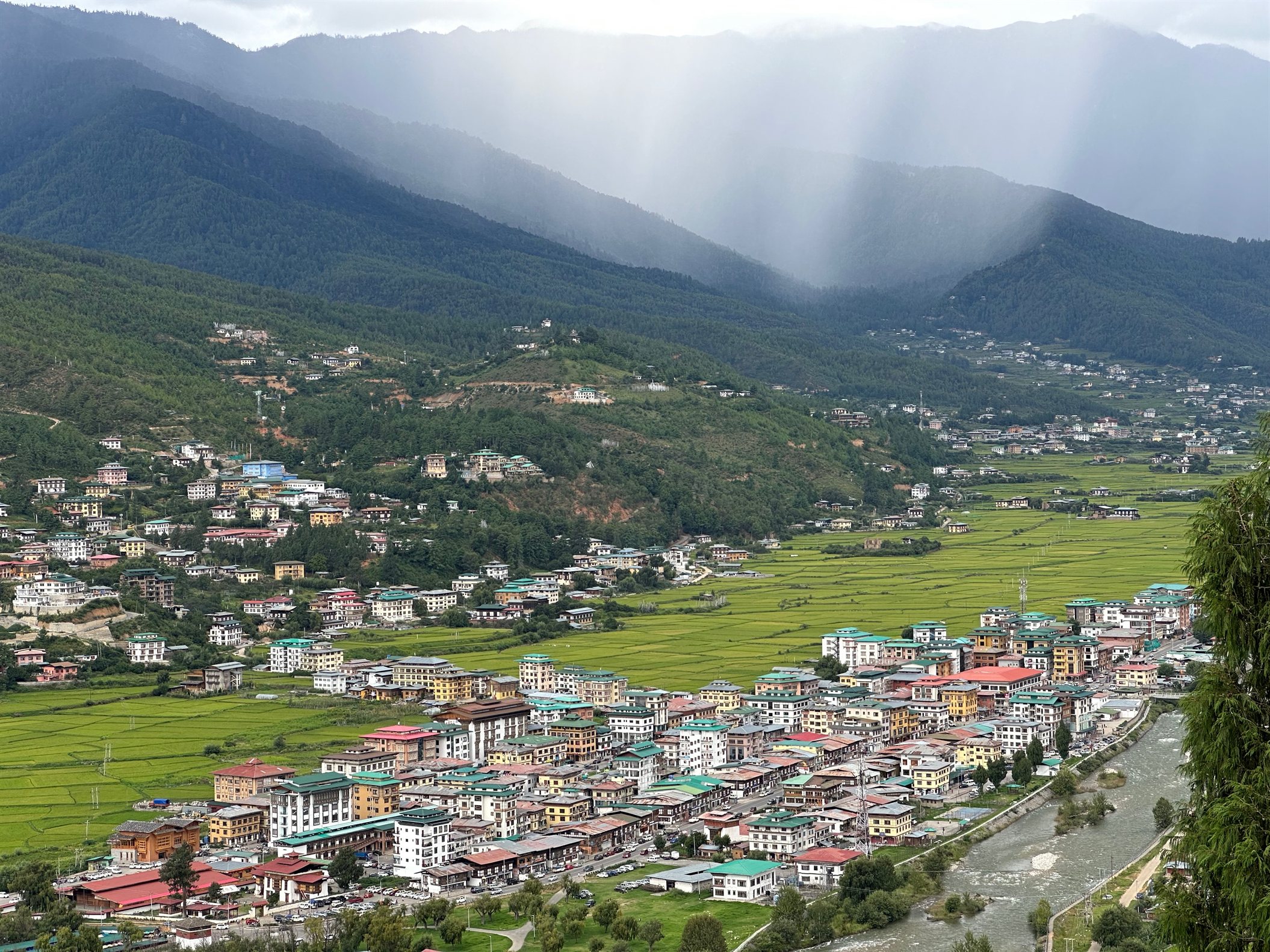
Paro Rinpung Dzong rises above the river and remains both an administrative centre and a monastic institution. The nearby National Museum occupies Ta Dzong, a former watchtower, and provides useful context for Bhutanese history, art and natural heritage. Kyichu Lhakhang is one of the country’s oldest and most revered temples, with peaceful courtyards and active prayer spaces.
Paro town is compact enough for an unhurried walk. Traditional wooden facades, small cafes and handicraft shops make it a pleasant place to settle into Bhutan. A gentle first day is sensible because the valley sits above 2,000 metres.
How long should you spend in Paro?
Allow two full days if you want Tiger’s Nest plus Paro’s other cultural sites. Three nights create a more comfortable rhythm and leave room for a hot stone bath, a village walk or time in the town.
The Essential Bhutan Cultural Journey shows how Paro can anchor a balanced route through western Bhutan.
Tiger’s Nest Monastery
Tiger’s Nest Monastery, or Paro Taktsang, is Bhutan’s most famous landmark. The monastery clings to a cliff above Paro Valley and is reached on foot through pine forest. The physical effort is part of the experience, but you should approach the hike at a steady pace rather than treating it as a race.
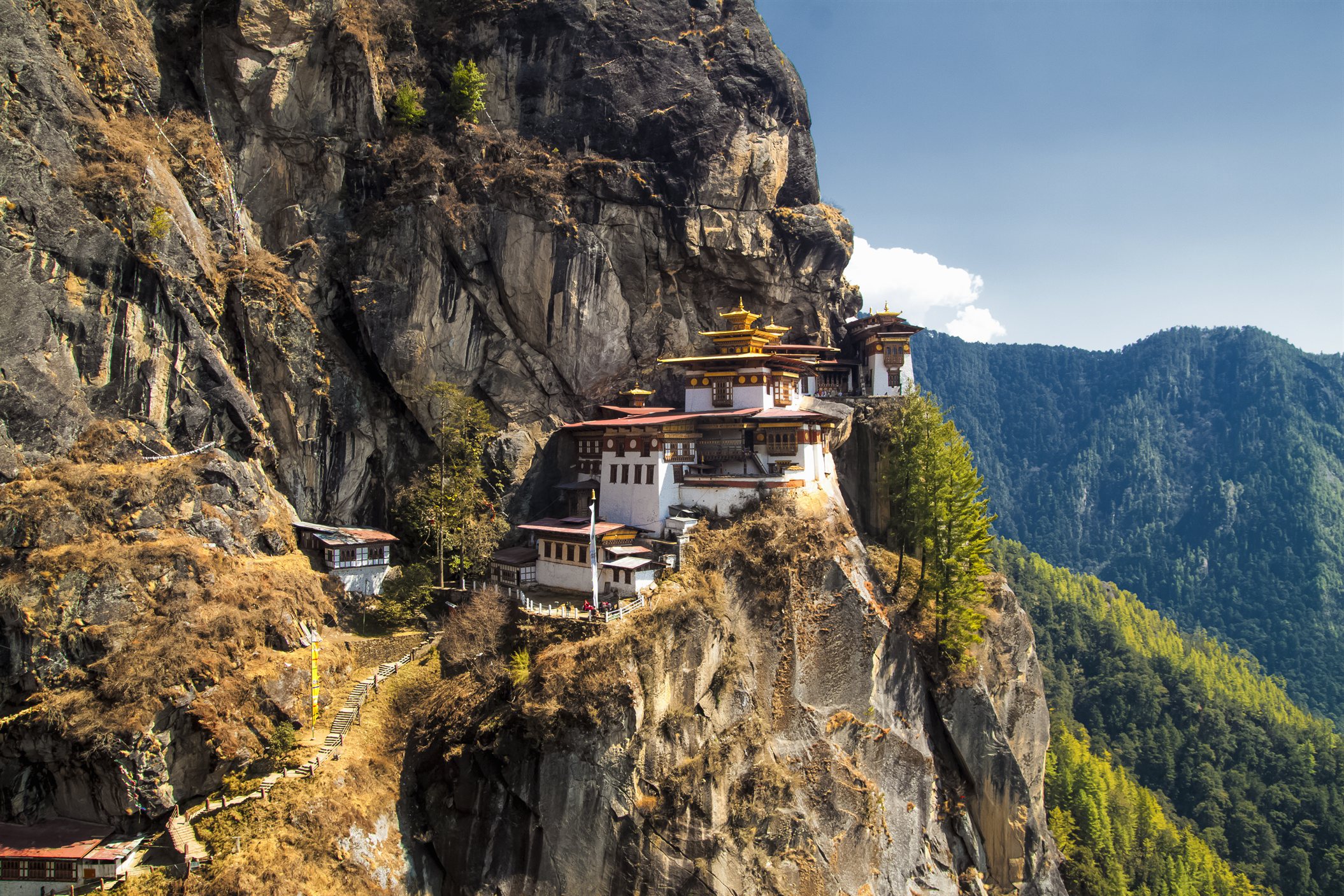
Bhutanese tradition connects the site with Guru Padmasambhava, also known as Guru Rinpoche, who is believed to have meditated in a cave here. The present complex developed around that sacred place. Inside, the atmosphere is intimate and devotional, with shrines and meditation spaces built into the mountain.
The complete outing usually takes much of a morning or early afternoon, depending on your pace and time inside the monastery. There is a cafeteria and viewpoint partway up. Horses may be available for part of the ascent, but they do not reach the monastery and visitors still need to manage steps near the final approach.
Start early, carry water and wear shoes with good grip. Photography is restricted inside religious buildings, so follow your guide’s instructions.
Check out the Tiger’s Nest Monastery Guide
Thimphu
Thimphu is Bhutan’s capital and its best place for understanding how tradition and contemporary life meet. Government offices, monasteries, schools, cafes, markets and craft institutions share a compact valley. Two nights give you enough time to explore without turning the city into a quick stop.
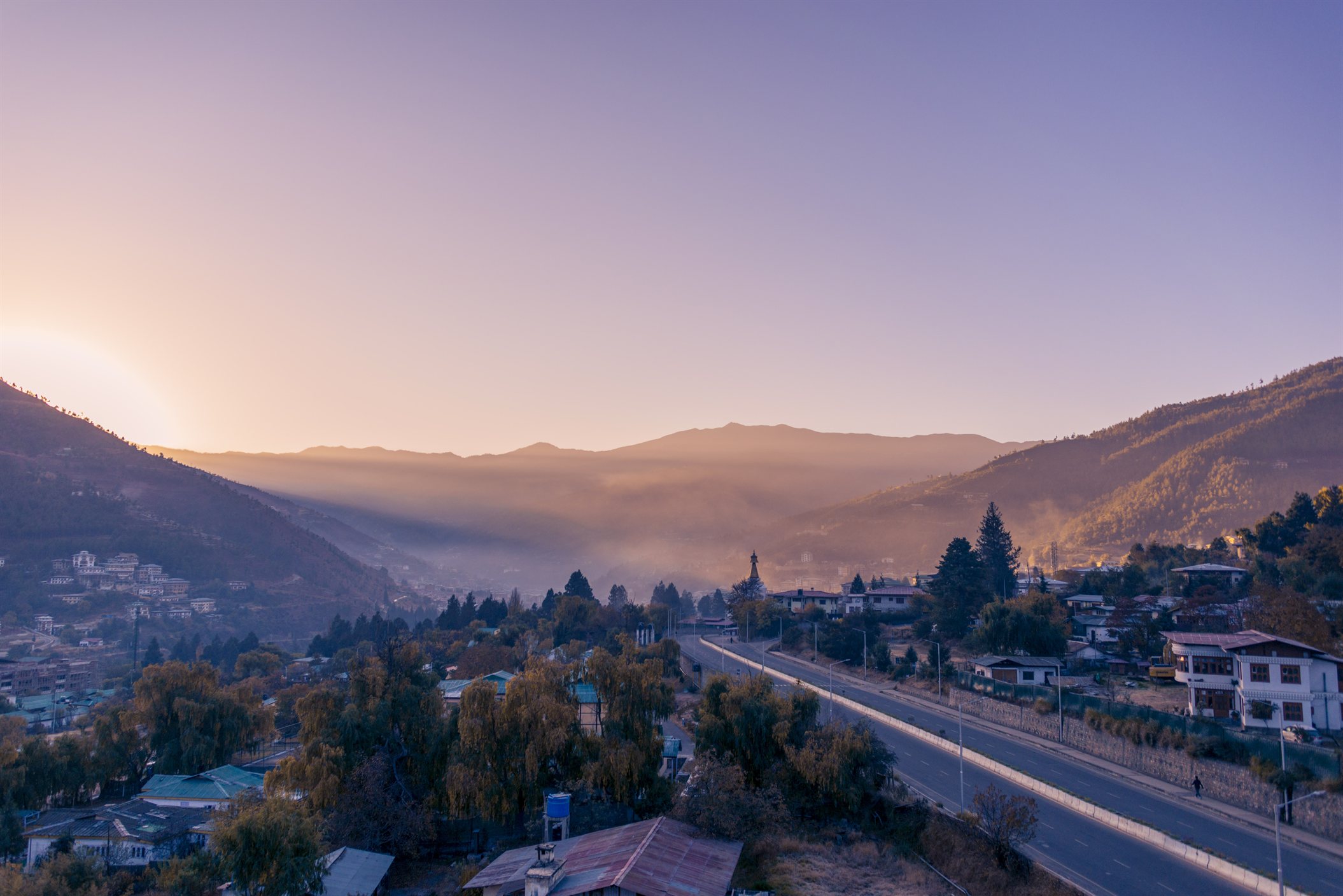
The Great Buddha Dordenma overlooks the capital from Kuenselphodrang. Its setting provides wide views across the valley, while nearby nature trails offer an easy introduction to walking at altitude. The National Memorial Chorten is one of Thimphu’s most active places of worship, where residents circle the stupa and turn prayer wheels throughout the day.
Tashichho Dzong is an important centre of government and monastic life. Visitor access depends on official functions, so timing may change. The Motithang Takin Preserve introduces you to Bhutan’s national animal, while textile, craft and heritage institutions reveal the skill behind traditional arts.
Do not overlook ordinary city life. A market visit, a walk near Clock Tower Square or time in a local cafe can help you see Bhutan beyond its monuments.
Who will enjoy Thimphu most?
Thimphu suits travellers interested in culture, crafts, food and social change. It is also a practical first stop after landing because the activities can be kept gentle while you adjust to the elevation.
Punakha
Punakha combines one of Bhutan’s most impressive dzongs with a warmer climate and a softer rural landscape. The lower elevation supports rice fields, fruit trees and subtropical plants, creating a noticeable contrast with Paro and Thimphu.
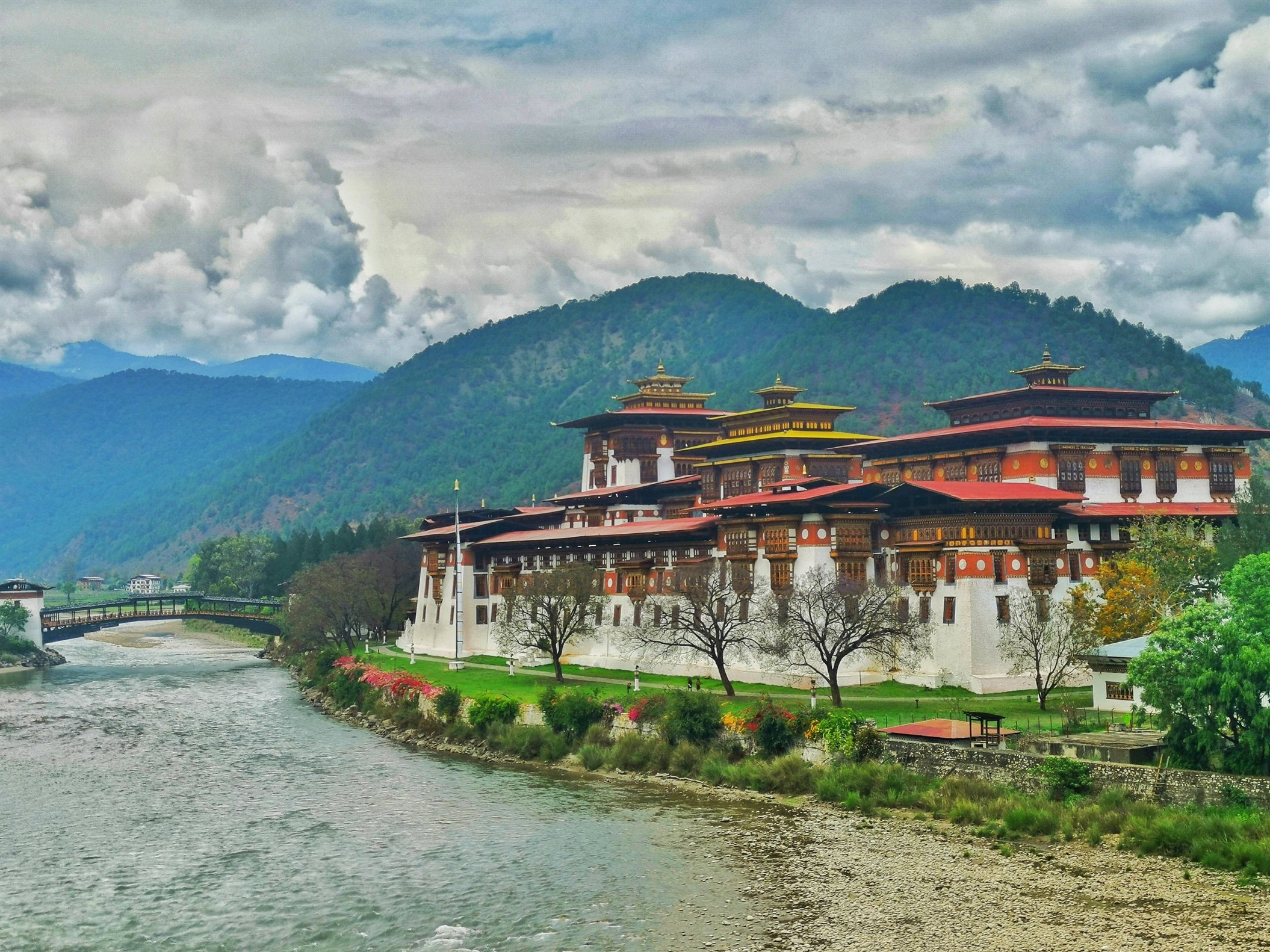
Punakha Dzong stands at the meeting of the Pho Chhu and Mo Chhu rivers. The fortress played a central role in Bhutan’s religious and political history and remains the winter residence of the central monastic body. Its courtyards, painted timber and riverside setting deserve time rather than a brief photograph from outside.
The valley also offers rewarding walks. Khamsum Yulley Namgyal Chorten is reached through fields and a steady hill climb, with open views from the upper level. Chimi Lhakhang, associated with the unconventional Buddhist teacher Drukpa Kunley, is approached through village lanes and farmland. The Pho Chhu suspension bridge provides another perspective on the river and surrounding hills.
How long should you spend in Punakha?
Two nights are ideal for most first visits. This allows a full day for the dzong, a village or temple walk and time to enjoy the valley. One night can work in a short itinerary, but the journey feels more hurried.
The Bhutan culture and short hikes journey includes several of Punakha’s most rewarding walks.
Dochula Pass
Dochula Pass lies on the road between Thimphu and Punakha. The 108 Druk Wangyal Chortens form its visual centre, surrounded by prayer flags and forest. In clear conditions, the pass can offer views towards Bhutan’s high Himalayan peaks.
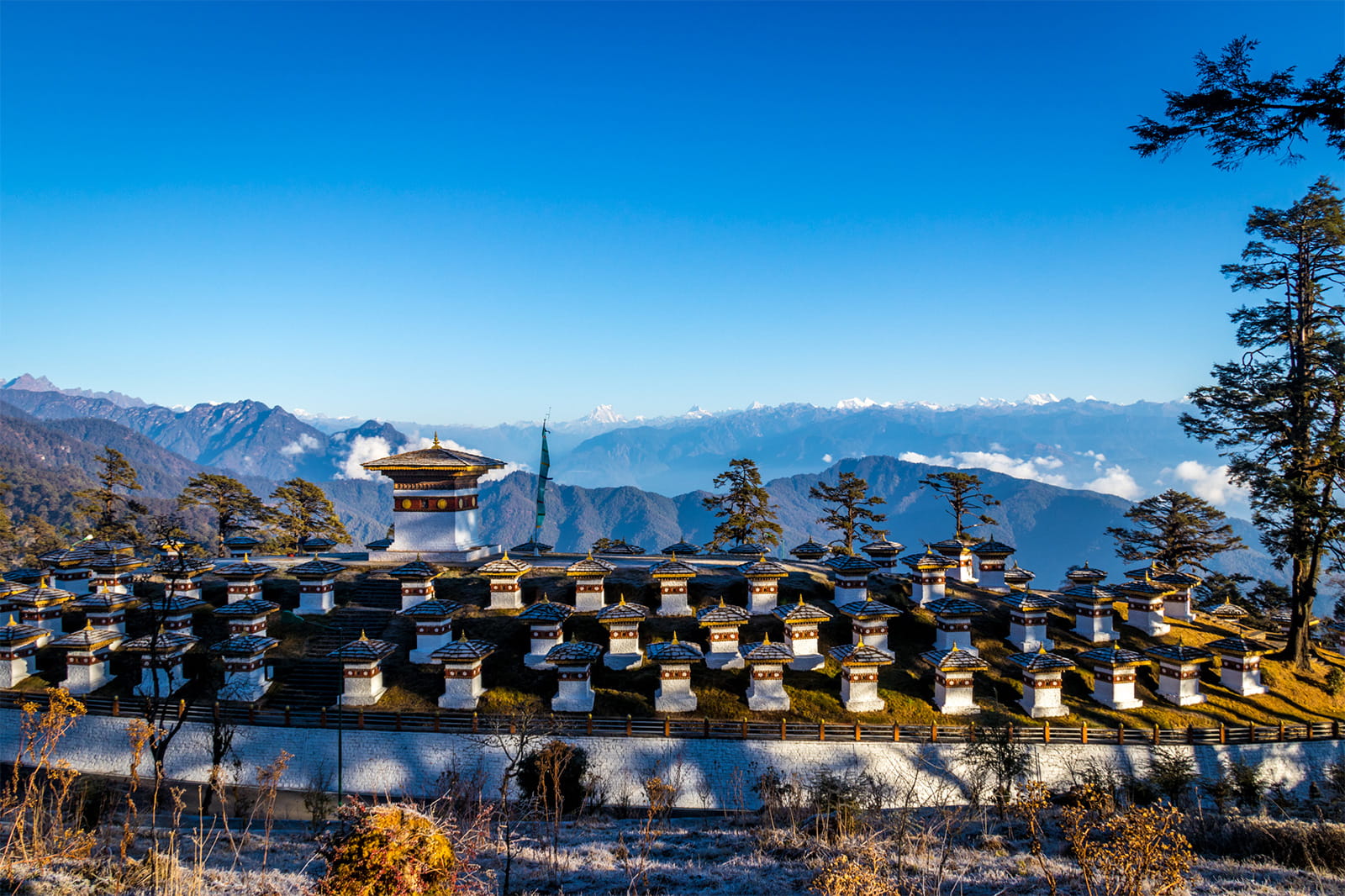
Cloud and mist are common, so treat the mountain view as a possibility rather than a promise. The chortens and spiritual atmosphere still make the stop worthwhile when the peaks remain hidden.
Active travellers can walk through the forest towards Lungchutse Temple. The trail passes rhododendron, hemlock and moss covered trees, with a longer return walk that needs suitable footwear and several hours. Conditions vary with rain, frost and snow.
Dochula is best included as part of the Thimphu to Punakha journey rather than a separate day trip. An early departure gives you more time at the pass and reduces pressure on the rest of the day.
Phobjikha Valley
Phobjikha is a broad glacial valley known for open landscapes, rural settlements and Gangtey Monastery. Its slower pace makes it a strong choice when you want nature and quiet after the cultural sites of western Bhutan.
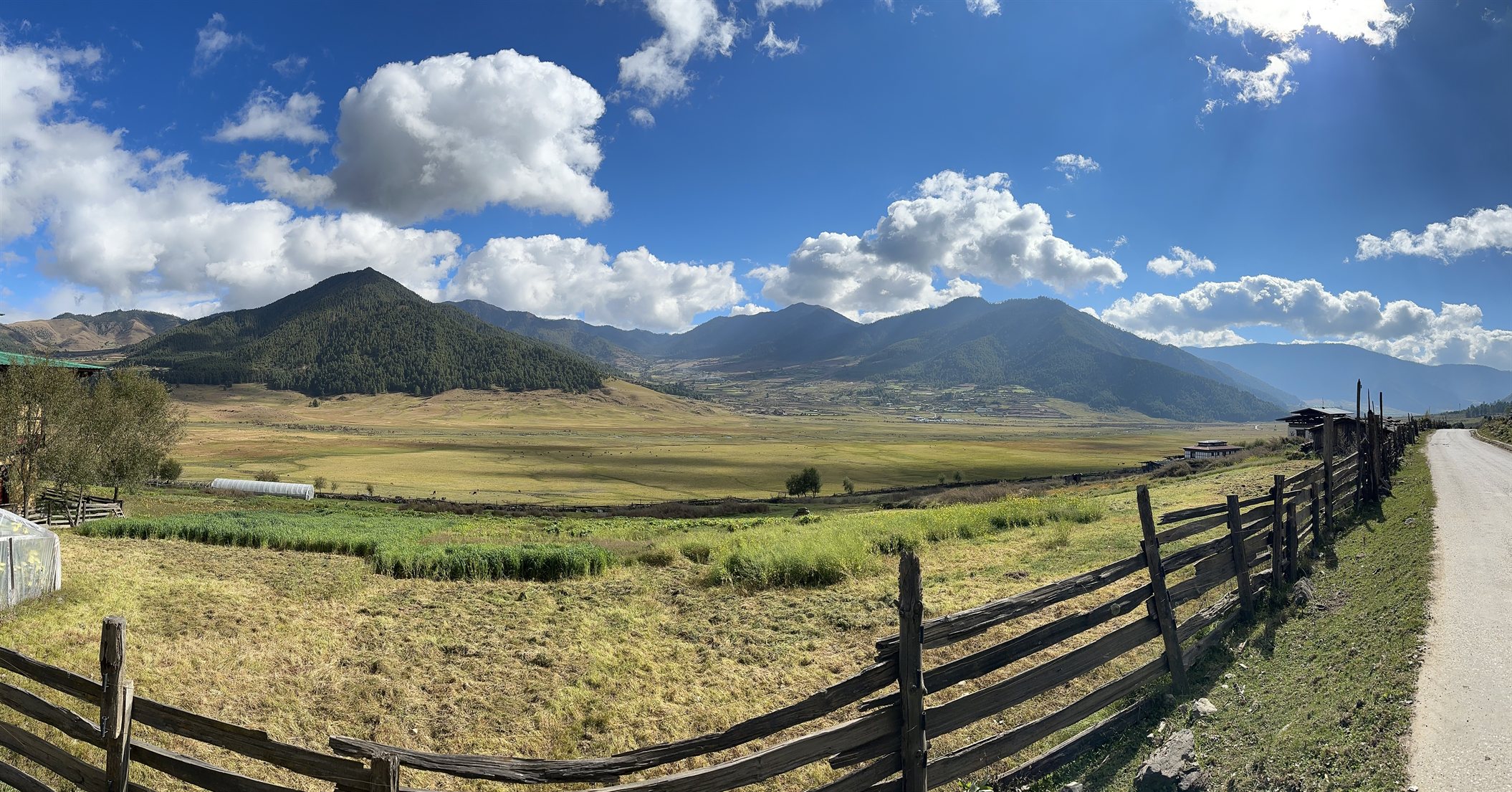
The valley is also associated with black necked cranes, which migrate here seasonally. Their arrival and departure vary with natural conditions, so never plan on a guaranteed sighting. The local conservation centre and designated viewing areas help visitors understand the birds without disturbing them.
Gangtey Monastery overlooks the valley and remains an active religious institution. The Gangtey Nature Trail offers a manageable walk through forest, farmland and open valley scenery. Winter can be very cold, while spring and autumn nights also need warm clothing.
Is Phobjikha worth the extra travel time?
Yes, if you have seven days or more and value landscape, walking and rural life. A one night stay introduces the valley, but two nights let you experience it without arriving and leaving in quick succession.
The Bhutan Adventure and Culture Journey adds Phobjikha to a seven day route.
Bumthang
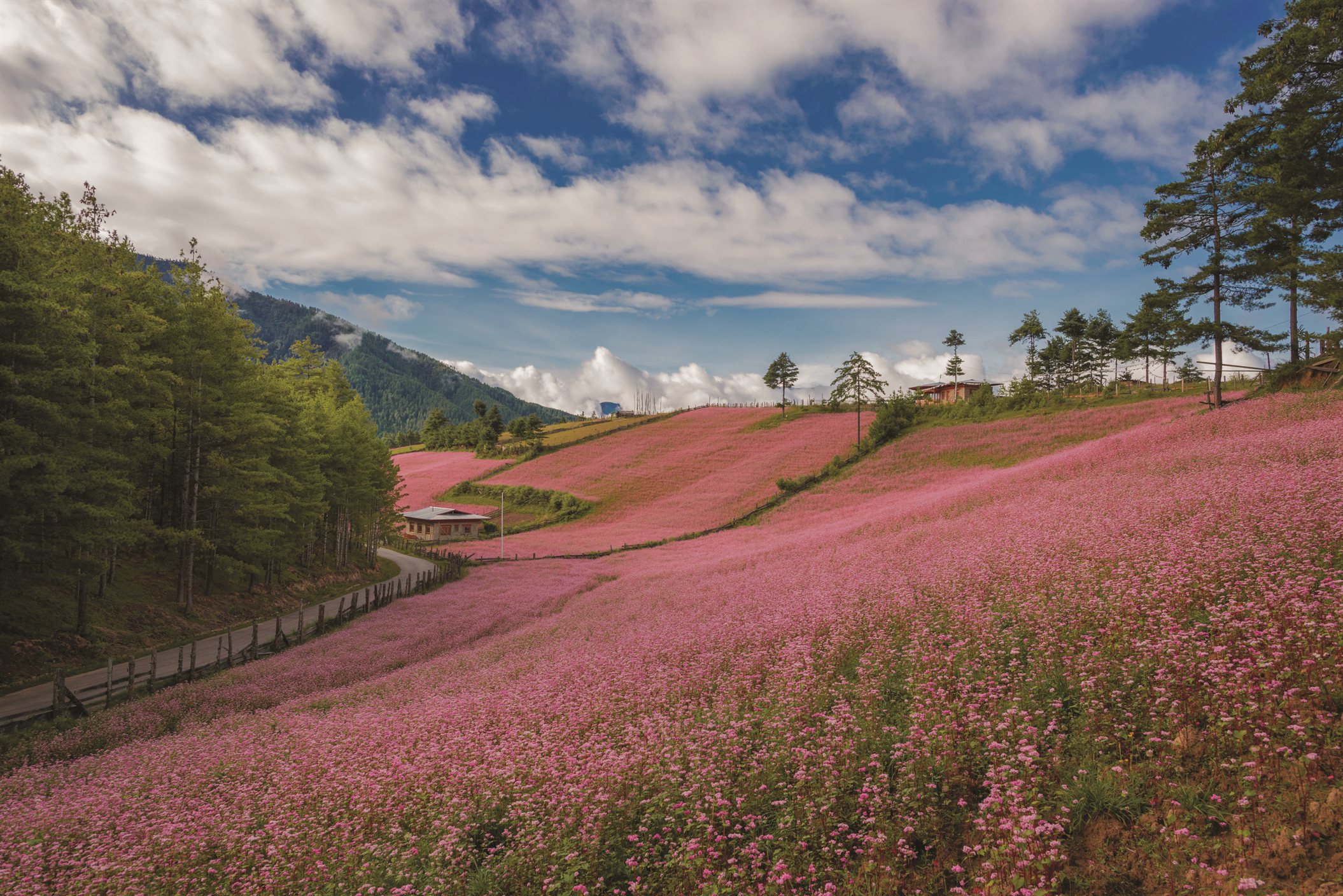
Bumthang is a group of central valleys rather than a single town. It is often described as Bhutan’s spiritual heart because of its concentration of temples, monasteries and stories connected with important Buddhist teachers. The region feels more spacious and rural than the western circuit.
Jambay Lhakhang and Kurjey Lhakhang are among the best known sacred sites. Tamshing Lhakhang has important religious associations and traditional murals. Walks between temples, farmhouses and villages make the experience feel connected rather than monument based.
The journey to Bumthang is substantial by road. Domestic flights can reduce travel time when schedules and weather align, but they should not be treated as guaranteed. A road itinerary allows stops in Trongsa and reveals the changing geography of central Bhutan.
How much time do you need in Bumthang?
Spend at least two nights, with three offering a better pace. Bumthang fits most naturally into a journey of ten days or longer. The Bhutan Discovery Journey connects the region with Paro, Thimphu, Punakha and Phobjikha.
Haa Valley
Haa is one of the most accessible quieter valleys in western Bhutan. It can be reached from Paro by road, often across Chele La when conditions permit. The journey passes forest, high viewpoints and rural settlements.
The valley suits travellers who enjoy village walks, traditional homes and landscapes with less visitor activity. Lhakhang Karpo and Lhakhang Nagpo, known as the White and Black Temples, are important local religious sites.
Haa can be visited as a long day trip, but an overnight stay gives you a more genuine sense of the valley. Winter snow may affect Chele La, and monsoon weather can slow the road journey.
Trongsa
Trongsa occupies a commanding position above a deep gorge in central Bhutan. Trongsa Dzong appears to extend along the ridge and historically controlled movement between eastern and western regions. The nearby museum provides context for Bhutan’s monarchy and regional history.
Many travellers see Trongsa while driving between Phobjikha and Bumthang. A night here can break a long journey and allow a more considered visit. If time is limited, a well planned stop still adds important historical depth.
Eastern Bhutan
Eastern Bhutan suits returning visitors and travellers with at least two weeks. Towns and valleys are more remote, road days are longer and tourism infrastructure is lighter than in the west. The reward is a closer look at regional identities, weaving traditions and village life.
Trashigang is a principal eastern centre, while nearby areas connect with monasteries, rural communities and textile traditions. Lhuentse and Mongar require further travel but reveal landscapes and cultural practices rarely included on first trips.
The East to West Cultural Expedition is designed for travellers ready to go beyond the classic western valleys.
Best places for different travel interests
Culture and spiritual heritage
Choose Paro, Thimphu, Punakha and Bumthang. These areas combine active monasteries, historic dzongs and opportunities to observe everyday religious practice.
Nature and gentle walking
Choose Phobjikha, Punakha and Haa. Each offers valley walks that can be adapted to your pace, with rural scenery and fewer urban distractions.
Trekking and active travel
Paro and Thimphu provide access to day hikes and longer routes. High treks require an accredited guide or operator and proper preparation. The Soi Yaksa Trek and Bhutan Cultural Journey combines mountain walking with the western cultural circuit.
Comfort and wellness
Paro, Thimphu and Punakha have Bhutan’s widest choice of premium stays and wellness experiences. The COMO Uma Paro and Punakha journey focuses on these two contrasting valleys.
Photography
Paro, Punakha, Dochula and Phobjikha offer strong architectural and landscape subjects. Begin early for softer light and allow more than one opportunity for mountain views, as cloud can change quickly.
How many places can you visit comfortably?
Five days are best focused on Paro and Thimphu, with Punakha added only if flight times support it. Seven days allow a comfortable Paro, Thimphu and Punakha circuit. You can add Phobjikha with a more active pace or by reducing time elsewhere.
Ten days create space for Paro, Thimphu, Punakha, Phobjikha and Bumthang. Journeys of two weeks or more can extend into eastern Bhutan or include a longer trek.
Mountain roads are slow and winding. A shorter list with two night stays usually creates a better experience than changing hotels every day.
Practical advice before visiting Bhutan’s attractions
Religious sites are living places of worship. Cover your shoulders and knees, remove hats where requested and follow instructions about shoes and photography. Walk clockwise around chortens, prayer wheels and sacred structures unless your guide advises differently.
The official Bhutan tourism guidance states that certified guides are required and that all treks must be undertaken with an accredited operator or guide. Current implementation can change, so confirm the arrangements for your route before travelling.
Weather affects high passes, trails and flights. Check the forecast, carry layers and keep a degree of flexibility. If altitude is a concern, read the SoulTrips guide to preparing for travel at high altitude.
Frequently asked questions
-
What are the three best places to visit in Bhutan?
Paro, Thimphu and Punakha are the strongest trio for a first visit. They combine Bhutan’s main international gateway, the capital, Tiger’s Nest, major dzongs and contrasting valley landscapes.
-
Is Tiger’s Nest suitable for beginners?
Many reasonably active first time hikers complete the walk at a steady pace. The trail involves sustained climbing and many steps, so allow time, carry water and discuss mobility concerns with your guide.
-
Is Punakha worth visiting?
Yes. Punakha adds a warmer climate, rice fields, village walks and an exceptional riverside dzong. Two nights provide a relaxed experience.
-
Should you choose Phobjikha or Bumthang?
Choose Phobjikha for open landscapes, cranes and a shorter extension from Punakha. Choose Bumthang for deeper spiritual history and several days of temple and village exploration.
-
Can you visit Bhutan without long hikes?
Yes. Many major sites in Thimphu, Punakha and Paro require only short walks or steps. Tiger’s Nest and hilltop temples can be replaced with gentler cultural experiences when mobility is limited.
-
How many days do you need for Bhutan?
Seven days are ideal for a first route through Paro, Thimphu and Punakha. Ten days allow Phobjikha and Bumthang to be added without making every day feel rushed.
-
What is the best place in Bhutan for mountain views?
Dochula Pass can reveal high Himalayan peaks in clear conditions. High trails and parts of central Bhutan also offer mountain views, but weather determines visibility and no viewpoint can guarantee them.
-
Which Bhutan valley is best in winter?
Punakha is especially comfortable because it sits lower and stays warmer. Paro and Thimphu remain rewarding with proper winter clothing, while Phobjikha and Bumthang are colder.
-
Are Bhutan’s monasteries open to visitors?
Many welcome visitors, but access can change during ceremonies, renovations or official events. Dress respectfully and follow your certified guide’s instructions at every site.
-
Can you photograph inside Bhutan’s dzongs and temples?
Photography is often allowed in exterior courtyards but restricted inside sacred rooms. Rules differ by location. Ask before taking photographs of interiors, monks or ceremonies.
Choose places that give your journey room to breathe
The most rewarding places to visit in Bhutan are not simply the sites with the greatest name recognition. Paro, Thimphu and Punakha create a rich first journey, while Phobjikha, Bumthang, Haa and the east add depth when you have time.
Choose fewer places, stay long enough to understand them and leave space for walks, conversations and changes in weather. Explore the wider SoulTrips Bhutan guide collection, then use the SoulTrips Plan My Trip service to shape a journey around your interests and preferred pace.