By Soul Trips · Updated on 18 September, 2026
Tiger’s Nest Hike: Monastery Difficulty, Timing and Practical Tips
The Tiger’s Nest hike is Bhutan’s most recognised hike and, for many travellers, its most anticipated day. Paro Taktsang appears to cling to a sheer cliff above the valley, reached by a forest path, a high viewpoint and a final sequence of stone steps. The first glimpse through the trees feels improbable even after you have seen countless photographs.
The route is not technical, but it should not be dismissed as an easy tourist stroll. You climb steadily at altitude, often in strong sun, then descend over uneven ground. Fitness, acclimatisation, weather and pace matter more than speed.
With a sensible itinerary, supportive guide and early start, many people complete the walk comfortably. This guide explains the difficulty, timing, altitude, packing, etiquette and alternatives so you can make an informed plan.
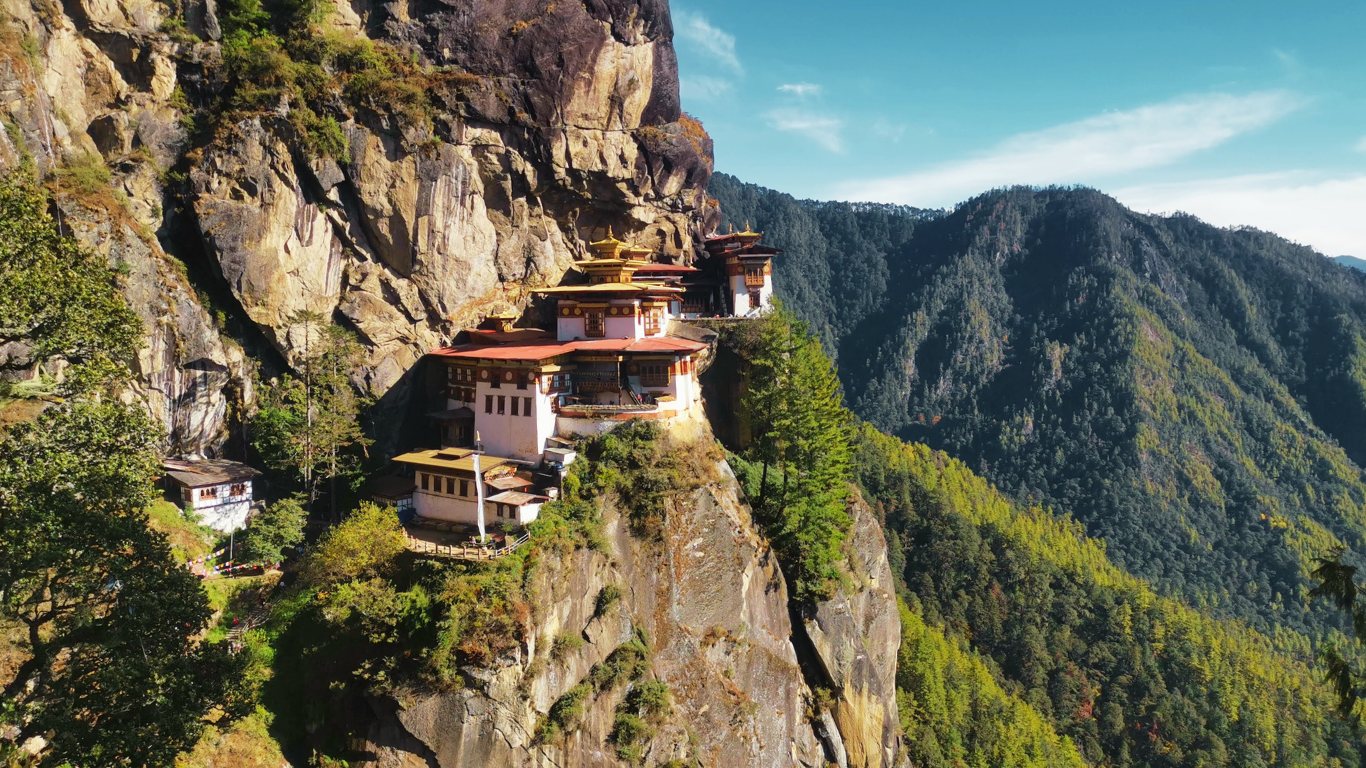
Tiger’s Nest hike facts at a glance
- Location: Paro Valley, western Bhutan
- Monastery name: Paro Taktsang
- Monastery altitude: about 3,120 metres
- Approximate ascent: about 900 metres from the trailhead area
- Typical total time: around five to six hours including breaks and the visit to the monastery
- Route type: sustained uphill path, followed by a staircase section
- Technical skill: none in normal conditions
- Main challenges: altitude, ascent, stairs, sun and descent
- Best approach: start early, acclimatise first and walk at a steady pace
Times vary widely. A strong hiker may be faster, while a traveller who pauses often may take longer. Weather, crowds, trail conditions and time inside the monastery all affect the day.
The hike is a steady climb of roughly two hours for a fit group and places the monastery at around 10,000 feet. Use that as context, not a target time.
Why Tiger’s Nest is important
Paro Taktsang is a sacred monastery complex associated with Guru Rinpoche, also known as Padmasambhava. Tradition holds that he reached the site in a powerful form and meditated in a cave. The place became an important centre of devotion long before it became Bhutan’s most photographed landmark.
The complex has experienced destruction and rebuilding across its history, yet its sacred significance endures. It is an active religious site rather than a scenic viewing platform.
Understanding this changes how you approach the hike. The climb is a pilgrimage route for many people. Speak quietly near prayer areas, dress modestly, follow photography rules and give worshippers room.
How difficult is the Tiger’s Nest hike?
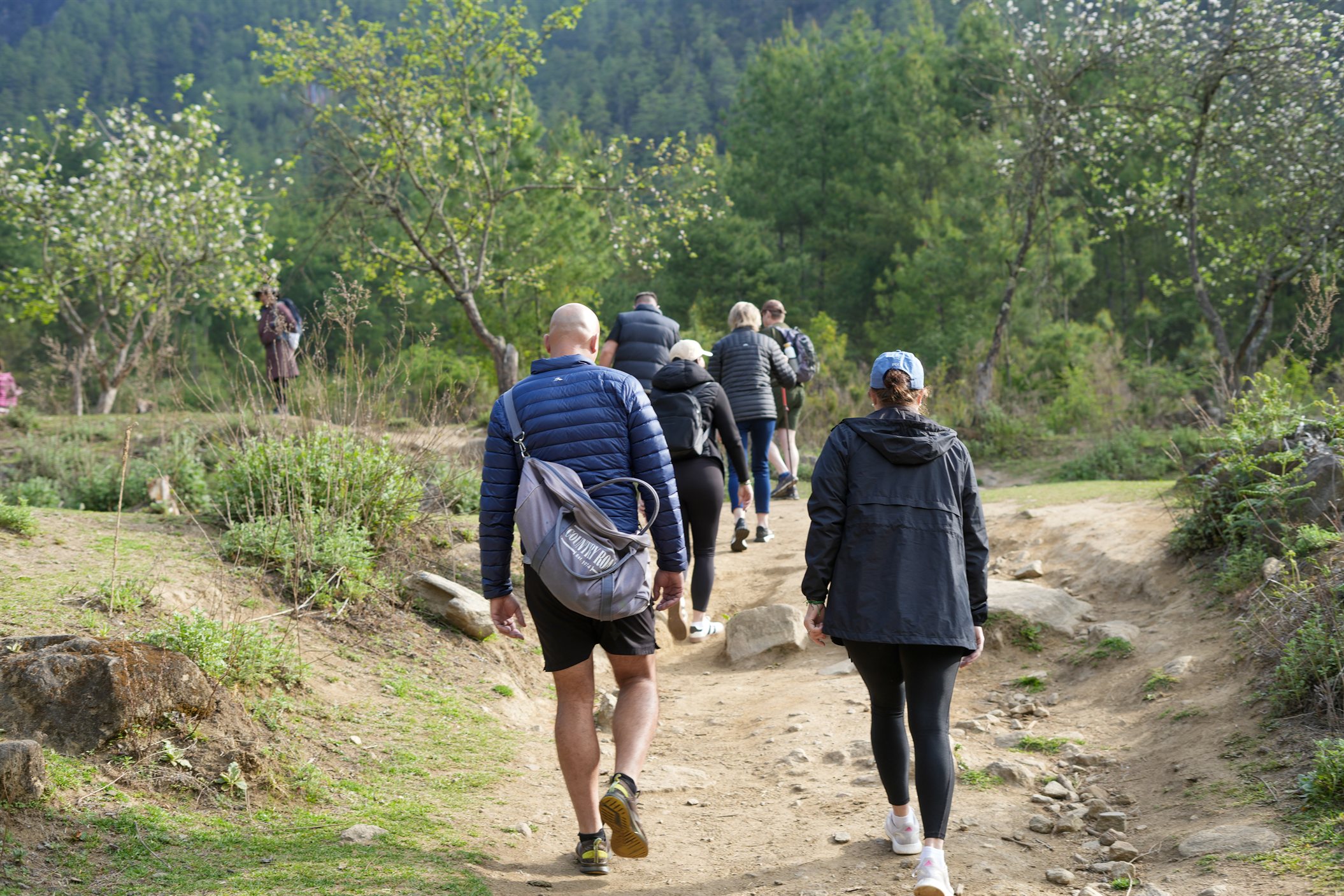
For a healthy traveller with moderate fitness, the hike is usually challenging but manageable. The path rises for much of the outward route, so you do not receive long flat recovery sections. At around 3,000 metres, the same effort can feel harder than it does in Singapore.
The surface includes packed earth, stones, roots and steps. Dust is common in dry weather, while rain can make the path muddy or slippery. The final approach crosses a viewpoint and descends before climbing stairs toward the monastery.
Difficulty depends on more than age. A regular walker who trains on stairs may feel stronger than a younger person who is inactive. Knee problems often become more noticeable on the descent. Heart, lung or mobility conditions require individual medical advice.
Do not treat the hike as a race. A pace that allows conversation and regular breathing is usually more sustainable than repeated fast efforts and long stops.
Altitude and acclimatisation
Paro sits at roughly 2,200 metres, already much higher than Singapore. The monastery is around 3,120 metres. You gain altitude while exercising, which can cause breathlessness, headache or fatigue even in fit travellers.
Spend time in Bhutan before the hike if possible. Many itineraries place Thimphu and Punakha first, then return to Paro. Others include one easy day in Paro before the climb. Attempting Tiger’s Nest straight from an overnight flight creates unnecessary strain.
Hydrate, eat normally, limit alcohol and sleep well. Walk more slowly than your sea level pace. If you develop concerning symptoms, tell your guide immediately and descend when advised.
Read how to prepare for travel at high altitude. Medical questions should be discussed with a qualified clinician before travel.
How long does the hike take?
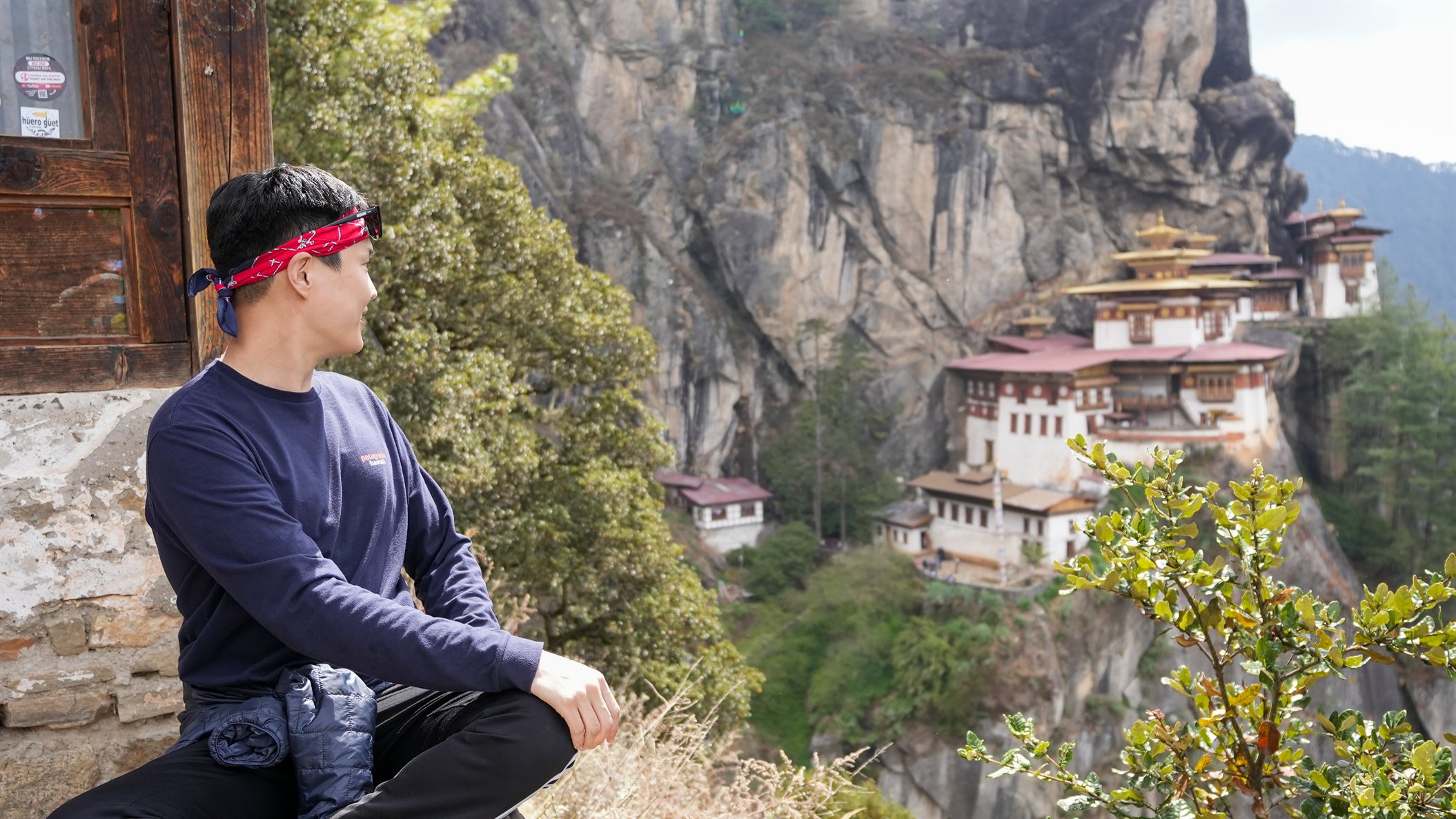
Allow most of the day. Around five to six hours is a useful planning estimate for the return walk, breaks and monastery visit, but some people need longer. The trip should not be squeezed between a late breakfast and a fixed afternoon transfer.
The first major milestone is the cafeteria area, reached after a sustained climb. From there, you continue to the classic viewpoint. The final section involves a descent and ascent on stairs before the monastery entrance.
Your time inside depends on access, crowds and interest. Security procedures may require bags, phones or cameras to be stored. Opening arrangements can change, so your guide should confirm the plan locally.
Best time of day to start
Start early in the morning. The air is often cooler, the path can be quieter and you have more margin for rest. Morning light may also reveal the monastery gradually as clouds shift through the valley.
An early start does not mean skipping breakfast or rushing the first hour. Eat a suitable meal, carry water and settle into a steady rhythm. Festival periods can bring larger crowds, making timing even more important.
Avoid relying on a rigid minute by minute schedule. Weather changes in the mountains, and the sacred site may have operational adjustments. Build the day around the hike rather than adding several unrelated attractions afterwards.
Best seasons for the Tiger’s Nest hike
Spring and autumn are popular for generally favourable walking conditions. Spring brings flowering vegetation and varied weather. Autumn often offers drier air and clear days, though dust and cold mornings are possible.
Summer is green and atmospheric but wetter. Bring serious rain protection and expect mud, cloud or slower progress. Winter can offer bright skies and fewer visitors, but mornings are cold and shaded sections may be icy.
No season guarantees a view. Mist can make the monastery feel mysterious, and clouds sometimes clear suddenly.
The SoulTrips Bhutan destination guides can help you match the hike to the wider seasonal plan.
What to wear
Wear supportive shoes with good grip that you have already broken in. Trail shoes or light hiking boots work well. Heavy expedition boots are unnecessary in normal conditions, while thin fashion trainers may lack traction and support.
Use breathable layers. Begin with a comfortable base, add a light fleece or warm layer and carry a waterproof shell. Temperatures change between the sunny trail, forest shade and monastery interior.
Your clothing must also suit a sacred site. Long trousers and a top that covers the shoulders are the simplest solution. Avoid very tight, transparent or damaged clothing. Remove hats and sunglasses when asked inside.
The Bhutan packing list covers seasonal layers, power adapters and wider trip essentials.
What to carry
Keep the day bag light. Carry:
- Water in a reusable bottle
- Sunscreen and lip balm
- Sun hat and sunglasses
- Light warm layer
- Waterproof jacket
- Personal medicine
- Blister plasters and tissues
- Small snack if recommended
- Phone or camera with enough power
- Small amount of cash
Walking poles can reduce knee strain, particularly on the descent. You can rent a walking pole for approximately USD1 at the base of the Tiger’s Nest trail.
Do not overload the bag with camera equipment. Extra weight becomes noticeable uphill, and all electronic equipment needs to be stored before entry.
The route step by step
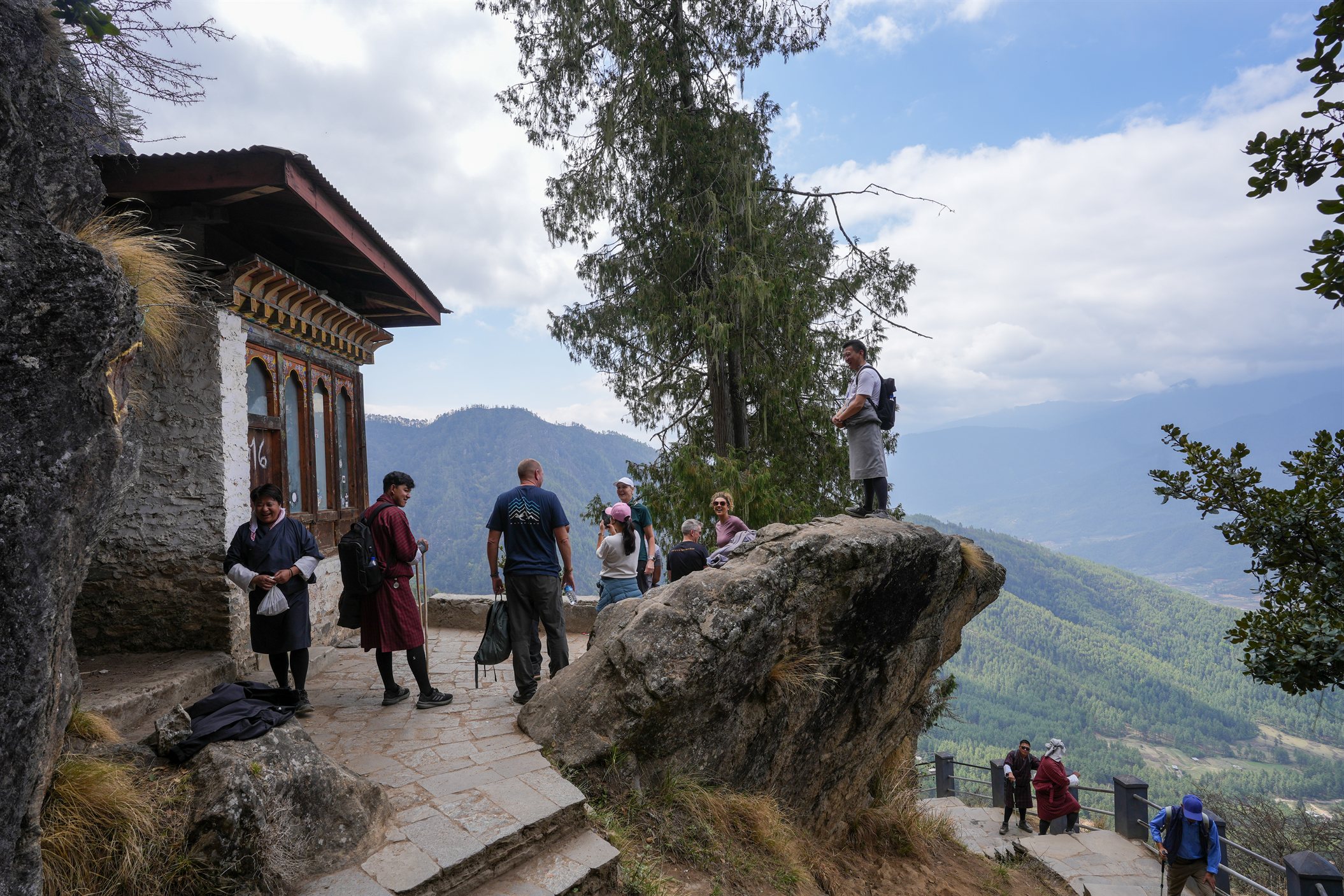
Trailhead to the forest climb
The walk begins in the valley at a busy trailhead area. After the initial stretch, the path climbs through pine forest with prayer flags and occasional views. Horses may use parts of the route, so stay alert and give them space on the safer side of the path as your guide directs.
Find a pace you can maintain. The first hour should feel controlled rather than heroic. Short standing pauses often work better than sitting for a long time and cooling down.
Cafeteria area
The cafeteria provides a natural rest point and an important view toward the monastery. Some travellers choose this as their turnaround point. Reaching it is already a worthwhile achievement.
Drink water, use the facilities if available and assess honestly how you feel. Continuing requires more climbing and the final stair section. Your guide can help you make a safe decision.
Classic viewpoint and waterfall
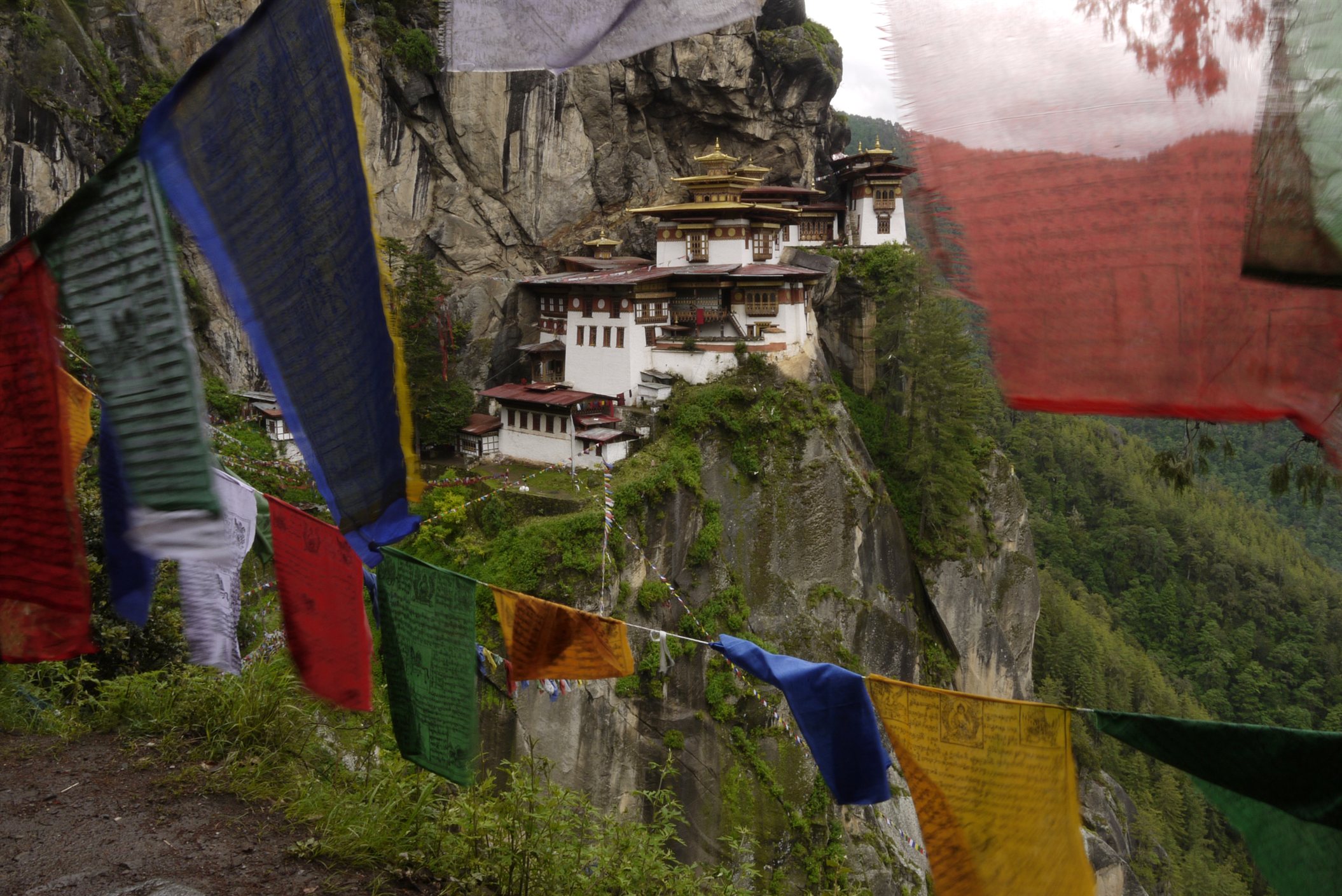
The path reaches the famous viewpoint across the gorge. From here, stairs descend toward a waterfall and then climb to the monastery. The visual drama can distract you from footing, so stop fully before taking photographs.
The stairs can feel demanding because you lose elevation before climbing again. Use the handrail where available, leave room for others and take your time.
Entering the monastery
At the entrance, follow instructions about shoes, bags, cameras and phones. Photography is generally restricted inside sacred rooms. Your guide will lead you through chapels and explain their significance.
Move quietly, do not touch murals or statues and allow worshippers to pray. The visit is not a reward photograph at the finish line. It is the spiritual heart of the day.
The descent
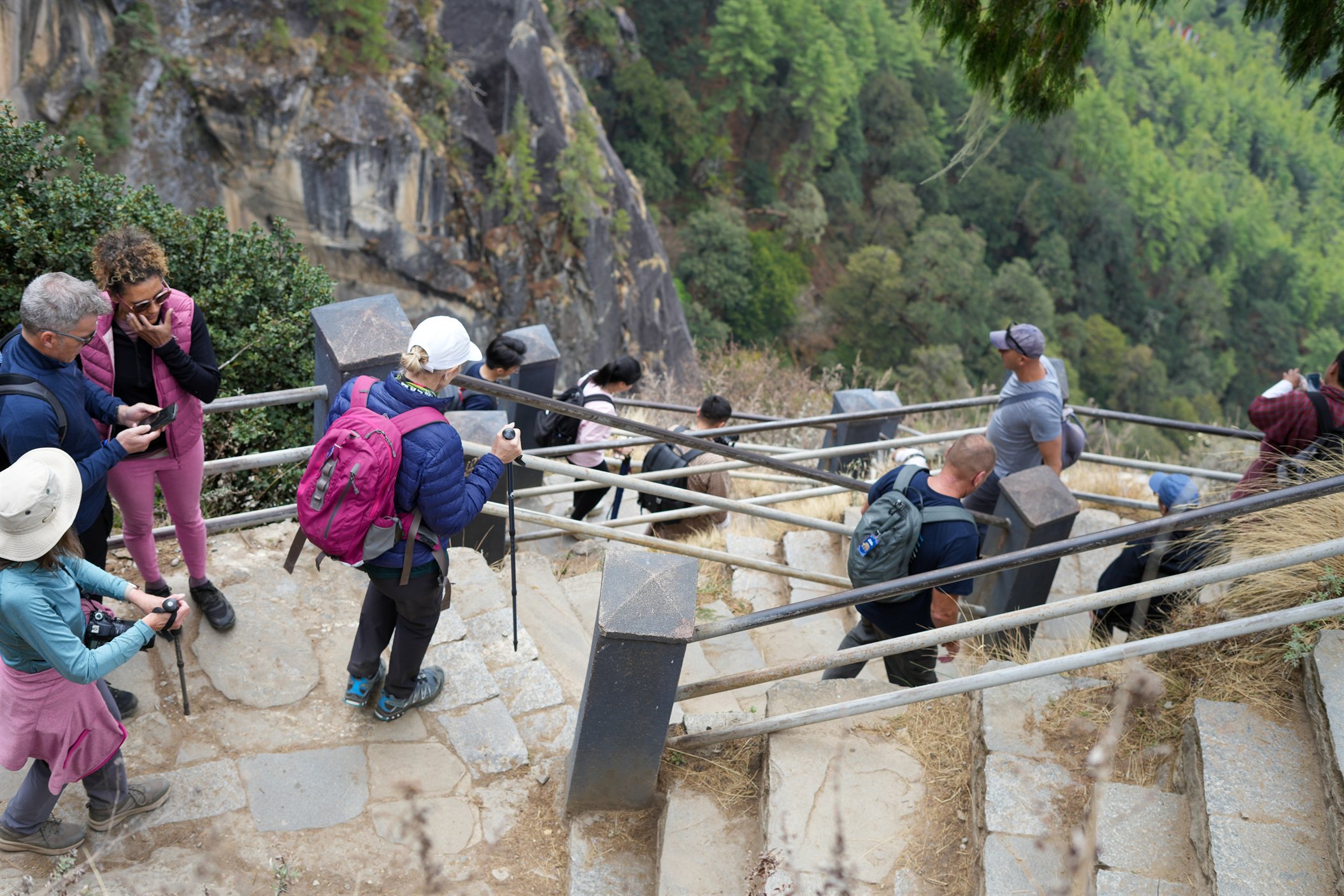
The return is faster for many people but can be harder on knees. Shorten your stride, keep your centre of balance controlled and use poles if helpful. Do not run on loose surfaces.
Fatigue increases the chance of a stumble. Continue drinking water and take a rest when form begins to deteriorate.
Horses on the trail
Horse services are sometimes available for part of the ascent. They do not remove the need to walk the entire route, especially the later path, stairs and descent.
Riding on a steep trail has its own risks and may feel uncomfortable for people unused to horses. Discuss availability, welfare, price and the exact drop point with your guide. Walkers should stand to the safe side when horses pass and follow the handler’s direction. Avoid sudden movements and keep trekking poles controlled.
Training before your trip
Begin with regular walking several weeks before departure if you are not already active. Add hills or stairs gradually. The goal is sustained movement, not one intense workout.
Useful preparation includes:
- brisk walks of increasing duration
- steady stair sessions
- controlled downhill walking
- lower body strength work
- balance exercises
- practice carrying your day bag
Train in the shoes you will wear. If knee pain, chest symptoms or unusual breathlessness occurs, seek professional advice rather than pushing through.
The Essential Bhutan Culture and Short Hikes tour offers a useful reference for combining gentle activity with cultural touring.
Eating and drinking for the hike
Eat breakfast with carbohydrates and some protein, using foods your stomach knows. Avoid an unusually heavy or spicy meal immediately before walking. Carry a small snack.
Drink regularly without forcing excessive water. At altitude, both dehydration and poor fuelling can magnify fatigue. Limit alcohol the previous evening.
The cafeteria may serve refreshments, but availability and opening arrangements can change. Carry enough for your own needs rather than depending on a purchase.
Monastery etiquette
Tiger’s Nest is an active sacred site. Cover shoulders and knees, remove hats and shoes when directed and keep your voice low. Do not touch religious objects or sit on sacred structures.
Follow every photography restriction. Store devices where required and never attempt a hidden photograph. Walk around sacred objects in the direction shown by your guide.
Read the Bhutan culture and etiquette guide before departure. A respectful visit is part of completing the journey well.
Safety and health
Tell your guide about medical conditions that affect exertion, balance or altitude. Carry personal medicine and travel insurance appropriate to the activities. Travel insurance is highly recommended even though it is not currently mandatory.
Turn around if symptoms, weather or trail conditions make continuing unsafe. Reaching the monastery is not worth a fall or medical emergency. A decision to stop at the cafeteria or viewpoint is not a failure.
Sun exposure is strong at altitude. Use sunscreen even on cool or cloudy days. In the rain, slow down and protect electronics.
Visiting with children or older travellers
Active children and older adults can complete the hike, but age alone is not a reliable guide. Consider regular activity, balance, altitude response and patience. Children need close supervision around steps and passing horses.
Build more time, carry familiar snacks and allow an honest turnaround. Private touring is valuable because the pace can respond to the group. The Bhutan Adventure and Culture Journey shows how active elements can be balanced with gentler days.
Accessibility and alternatives
The monastery route includes sustained climbing and many steps, so it is not fully accessible for wheelchairs or travellers who cannot manage uneven terrain. Horse assistance, when available, covers only part of the journey.
The cafeteria viewpoint can be a satisfying goal for travellers who can walk partway. Others can experience the Paro Valley through Kyichu Lhakhang, Paro Dzong, the National Museum, village visits and viewpoints accessible by vehicle with short walks.
Speak openly about mobility before booking. A thoughtful alternative should feel like a meaningful Bhutan day.
How the hike fits into an itinerary
Place Tiger’s Nest near the end of a classic western journey, after some acclimatisation. Keep the previous day moderate and the evening quiet. Avoid a long drive directly after the hike if possible.
Seven day routes usually provide a strong balance of Paro, Thimphu and Punakha. The Essential Bhutan Cultural Journey is a useful starting point. Travellers with limited leave can review the Magical Bhutan Journey, but should protect recovery time.
Common mistakes
The most common mistakes are hiking immediately after arrival, starting late, wearing new shoes, carrying too much, racing the first climb and underestimating the descent. Another is focusing so completely on photographs that the sacred visit becomes secondary.
Avoid rigid expectations about visibility. Cloud, rain and changing light are part of the mountain. Let the day be more than the perfect image.
Frequently asked questions
-
How hard is the Tiger’s Nest hike?
It is a sustained uphill walk at altitude, followed by stairs and a long descent. Many moderately fit travellers complete it with steady pacing. It is not technical, but it is physically demanding.
-
How long does the hike take?
Allow around five to six hours for walking, rests and the monastery visit. Some people take longer. Start early and keep the day flexible.
-
What altitude is Tiger’s Nest?
Paro Taktsang sits at about 3,120 metres above sea level. Paro itself is around 2,200 metres. The gain makes acclimatisation and slow pacing important.
-
Do I need hiking boots?
Supportive trail shoes are enough for many visitors in normal conditions. Light boots may help if you prefer ankle support. Wear footwear that is broken in and has reliable grip.
-
Can I ride a horse to the monastery?
Horse assistance may be available for part of the ascent, subject to local arrangements. It does not cover the full route, final stairs or descent. Discuss suitability and welfare with your guide.
-
Is photography allowed inside Tiger’s Nest?
Photography is generally restricted inside sacred rooms. Follow the instructions at the entrance and store devices where required. Outdoor viewpoints provide the classic photographs.
-
What should I wear?
Wear breathable walking layers, supportive shoes and modest clothing that covers shoulders and knees. Carry a warm layer, waterproof shell, sun hat and sunscreen. Conditions can change quickly.
-
Can children complete the hike?
Active children may complete it with close supervision, enough time and realistic expectations. Consider the individual child’s stamina and altitude response. Be willing to turn around.
-
When should I do the hike in my itinerary?
Near the end of the trip is often best because you have had time to acclimatise. Avoid attempting it immediately after a long flight. Keep the previous evening calm.
-
Is there an entrance fee?
Monument fees and package inclusions can change. Ask your travel specialist to confirm the current fee and if it is included in your quote. Carry payment only in the form advised locally.
Walk with patience and purpose
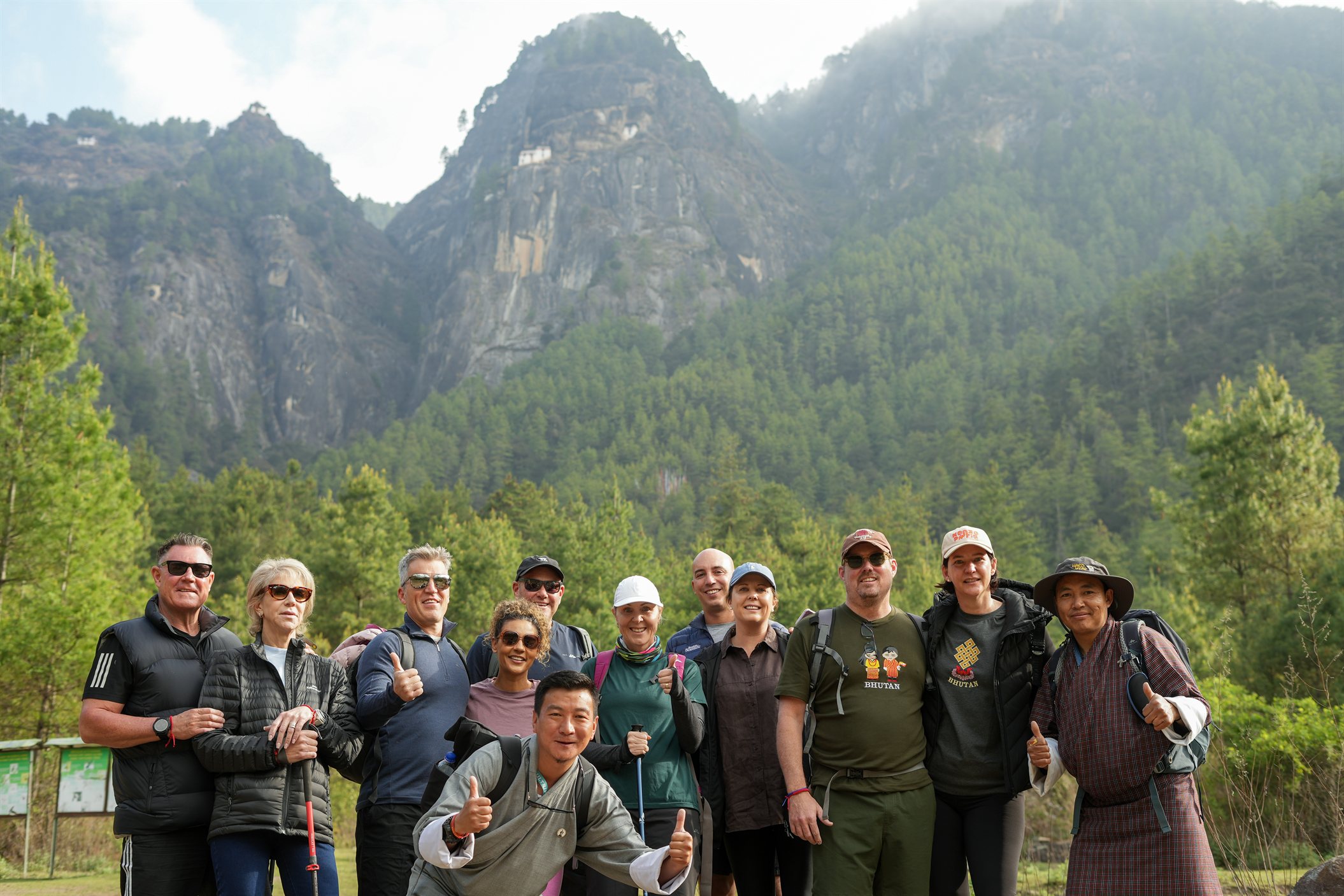
The Tiger’s Nest hike is demanding enough to feel earned and accessible enough for many travellers with preparation. Acclimatise, start early, carry only what you need and let your guide set a safe rhythm. The monastery deserves the same attention as the famous view.
Explore SoulTrips Bhutan tours, use the trip planning service or contact SoulTrips. A well paced itinerary can place the Tiger’s Nest hike at the right point and give you the support to enjoy every step.