Discover Bhutan on a 7-day private tour through Thimphu, Punakha, Phobjikha and Paro, with Tiger’s Nest, forest hikes, temples and local culture.
Bhutan invites you to experience travel at a different pace. Across seven carefully planned days, you’ll journey through forested mountain passes, fertile river valleys and towns where centuries-old traditions remain part of everyday life.
Beginning in Paro, the journey takes you to Bhutan’s capital, Thimphu, before continuing through Punakha, the glacial landscapes of Phobjikha Valley and back to Paro. Along the way, you’ll walk through peaceful forests, visit sacred temples and fortress monasteries, meet local people and share experiences that bring Bhutanese culture to life.
The itinerary balances Bhutan’s defining landmarks with quieter moments. You’ll have time to wander through local markets, enjoy a riverside picnic, walk beneath prayer flags and pause at mountain viewpoints. For those looking for more activity, the journey also includes rewarding hikes, a traditional archery experience and the option to go white-water rafting.
The pace is active but considered, with private transport, an experienced local guide and all essential arrangements handled throughout your stay.
This journey is designed for travellers who want more than a sightseeing holiday. You’ll discover how Bhutan’s spiritual traditions, natural environment and approach to community shape daily life, while enjoying the comfort and reassurance of a privately guided itinerary.
For 2 travellers:
- Twin Sharing (per person): SGD 4,325
- Single Supplement (per person): SGD 4,625
For 3 to 5 travellers:
- Twin Sharing (per person): SGD 4,195
- Single Supplement (per person): SGD 4,495
Travel on your preferred dates, subject to flight and accommodation availability.
Private departures can be arranged for couples, families and small groups.
Prices include SGD 265 in airline taxes. Taxes are subject to change without prior notice.
Elevation: 2,334 metres
Approximate drive time: 1.5 hours
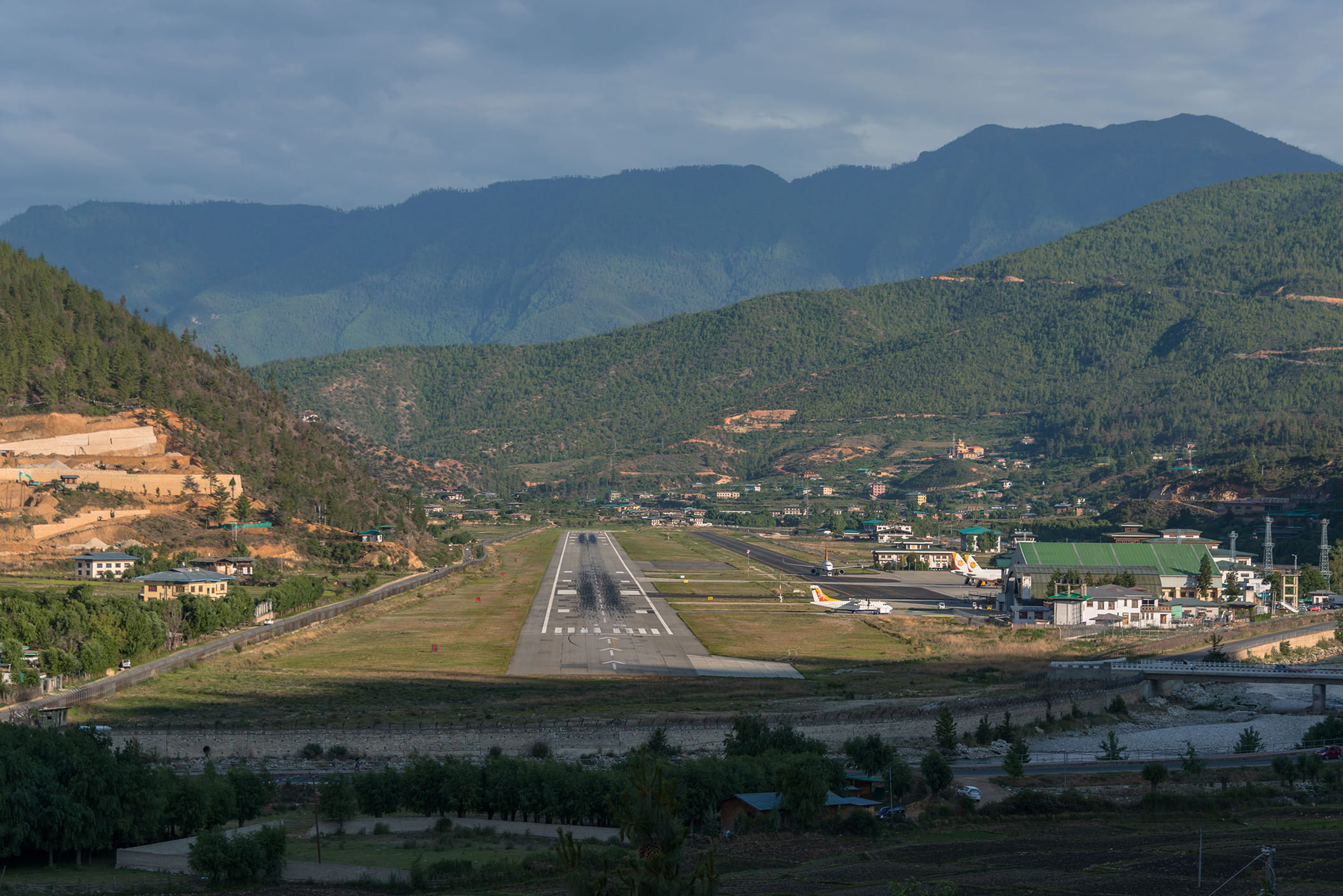
Your first view of Bhutan arrives before you even touch the ground. The flight into Paro follows the contours of the Himalayan landscape, descending into a valley surrounded by forested slopes and traditional farmhouses.
After completing arrival formalities, you’ll meet your local guide outside the airport and begin the scenic drive to Thimphu. The day is intentionally relaxed, giving you time to settle in and acclimatise to the altitude.
After checking into your hotel, enjoy your first taste of Bhutanese cuisine. Your guide can introduce you to local flavours and explain the ingredients and customs behind the meal.
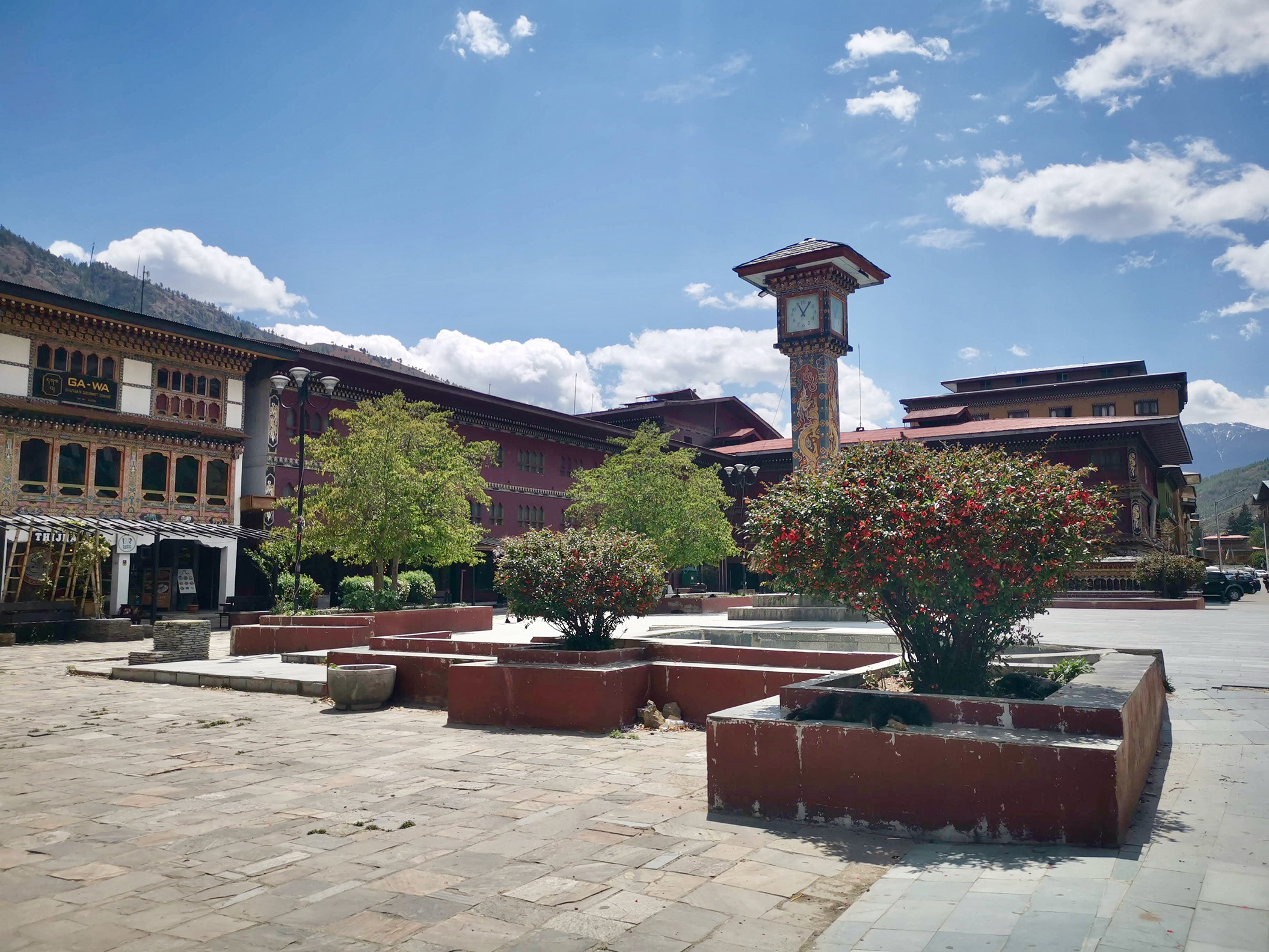
Later, take an easy walk through central Thimphu. Begin at Clock Tower Square, where carved wooden façades, prayer wheels and public gathering spaces offer a first look at daily life in the capital. Continue along Norzin Lam, passing handicraft shops, cafés and traditional buildings decorated with colourful murals and intricate woodwork.
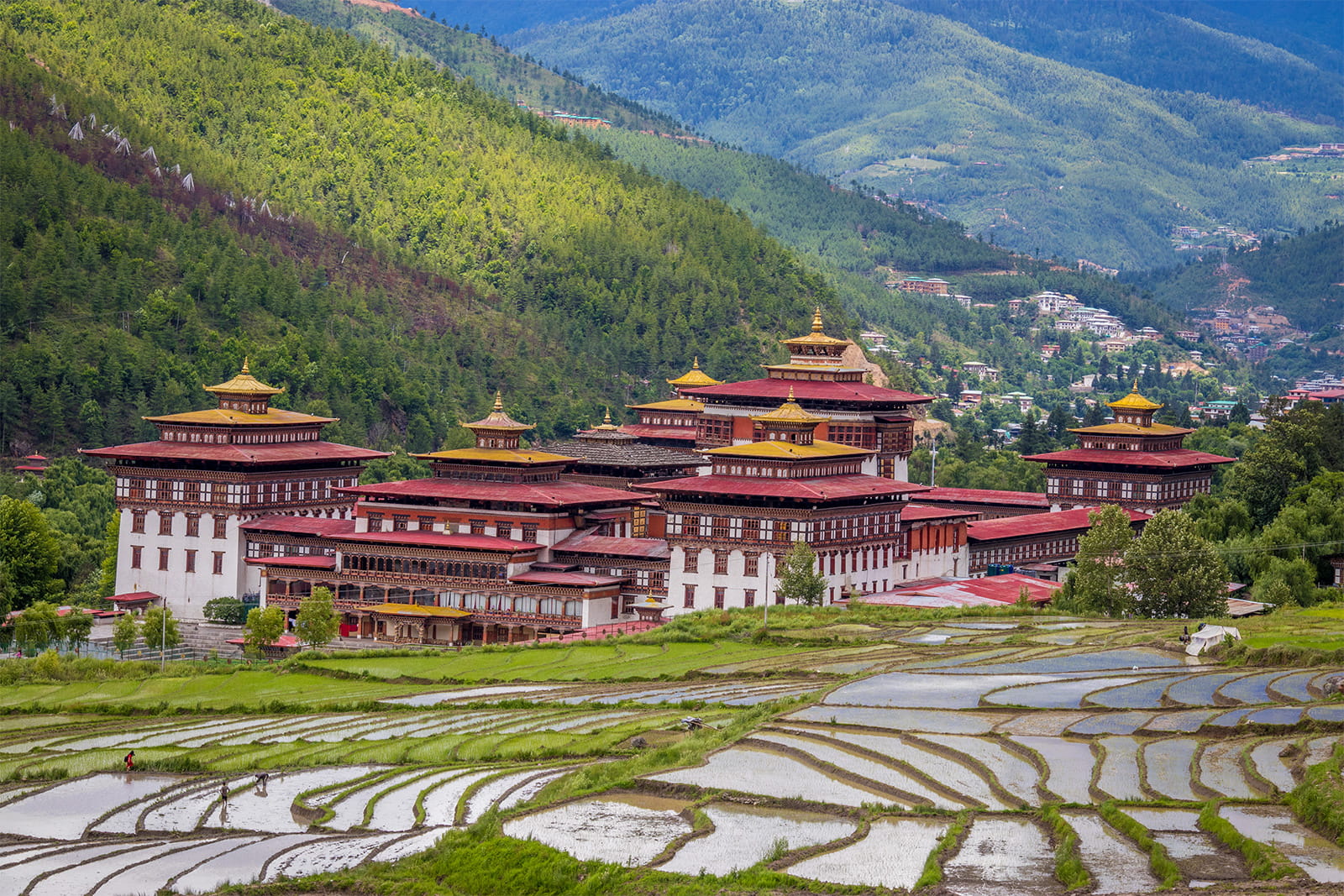
As evening falls, visit the surroundings of Tashichho Dzong. Illuminated against the night sky, its white walls and golden roofs create one of Thimphu’s most memorable evening scenes. Pause here to appreciate the scale and stillness of Bhutan’s political and spiritual centre.
Overnight in Thimphu.
Elevation: 2,334 metres
Thimphu brings together many sides of modern Bhutan. Government offices, monasteries, cafés, markets and traditional workshops share the same compact valley, creating a capital that feels both contemporary and deeply connected to its heritage.
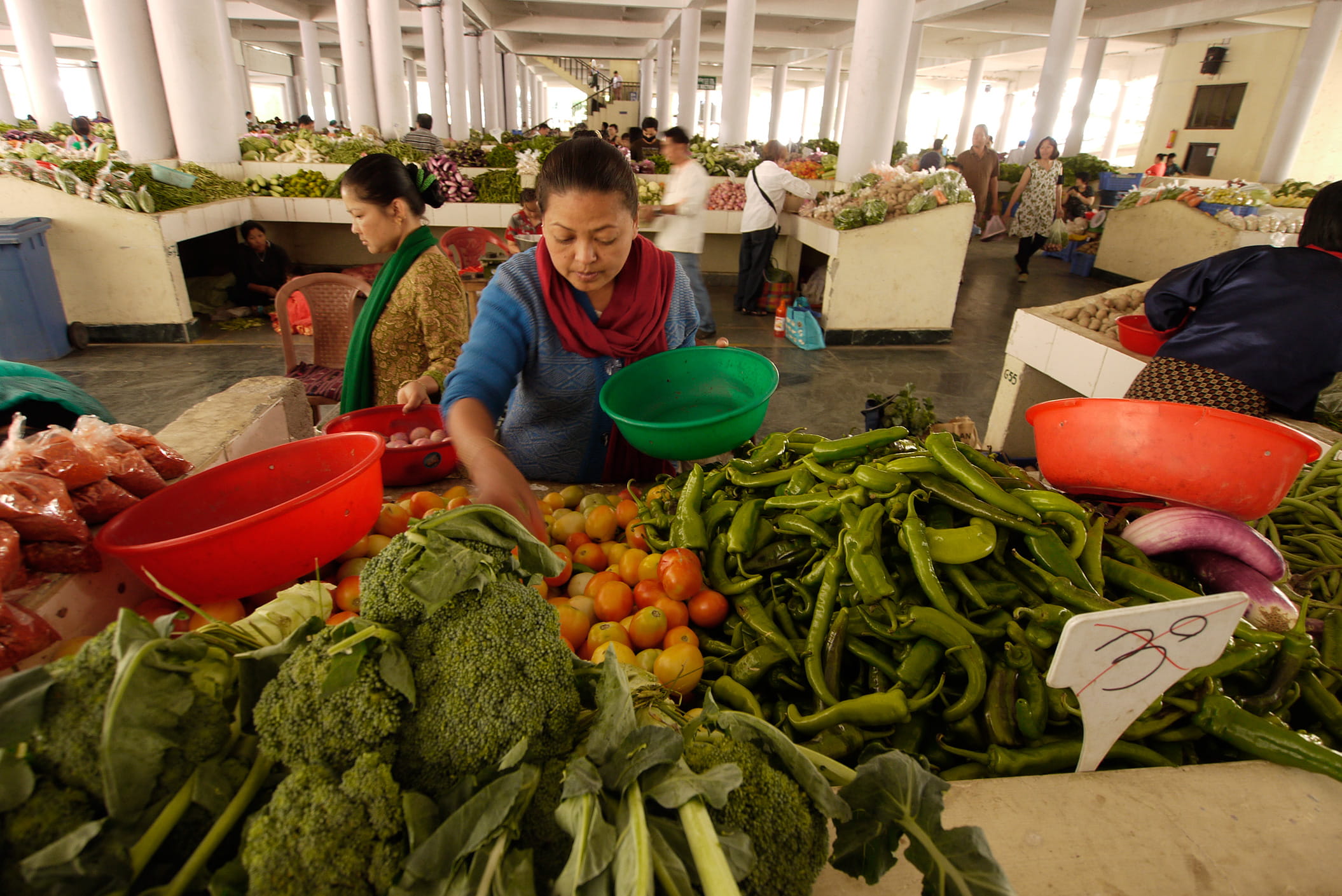
When your visit falls over the weekend, begin at the Centenary Farmers’ Market. Local farmers gather to sell seasonal fruit, vegetables, herbs and other produce from the surrounding valleys. Take time to watch people shop, sample local snacks and browse stalls selling wooden utensils, woven baskets and traditional textiles.
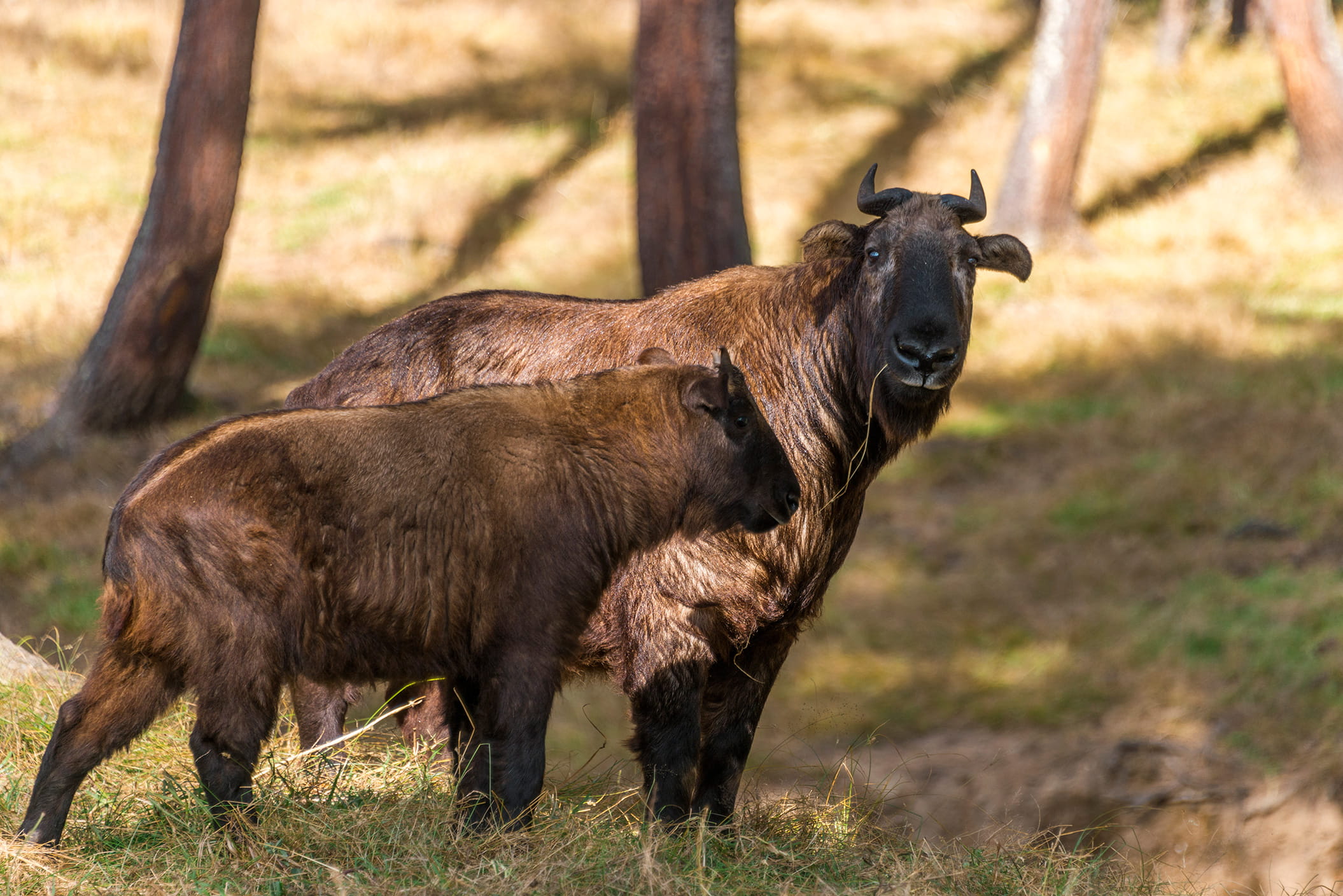
Continue to the Motithang Takin Preserve, a forested sanctuary dedicated to Bhutan’s national animal. The takin has the sturdy body of a cow and the features of a goat, giving it a distinctive appearance. Seeing these animals in a quiet woodland setting offers an accessible introduction to Bhutan’s wildlife and conservation efforts.
From here, drive towards Sangaygang, also known as the BBS Tower. Set above the city, the viewpoint looks across Thimphu Valley, with its hillside homes, public buildings and surrounding mountains spread below.
The Wangditse hike begins nearby. Follow an easy trail through pine, oak and rhododendron woodland, passing orchards and local homes on the way to Druk Wangditse Lhakhang. The hilltop temple dates from the 18th century and offers broad views towards Tashichho Dzong, the Buddha Dordenma statue and the wider valley.
Later, visit Tashichho Dzong during daylight hours. Known as the Fortress of the Glorious Religion, the complex houses government offices and Bhutan’s central monastic body. Walk through its courtyards and observe how religious and administrative life continue side by side.
Overnight in Thimphu.
Elevation: Approximately 1,242 to 3,140 metres
Approximate drive time: 2.5 hours, excluding stops
Leave Thimphu after breakfast and begin the journey towards Punakha, Bhutan’s former capital. The road climbs gradually through the mountains before reaching Dochula Pass.
At approximately 3,100 metres, Dochula is marked by 108 memorial chortens set against a landscape of forested ridges. Prayer flags move in the mountain wind, while clear days may reveal distant views of Bhutan’s snow-covered Himalayan peaks.
From Dochula, begin the Lungchutse hike. The trail climbs steadily through hemlock, birch and rhododendron forest, opening occasionally into meadows before returning beneath moss-covered trees, junipers and bamboo undergrowth.
The final approach follows a line of prayer flags towards Lungchutse Temple. From the ridge, you may enjoy wide views across the Himalayan range when weather conditions are clear. The route can continue towards Trashigang Goemba and Hongtsho village.
After the hike, enjoy a picnic lunch in a peaceful riverside setting. It is a chance to rest, take in the landscape and enjoy the changing atmosphere as you descend into the warmer Punakha Valley.
For those seeking an additional outdoor experience, an optional white-water rafting journey can be arranged on the Mo Chhu River. The approximately 10-kilometre route includes gentle to moderate Class 2 and 2+ rapids, passing through a broad valley towards Punakha Dzong. Birdlife along the river may include kingfishers and, on rare occasions, the endangered white-bellied heron.
The rafting experience carries an additional charge of approximately USD 150 to USD 250 per boat, payable in Bhutan. The cost may be shared when other travellers join.
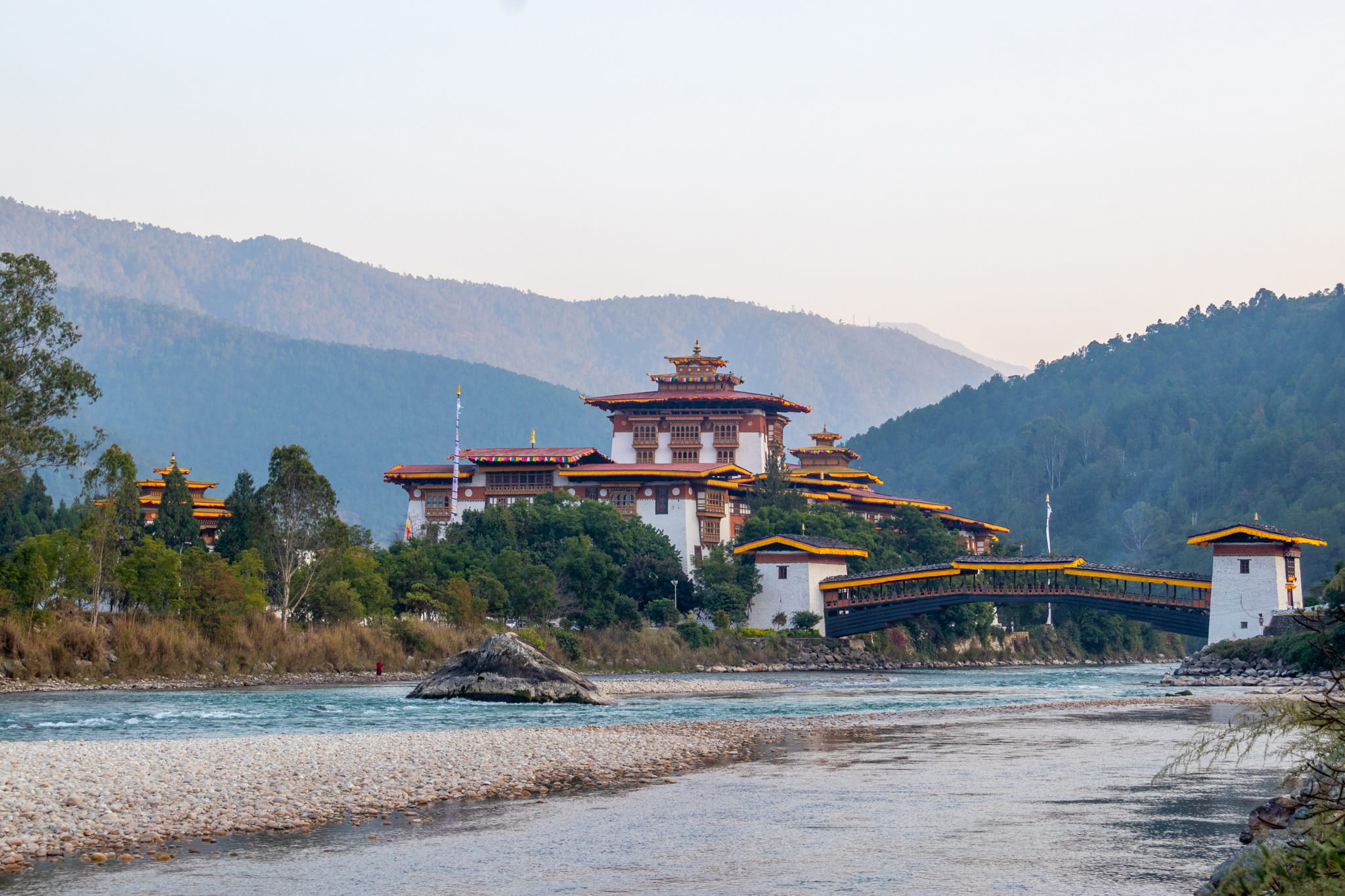
Complete the day at Punakha Dzong, positioned at the meeting point of the Pho Chhu and Mo Chhu rivers. Built in 1637 by Zhabdrung Ngawang Namgyal, the fortress has played a central role in Bhutan’s political and religious history.
Cross the traditional wooden cantilever bridge and enter a series of courtyards, temples and administrative spaces. Look closely at the painted details, carved woodwork and proportions of the buildings. The dzong remains the winter residence of Bhutan’s central monastic body.
Overnight in Punakha.
Elevation: Approximately 1,242 to 3,000 metres
Approximate drive time: 2 hours each way
Today’s journey leads into the broad highlands of Phobjikha, one of Bhutan’s most distinctive valleys. The landscape changes as the road climbs away from Punakha, passing forests, mountain settlements and open farmland.
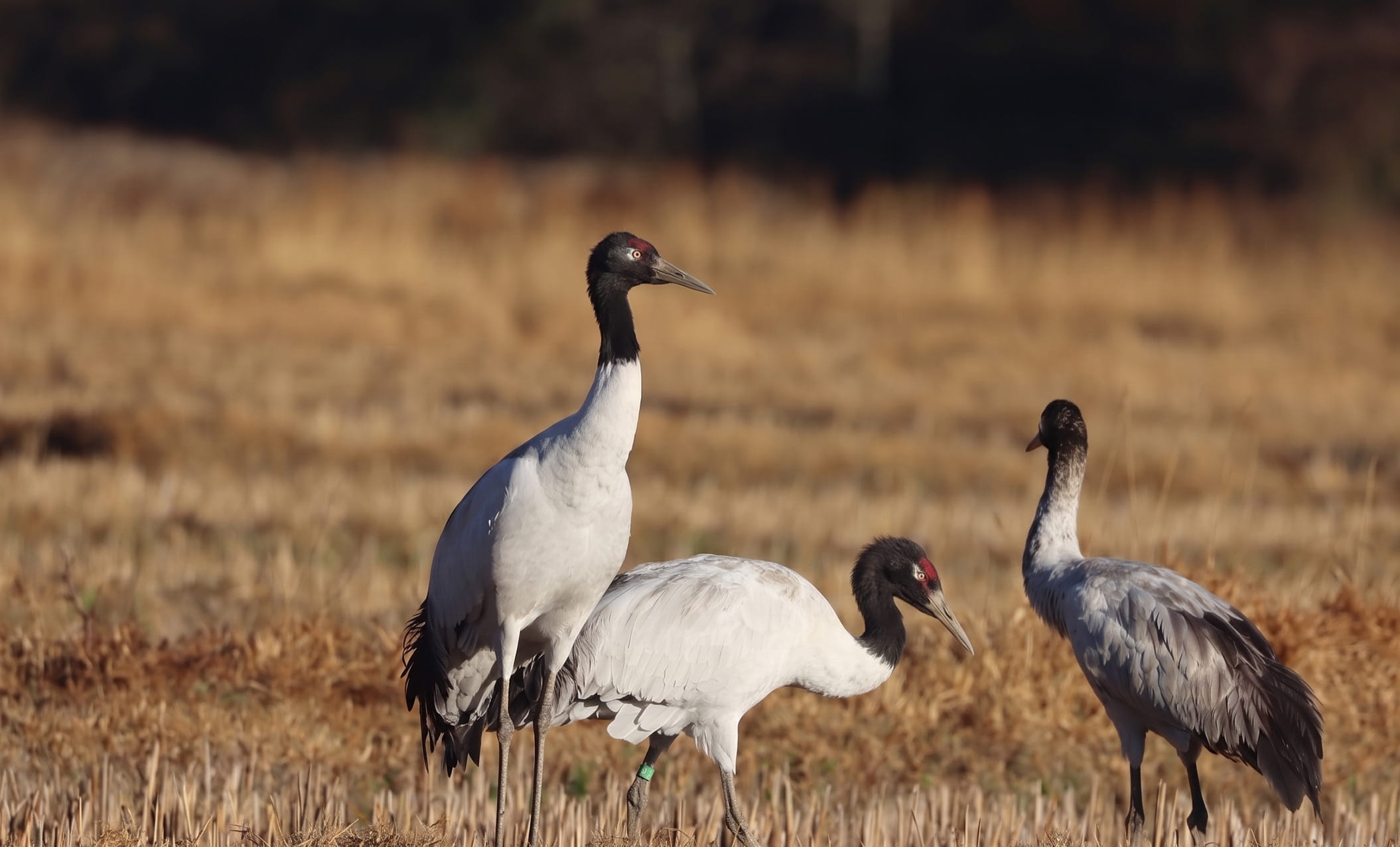
Phobjikha is best known as an important winter habitat for the endangered black-necked crane. The birds migrate from the Tibetan Plateau and are usually present from early November until the end of March.
Visit the Black-Necked Crane Information Centre to learn about the birds, their behaviour and the wetland ecosystem that supports them. High-powered spotting scopes allow visitors to observe the cranes without disturbing their habitat during the migration season.
The centre also contains ecological displays, a small library and a handicraft shop. Educational videos are generally shown at 10.00 am and 3.00 pm, with an additional entry charge of Nu 200 as stated in the original programme.
Continue with the Gangtey Nature Trail, an easy walk through one of Bhutan’s most peaceful landscapes. The route begins near Gangtey Goemba and passes through pine forest and Semchubara Village before descending towards the valley floor.
Traditional farmhouses, fields and distant mountain ridges accompany the walk. During winter, black-necked cranes may be seen feeding across the wetlands. Outside the migration months, the valley remains rewarding for its open scenery and rural atmosphere.
Before returning to Punakha, visit Sangchhen Dorji Lhuendrup Lhakhang and Nunnery. Set on a ridge, the temple looks across the Punakha, Toebesa and Wangdue Phodrang valleys. Dedicated to the Bodhisattva of Compassion, it remains an active place of prayer, study and spiritual practice.
Return to Punakha in the late afternoon.
Overnight in Punakha.
Elevation: Approximately 2,200 metres
Approximate drive time: 3 hours
After breakfast, leave Punakha and travel back across the mountains towards Paro. The drive offers another opportunity to appreciate the changing scenery between Bhutan’s warmer river valleys and its higher forested passes.
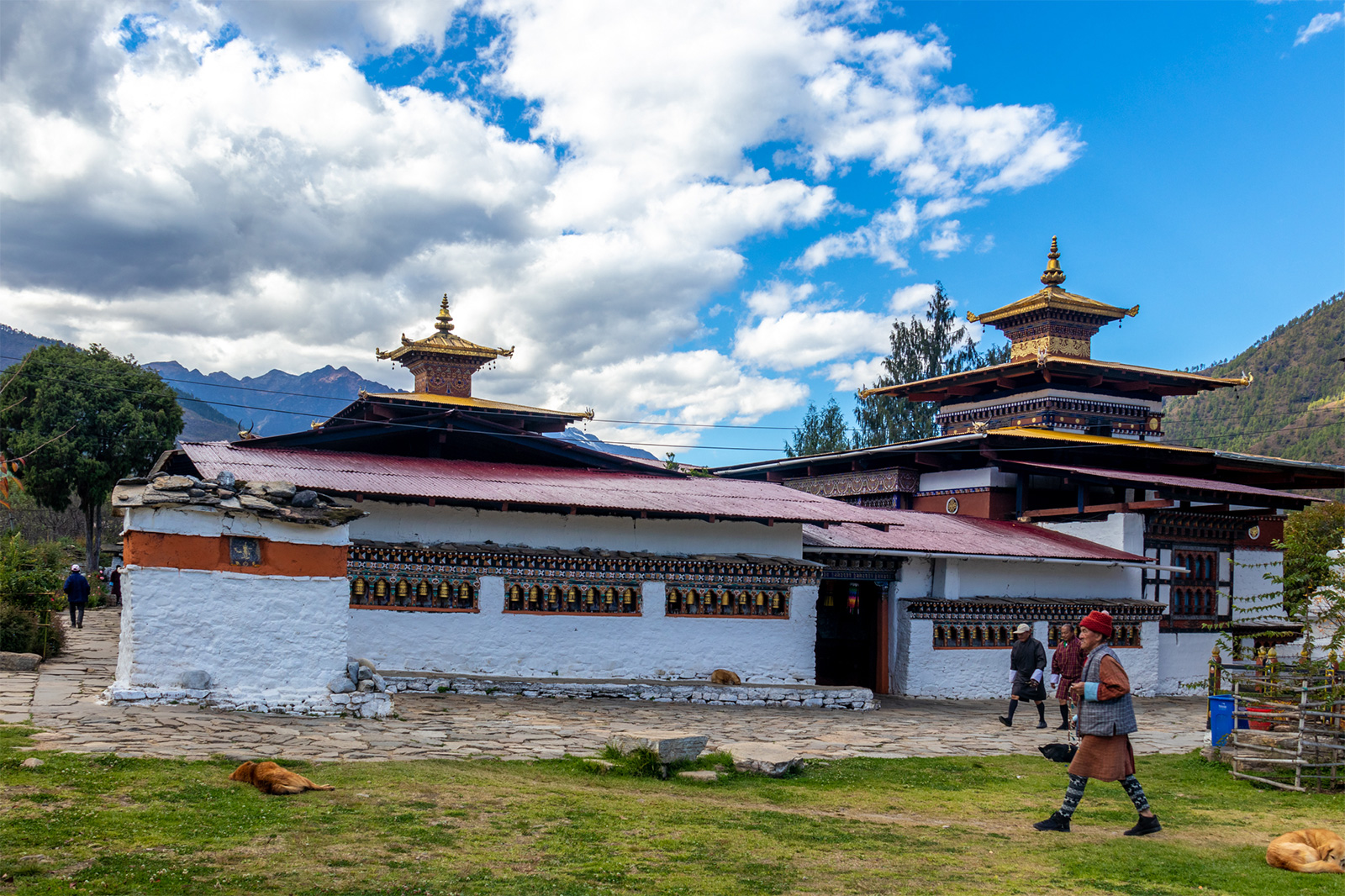
Your first cultural stop is Kyichu Lhakhang, one of Bhutan’s oldest and most sacred temples. Believed to have been built in the 7th century by the Tibetan Emperor Songtsen Gampo, the temple has been expanded and cared for by generations of Buddhist masters and devotees.
Within the temple grounds, take part in a butter lamp offering. In Bhutanese Buddhist tradition, the flame represents wisdom and knowledge, helping to dispel the darkness of ignorance. The ritual is simple and quiet, offering a personal moment of reflection during the journey.
Continue to Tachog Lhakhang, a 14th-century temple associated with the Tibetan yogi and bridge-builder Thangtong Gyalpo. Reach the site by taking a short walk and crossing a traditional iron chain bridge over the Paro River.
The temple rests on a hillside overlooking the surrounding valley. Inside, wall paintings and statues preserve stories connected with its founder and the Buddhist traditions of the region. The walk is easy, although there are some uneven steps and a suspension bridge crossing.
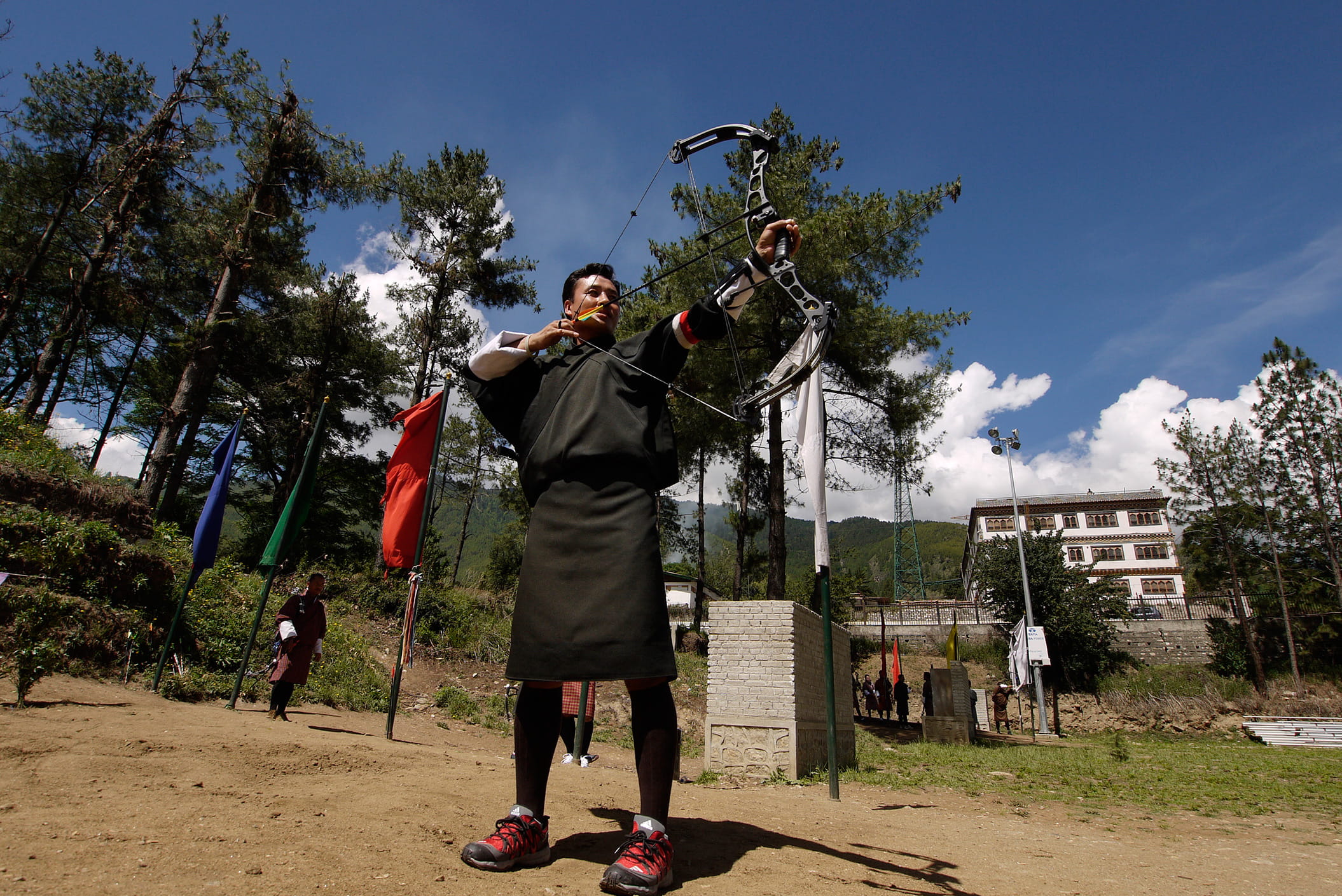
Later, try two of Bhutan’s traditional sports, archery and khuru. With guidance from your local host, learn how to hold the bow, take aim and release an arrow. You’ll also try khuru, a lively game in which large darts are thrown towards a distant target.
End the afternoon with time in Paro town. Browse local shops, handicraft boutiques and cafés housed within traditional wooden buildings. This is a good opportunity to look for textiles, crafts and small mementoes before returning to your hotel.
Overnight in Paro.
Elevation: Approximately 2,200 to 3,120 metres
Approximate activity duration: 6 hours
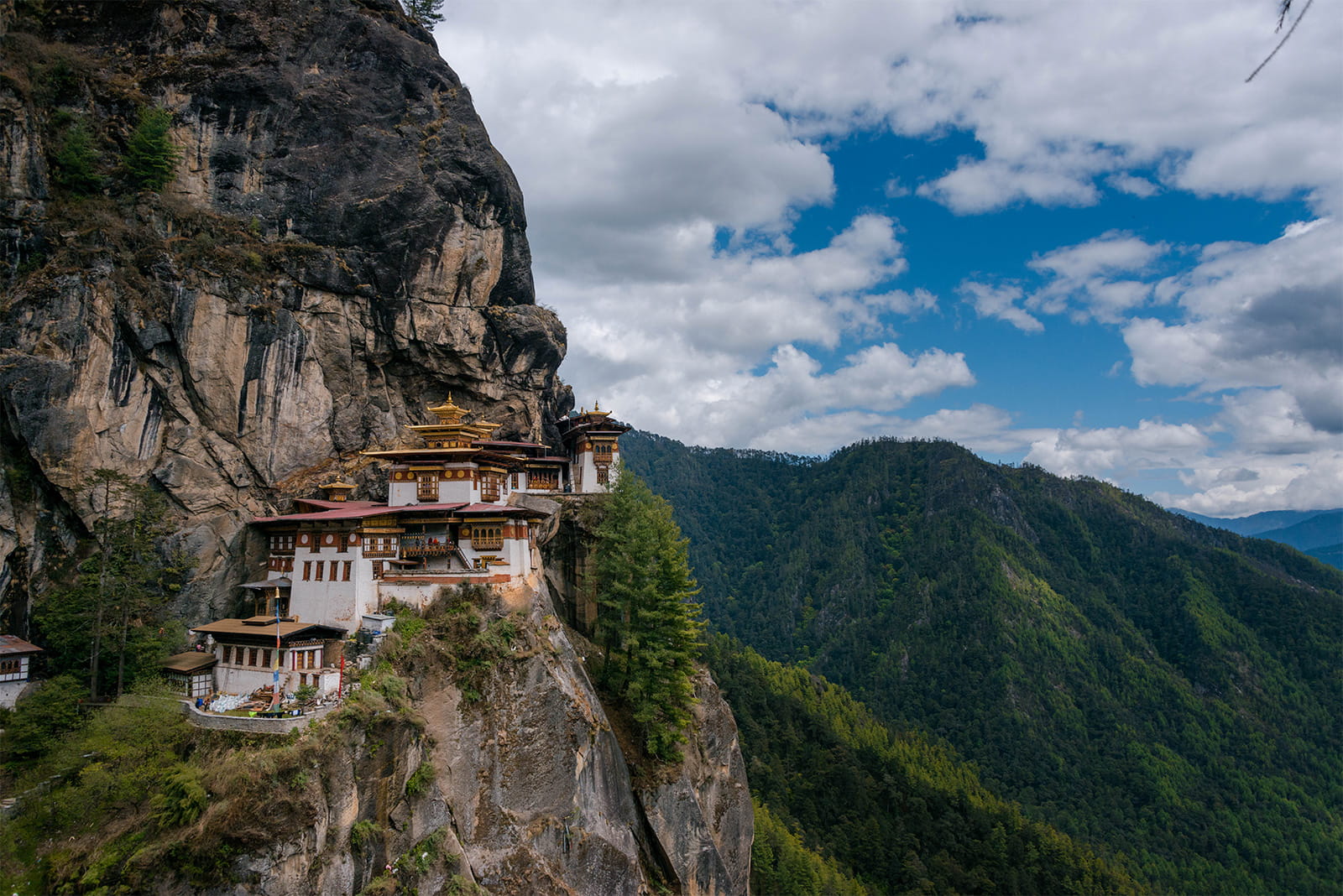
Today brings the journey’s most recognised experience, the hike to Taktsang Monastery, better known as Tiger’s Nest.
The monastery sits high above Paro Valley, built into a cliff at approximately 3,120 metres. According to Buddhist tradition, Guru Padmasambhava arrived at this site in the 8th century on the back of a tigress and meditated in a cave now contained within the monastery complex.
Begin the hike through pine forest, following a mountain trail marked by prayer flags. The ascent usually takes between two and three hours, depending on your pace and the amount of time spent at viewpoints.
A cafeteria partway up the trail offers a natural place to rest. From here, you’ll see the monastery across the valley, attached to the rock face above a deep forested gorge.
The final approach descends a series of steps before crossing towards the monastery. Inside, your guide will explain the history of the temples, meditation caves and sacred spaces.
The return walk follows the same trail back towards the valley. Although the hike requires steady effort, there is no need to rush. The experience is as much about the forest, silence and changing perspectives as reaching the monastery itself.
Afterwards, an optional traditional Bhutanese hot stone bath can be arranged. Fire-heated river stones are placed into a wooden bath filled with water and mountain herbs. The warmth can help soothe tired muscles after the hike.
Additional charges apply for the hot stone bath.
Overnight in Paro.
After breakfast, your guide and driver will accompany you to Paro International Airport for your onward flight.
As you leave the valley, there is time to reflect on the places and people encountered during the journey. The temples, mountain trails and river valleys form part of the experience, but many travellers remember the quieter details too. A conversation with a local guide, the sound of prayer flags in the wind or a shared meal can remain long after returning home.
We hope your time in Bhutan leaves you with meaningful memories, new friendships and a lasting connection to the Land of the Thunder Dragon.
Tashi Delek, and safe travels.