By Soul Trips · Updated on 25 September, 2026
China Weather by Month: Temperature, Rain and Seasonal Conditions
Understanding China weather by month begins with one simple fact: there is no single China climate. The country spans cold northern plains, humid eastern cities, subtropical southern coasts, deserts and some of the world's highest plateaus. Your experience will depend far more on your route than on a national average.
This guide gives you a useful month by month picture for popular destinations. It avoids false precision because weather varies each year and temperatures can shift quickly in mountains. Use it to choose a season and build a packing list, then check the China Meteorological Administration and local forecasts near departure.
For ideas that connect the weather with real routes, start with the SoulTrips China destination guide. You can then compare Beijing, Yunnan, Zhangjiajie, Xinjiang and other regions on a practical itinerary.
China weather by month at a glance
Average High and Low Temperature in China
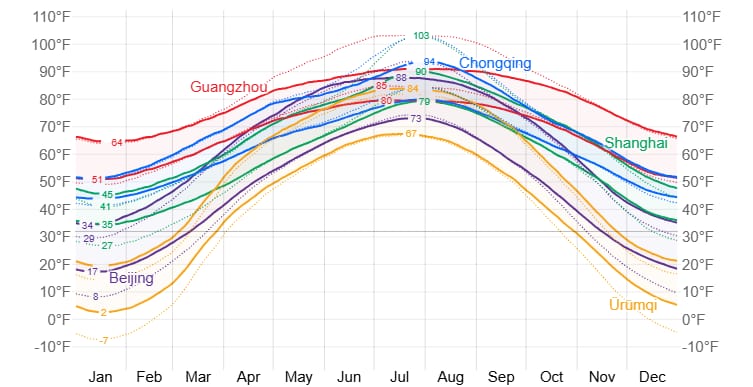
Source:https://weatherspark.com/countries/CN
The broad seasonal rhythm is straightforward, although local conditions differ:
- January and February are cold in the north, cool in much of the east and milder in the far south.
- March to May bring warming temperatures, blossom, variable rain and good walking conditions in many regions.
- June to August are hot and humid in many cities, wet in the south and east, and more comfortable in some high areas.
- September to November bring cooling temperatures, clearer conditions in many northern areas and strong demand around early October.
- December marks the return of winter, with dry cold in the north and cool damp conditions in parts of the east and south.
Rainfall is not the only factor. Humidity, elevation, wind and large changes between day and night can affect comfort just as much as the number shown on a forecast.
China's main climate regions
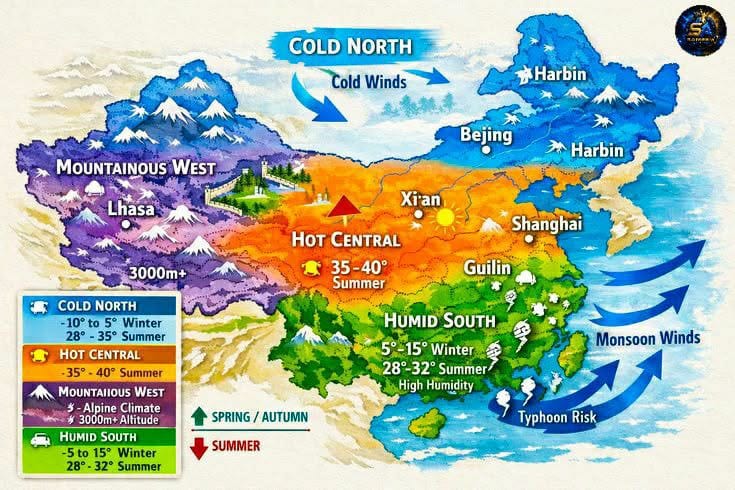
Beijing, Xi'an and northern China
Northern China has four clear seasons. Winters are cold and usually dry. Spring warms quickly and can be windy. Summers are hot, with most rain falling in the warmer months. Autumn is often cool, clear and comfortable.
Shanghai and eastern China
Shanghai, Hangzhou and Suzhou have humid summers, frequent rain and cool winters that can feel colder because of dampness. Spring and autumn are moderate but still changeable. A compact umbrella is useful in most seasons.
Southern China and Chaoshan
The south stays warm for longer. Spring can be humid, summer is hot and wet, and tropical systems may affect coastal travel. Autumn and early winter are often pleasant for city walks and food focused journeys. The Authentic Chaoshan Heritage and Culture Journey is a useful example of a southern route.
Yunnan
Yunnan's weather changes with altitude. Kunming is known for relatively mild conditions. Dali and Lijiang have sunny days and cooler nights, while Shangri La is much higher and colder. The wet season usually overlaps with summer, but rain often comes in bursts rather than lasting all day.
Zhangjiajie
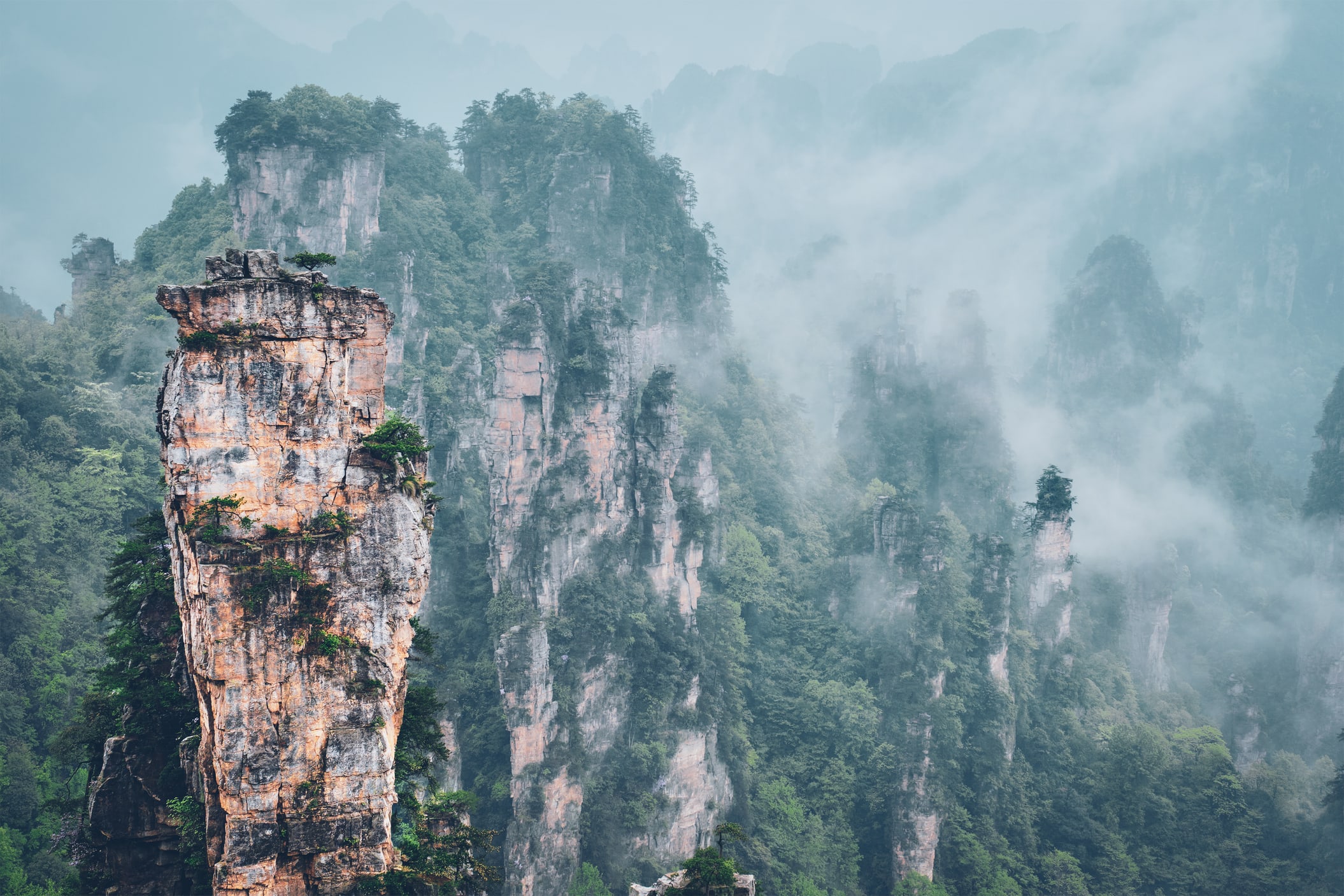
Zhangjiajie is humid, forested and often misty. Rain creates the landscape's green character, yet it can also obscure the sandstone pillars. Conditions can change during the same day, so a flexible plan is more useful than trying to guarantee perfect visibility.
Xinjiang
Xinjiang is dry and continental, with hot summers in lower basins, cold winters and big differences between day and night. Mountain areas are much cooler than desert cities. A single itinerary may require sun protection and a warm layer on the same day.
January weather in China
January is midwinter. Beijing and Xi'an are cold, with freezing nights common. The air is often dry, and clear days can be bright. Shanghai is less severe but frequently feels chilly and damp. Southern China is milder, although cool spells still occur.
Yunnan can be appealing in January. Kunming and lower parts of Dali may have comfortable sunny afternoons, while mornings, nights and higher Lijiang or Shangri La are cold. Xinjiang is wintry and some scenic routes have limited access.
January suits travellers who enjoy quieter cultural sites and winter atmosphere. Pack thermal layers, an insulated coat, gloves and moisturiser for the dry north. Check dates for the Spring Festival travel period, which changes each year and can greatly increase transport demand.
February weather in China
February remains cold in northern China, although daylight gradually increases. Beijing is usually dry. Xi'an can feel raw on overcast days. Shanghai and the lower Yangtze remain cool and may be wet.
The south is more comfortable for outdoor food and heritage tours, but humidity can make temperatures feel cooler. Yunnan offers a useful contrast between mild lower cities and cold high areas. Blossom may appear in warmer districts, though timing changes every year.
The variable Spring Festival period can fall in January or February. Transport stations, trains and airports become exceptionally busy before and after the main holiday. Some family run businesses close or shorten hours, while major visitor attractions may be crowded.
March weather in China
March begins the transition to spring. Beijing can swing between cold mornings and mild afternoons. Wind is possible, and trees may still look bare early in the month. Xi'an follows a similar warming pattern.
Shanghai, Hangzhou and Suzhou become softer and greener, with increasing rain. Southern China grows warmer and more humid. In Yunnan, March is often a good month for a multi stop route, but you still need a warm layer for Lijiang and Shangri La.
Zhangjiajie begins to green, and mist can create atmospheric views. Pack layers, a light waterproof jacket and closed shoes. March works well if you prefer fewer people than the later spring peak and accept changing conditions.
April weather in China
April is one of the strongest all round travel months. Beijing and Xi'an are generally comfortable for walking, although cool evenings and windy days are possible. Eastern China has gardens, blossom and periodic rain.
Yunnan is attractive across Kunming, Dali and Lijiang. Higher Shangri La remains much cooler, particularly at night. Zhangjiajie is lush, with rain and mist forming part of the experience.

April can include public holiday travel around the Qingming period, so confirm the current calendar. Carry a compact umbrella and a warmer evening layer. For a route through several elevations, the Grand Yunnan Journey shows why versatile clothing matters.
May weather in China
May brings warmer days across much of China. Beijing and Xi'an are often pleasant early in the month, then increasingly warm. Shanghai becomes more humid and rain remains possible. The south can feel summery.
Yunnan continues to offer good touring conditions, though rain becomes more likely as the month progresses. Zhangjiajie is green and warm, with showers and changing visibility. Xinjiang enters a practical travel season in many areas, while high passes may still be cool.
The Labour Day holiday around the start of May creates significant domestic demand. If your trip overlaps, expect busy trains, hotels and attractions. Outside the holiday, May is excellent for combining culture and nature.
June weather in China
June marks the start of meteorological summer in many regions. Beijing becomes hot, and thunderstorms are possible. Shanghai and the lower Yangtze can be humid and very wet. Southern China also experiences heavy rain.
Yunnan's wet season becomes more established. Rain can freshen the landscapes, and higher destinations may still feel comfortable compared with lowland cities. Zhangjiajie is warm, humid and lush. Waterproof footwear and a light rain jacket are more useful than a heavy coat.
Xinjiang offers long daylight hours, but daytime heat increases in lower basins. Mountain areas remain cooler. Protect yourself from the sun even when the air feels fresh because elevation and clear skies intensify exposure.
July weather in China
July is hot across many cities. Beijing, Xi'an, Shanghai, Chengdu and Chongqing can all feel intense, with humidity strongest in the east and central south. Rain often arrives as heavy showers or storms rather than steady drizzle.
This is also a busy family travel month. Start outdoor sightseeing early, use museums or tea houses during the hottest hours and return outside later. Hydration, shade and a realistic pace matter more than fitting every landmark into one day.
Yunnan and high mountain areas provide cooler alternatives, but summer rain is normal. Xinjiang's lower areas can be extremely hot, while upland grasslands are milder. Carry a warm layer for mountain evenings despite the season.
August weather in China
August remains hot and humid in much of eastern, central and southern China. Thunderstorms and heavy rain can disrupt roads or flights. Coastal areas may experience tropical weather, so monitor local warnings and allow flexibility around essential connections.
Yunnan is green and wet. Clouds can hide mountain views, then clear quickly. Zhangjiajie has similar variability, with mist, rain and strong visitor numbers. Beijing and Xi'an are hot, but early morning visits can still be rewarding.
Summer travel is entirely possible when the route respects the climate. Choose well located hotels, avoid excessive midday walking and include indoor cultural experiences. A Yangtze sailing such as the Yangtze Explorer luxury cruise can add a more relaxed rhythm.
September weather in China

September begins with lingering summer warmth, then becomes more comfortable. Beijing and Xi'an usually improve through the month. Shanghai remains warm and may still see rain. Yunnan becomes gradually drier, while Zhangjiajie stays green.
Xinjiang is attractive in September, with cooler days in many areas and autumn beginning at different elevations. Nights can turn cold quickly. Pack a warm layer even if the daytime forecast looks mild.
September is popular for longer journeys because it supports several climate zones. The Luxury Rail Expedition from Chengdu to Xinjiang demonstrates how a route can move from humid Sichuan towards drier western landscapes.
October weather in China
October is one of the most appealing months for broad China travel. Beijing often has crisp air and comfortable walking temperatures. Xi'an is cool and pleasant. Shanghai and the south remain milder, while Yunnan offers good conditions across many routes.
The key issue is National Day travel in early October. Major sites, trains and hotels can be extremely busy. If you can, begin after the main holiday movement has eased. Later October often brings an excellent balance of autumn colour and manageable temperatures.
Zhangjiajie may have clearer views than in summer, although mountain weather is never guaranteed. Xinjiang cools rapidly, especially in mountains and northern areas. Confirm road conditions for remote routes.
November weather in China
November is a transition month. Beijing and Xi'an become cold, particularly at night, but early November can still be good for cultural touring. Shanghai is cooler and may feel damp. Southern China becomes comfortable for walking and dining.
Yunnan remains attractive, with sunny spells and cooler nights. Shangri La requires proper winter layers. Zhangjiajie is quieter and cold mornings are common. Some high routes in Xinjiang move into winter conditions.
November suits travellers who value fewer people and do not mind carrying warmer clothing. Daylight is shorter, so plan major outdoor visits earlier and avoid overloading the schedule.
December weather in China
December brings winter back to the north. Beijing is cold and dry, and wind can make exposed sections of the Great Wall feel severe. Xi'an is cold, while Shanghai is cool and often damp.
Southern China is comparatively mild, making Chaoshan and other food focused routes appealing. Yunnan has clear days in many areas, though high places are cold. Winter weather may limit some remote western or mountain programmes.
December can be calmer outside local holiday peaks. Pack for the coldest part of your route, not the warmest city. Indoor temperatures also vary, so layers remain useful.
Rain, humidity and tropical weather
Late spring and summer are wetter across much of southern and eastern China. Rainfall can be local, so one district may experience a downpour while another remains dry. Mountain cloud often changes faster than a city forecast suggests.
Coastal provinces can be affected by tropical storms. These may alter flights, rail services and attraction operations. Follow official warnings and your operator's advice. Never continue into a closed scenic area because a general forecast looked acceptable.
Humidity is especially important in Shanghai, Chengdu, Chongqing and the south. Choose breathable clothing, take breaks and drink water regularly. Laundry services can be more useful than carrying excessive clothes on a long journey.

Air quality and visibility
Air quality varies with season, weather and location. Rain or wind may improve visibility, while still conditions can reduce it. Check official local readings rather than relying on a historic reputation for a city.
If you have respiratory concerns, speak with a medical professional before travelling and carry any prescribed medicine. A flexible programme lets you move demanding outdoor activities to a clearer day when possible.
Packing for China weather
A modular wardrobe is more reliable than one heavy outfit. Choose pieces that can be combined as the temperature changes.

- Base layers that dry quickly.
- Light knitwear or fleece for air conditioned interiors and cool evenings.
- Compact waterproof outer layer.
- Comfortable shoes with grip.
- Sun hat, sunglasses and sunscreen.
- Warm hat and gloves for winter or high altitude routes.
- Small umbrella for cities.
- Refillable water bottle and compact day bag.
If you are going to Shangri La or another elevated region, review the SoulTrips guide to high altitude travel. Weather and altitude should be considered together.
Planning around weather disruption
Place a buffer before an international flight when your route includes remote roads, mountain airports or several separate tickets. Avoid planning an irreplaceable excursion immediately after a tight connection. Good travel design allows a guide to change the order of visits without losing the essence of the trip.
Reserve popular attractions in advance, but understand their change rules. Some sites use timed admission linked to your passport. The SoulTrips travel tips offer broader guidance, while booking an international trip in advance helps with seasonal demand.
Frequently asked questions
-
Which month has the best weather in China?
April, May, September and later October suit many classic routes. No month is best everywhere, so match the choice to the regions and elevation on your itinerary.
-
What is the hottest month in China?
July and August are usually among the hottest months in many cities. Local peaks vary, and desert basins can feel very different from mountain areas.
-
What is the coldest month in China?
January is typically the coldest period across much of northern China. High altitude areas and Xinjiang can experience severe winter conditions beyond that simple national pattern.
-
When does it rain most in China?
Late spring and summer are generally wetter in the south and east. Yunnan and Zhangjiajie also receive substantial summer rain, while Xinjiang remains much drier.
-
Is Beijing cold in winter?
Yes. Beijing winters are cold and dry, with freezing nights common. Wind can make outdoor sites feel colder, so an insulated coat and warm accessories are important.
-
Is Yunnan warm all year?
Yunnan is milder than many regions, but elevation changes everything. Kunming can be comfortable while Lijiang is cool and Shangri La is wintry.
-
Does rain ruin Zhangjiajie?
Not necessarily. Mist can create beautiful views, though heavy cloud may hide the pillars. Allow extra time and let your guide adjust the day's order.
-
What should I wear in China in October?
Bring light layers, a warmer evening piece and comfortable shoes. Northern and high altitude stops need more warmth than Shanghai or the south.
-
Is summer a bad time to visit China?
Summer can be rewarding if you accept heat and rain. Early starts, highland destinations and a slower pace make a substantial difference.
-
Where can I check current China weather?
Use official meteorological information and a reliable local forecast close to travel. Your hotel, guide or transport operator can add site specific advice when mountain or storm conditions affect access.
Use China weather by month to shape your route
China weather by month is most useful when it helps you make practical choices, not when it becomes a search for one perfect week. Spring and autumn give the broadest comfort, summer rewards thoughtful pacing, and winter offers a quieter view of many cultural cities.
Share your dates, preferred regions and comfort level through Plan My Trip, or contact SoulTrips. A well designed route can work with the season and turn regional differences into part of the experience.