By Soul Trips · Updated on 18 September, 2026
Getting Around Bhutan: Flights, Private Vehicles and Mountain Roads
Getting around Bhutan is easiest in a private vehicle with an experienced local driver. Mountain roads are winding, public transport is not designed around visitor itineraries and self drive rental cars are not available. Domestic flights can shorten journeys to central, eastern and southern Bhutan, but schedules are limited and weather dependent.
Transport is not simply a practical detail in Bhutan. Road journeys reveal rivers, villages, forested passes and changes in altitude that help you understand the country. The key is to plan realistic days and avoid measuring distance by kilometres alone.
This guide explains the main transport options, likely road conditions, guide requirements and the best way to connect Paro, Thimphu, Punakha, Phobjikha, Bumthang and the east.
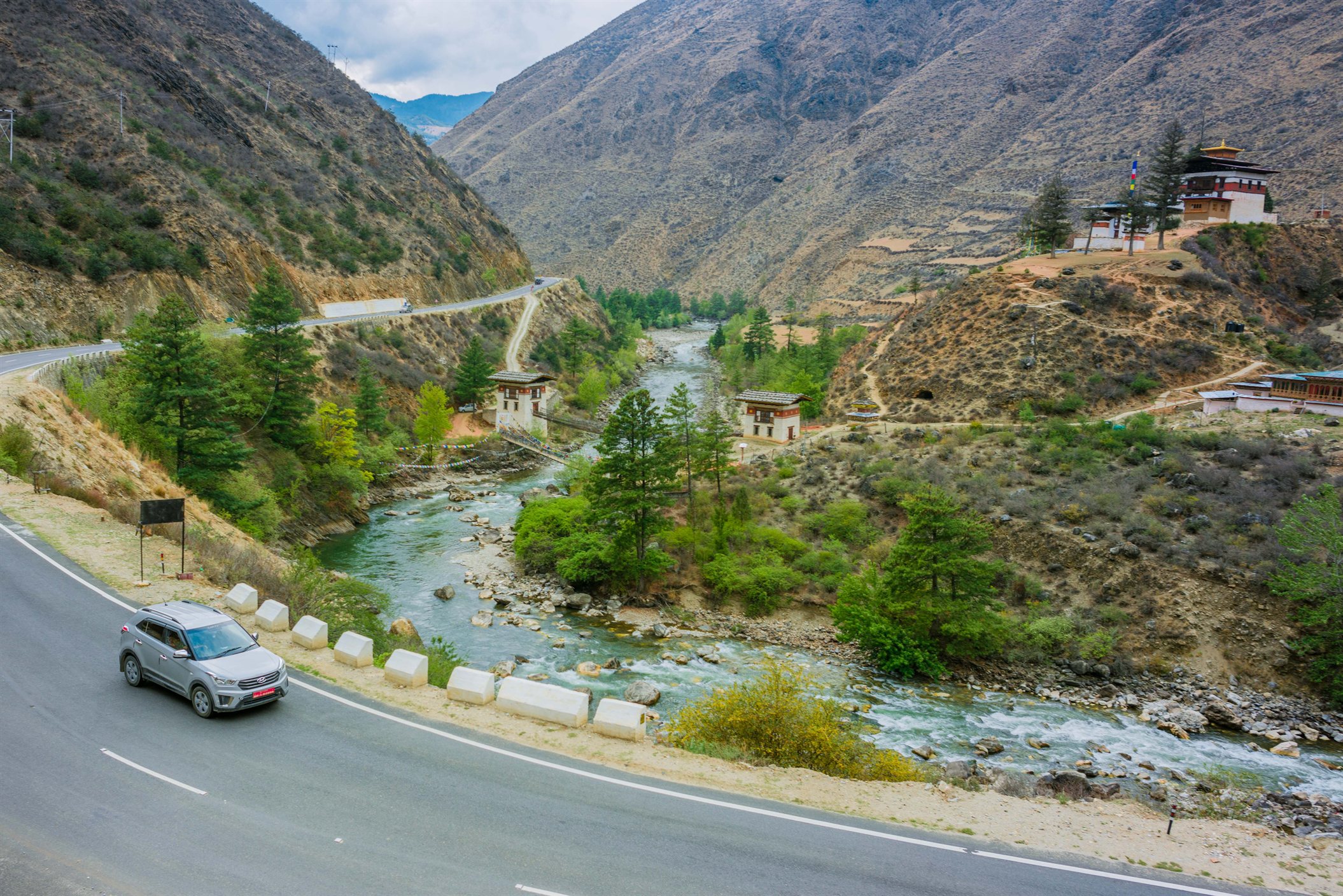
Getting around Bhutan at a glance
- Best option for most visitors: Private vehicle with a local driver
- Self drive rental: Not available
- Airport transfer: Prearranged vehicle or taxi from the airport rank
- Public airport transport: No regular public service from Paro airport
- Domestic airports: Paro, Bumthang, Yonphula and Gelephu
- Route permit: No longer required when travelling with a certified guide
- Road conditions: Winding, mountainous and vulnerable to weather disruption
- Best planning rule: Treat every long transfer as part of the day
What is the best way to travel around Bhutan?
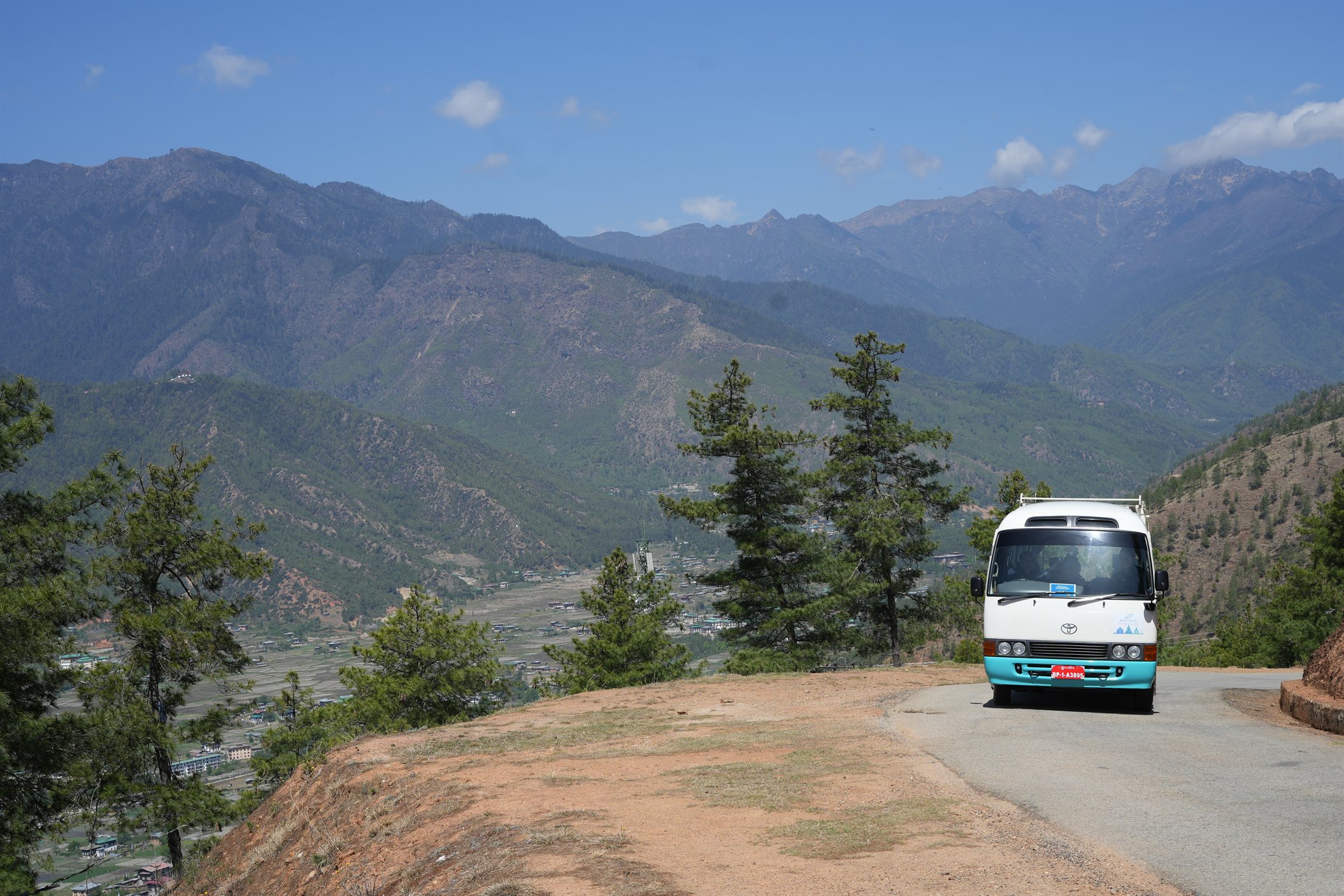
A private vehicle and driver are the most practical choice for a first trip. This arrangement gives you flexibility for viewpoints, meal stops, temple visits and changing local conditions. Your driver also understands the road surface, traffic patterns and mountain weather.
The vehicle type depends on group size and route. A comfortable car or sport utility vehicle may suit one to three travellers, while larger groups need a van or bus. Ask about luggage space, seat comfort, air conditioning and heating before confirmation.
If you book a private SoulTrips journey, local transport is normally coordinated with the guide and accommodation. The SoulTrips Bhutan destination page presents routes designed around realistic valley travel.
Can tourists drive themselves in Bhutan?
Bhutan does not currently offer self drive vehicle hire for international visitors. It is not possible to rent a self drive vehicle in the country.
Separate rules exist for bringing a qualifying private vehicle across a land border. This involves a daily vehicle charge, guide requirement and documents such as a driving licence, insurance, pollution control certificate and entry permit. It is mainly relevant to regional overland travellers.
For most international visitors, a local driver is safer and more convenient. Road signs, mountain bends, construction and weather can make unfamiliar driving demanding.
Do you need a guide to travel around Bhutan?
Visitors must be accompanied by a certified guide. Guides are also required for treks, monuments, dzongs and travel beyond land border towns.
Route permits are no longer required when you travel with a guide certified by the Department of Tourism. Local access procedures can still change, and a guide helps coordinate checkpoints, site opening times and appropriate behaviour at religious places.
What are Bhutan’s mountain roads like?
Bhutan’s roads follow steep valleys, cross high passes and bend around mountain slopes. A short straight line on a map can require several hours of driving. Average speeds are lower than on Singapore expressways.
Main routes between Paro, Thimphu and Punakha are paved, but road works, local traffic, fog, rain, snow and landslides can affect conditions. Smaller rural roads may be narrow or uneven.
Motion sensitivity is common on longer transfers. Sit towards the front, look ahead, eat lightly and carry medication recommended by your doctor. Ask for regular stops instead of trying to complete a difficult journey without breaks.
The road itself can be rewarding. Prayer flags, farmhouses, forest changes and roadside shrines give each transfer cultural and visual value.
Paro airport to Thimphu
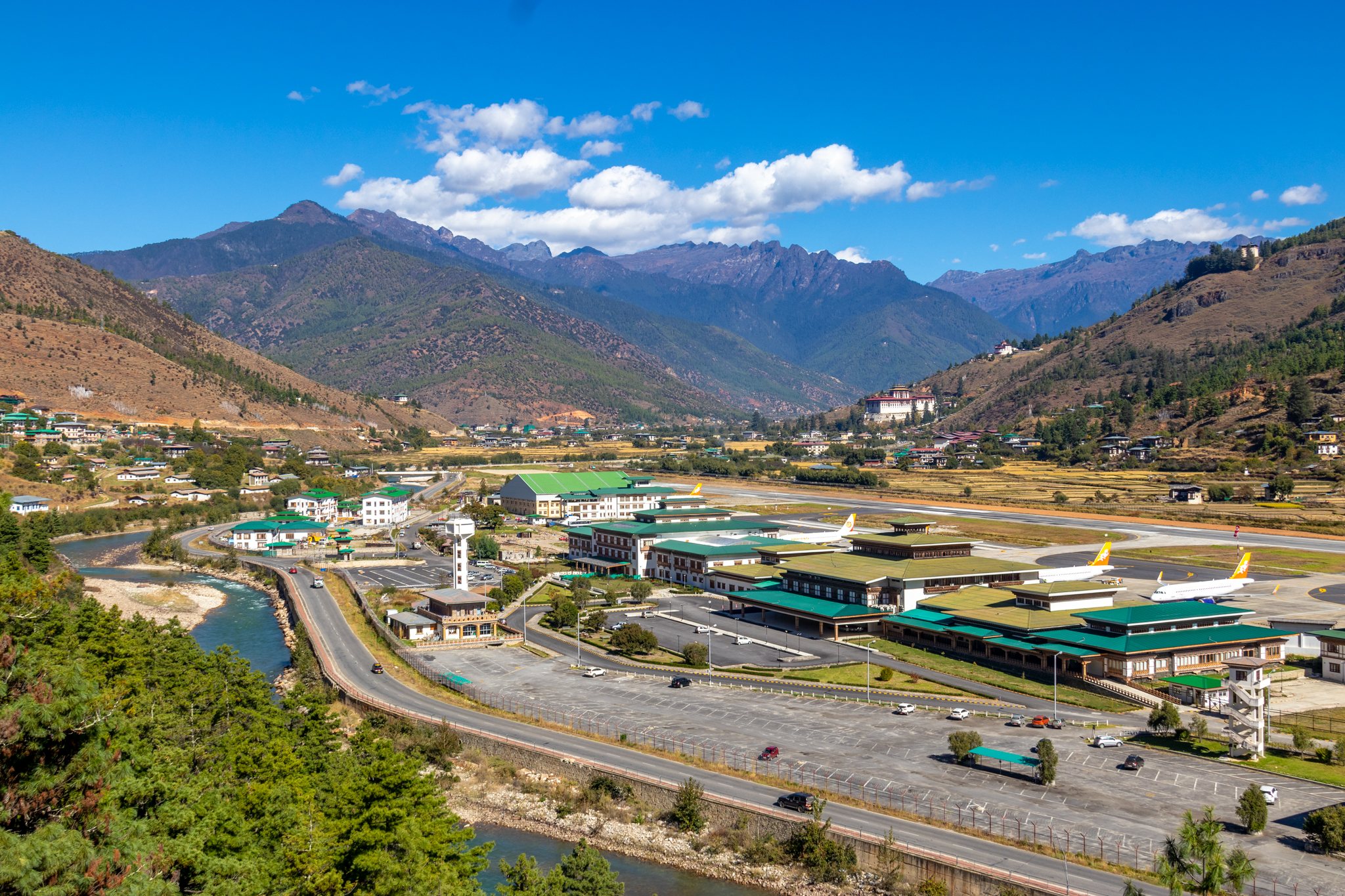
The drive from Paro International Airport to Thimphu commonly takes about one and a half hours in normal conditions, excluding stops. The route follows the Paro Chhu and Wang Chhu rivers.
Many itineraries go directly to the capital after landing. Keep the arrival afternoon light because the flight may begin early and both valleys sit above 2,000 metres.
You can also stay in Paro first, especially after a late arrival. The best sequence depends on flight time and hotel availability.
Thimphu to Punakha
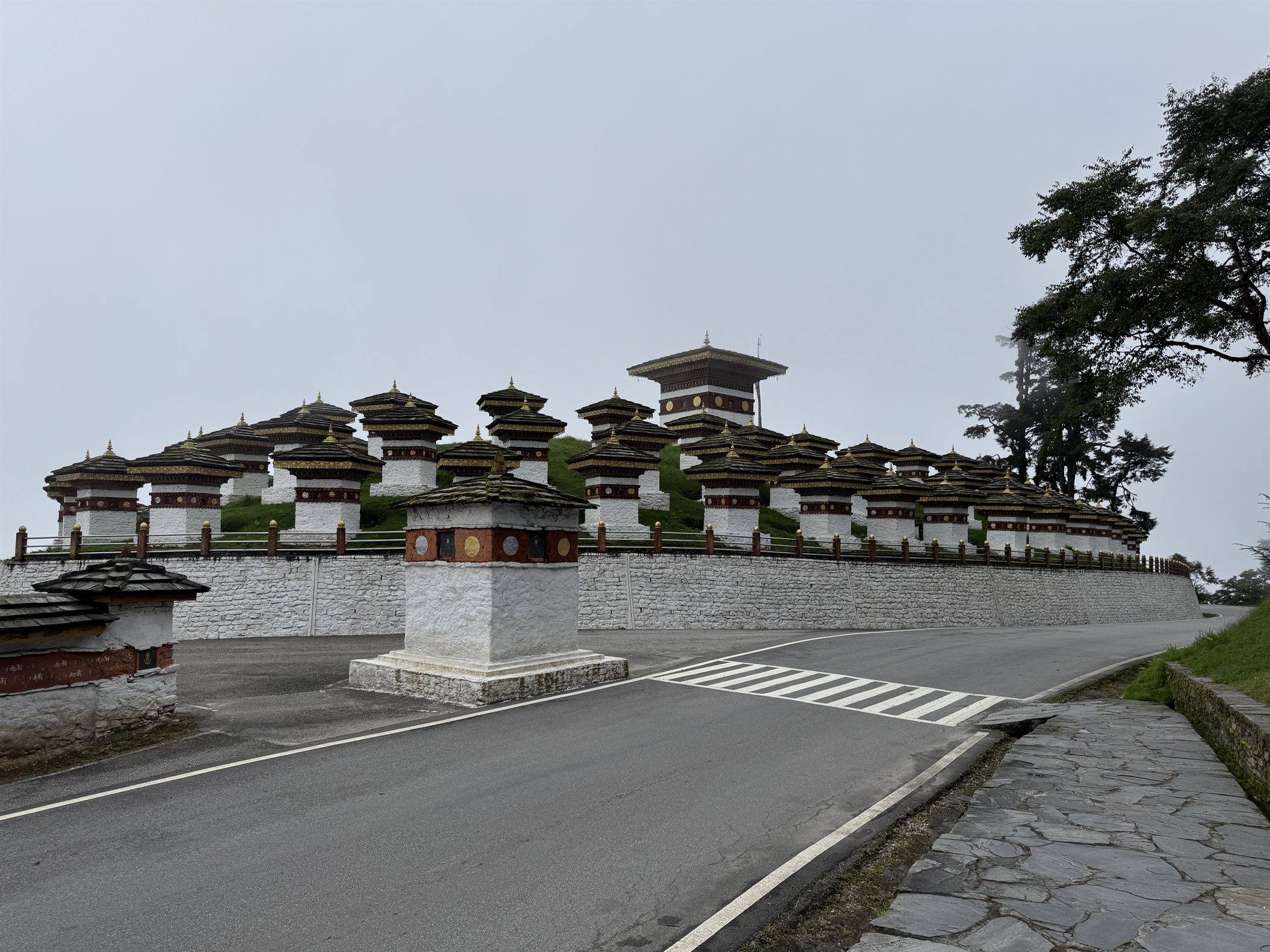
The drive from Thimphu to Punakha generally takes about two and a half to three hours without a long walk, depending on road conditions and stops. The route climbs to Dochula Pass before descending into the warmer Punakha Valley.
Most travellers stop among the 108 Druk Wangyal Chortens. Clear weather may reveal Himalayan peaks, but cloud is common. Adding the Lungchutse hike turns the transfer into a full day.
Leave in the morning so you can visit Punakha Dzong or settle into the valley without rushing. The Essential Bhutan Cultural Journey uses this classic western route.
Punakha to Paro
The journey from Punakha to Paro usually takes at least half a day once you include mountain roads, stops and traffic through the Thimphu area. A simple driving estimate may look shorter, but sightseeing and breaks extend the day.
Use cultural stops to divide the route. Tachog Lhakhang, a riverside viewpoint or time in Thimphu may fit according to access and schedule.
Do not plan Tiger’s Nest on the same day. Save the climb for the following morning after proper rest.
Punakha to Phobjikha
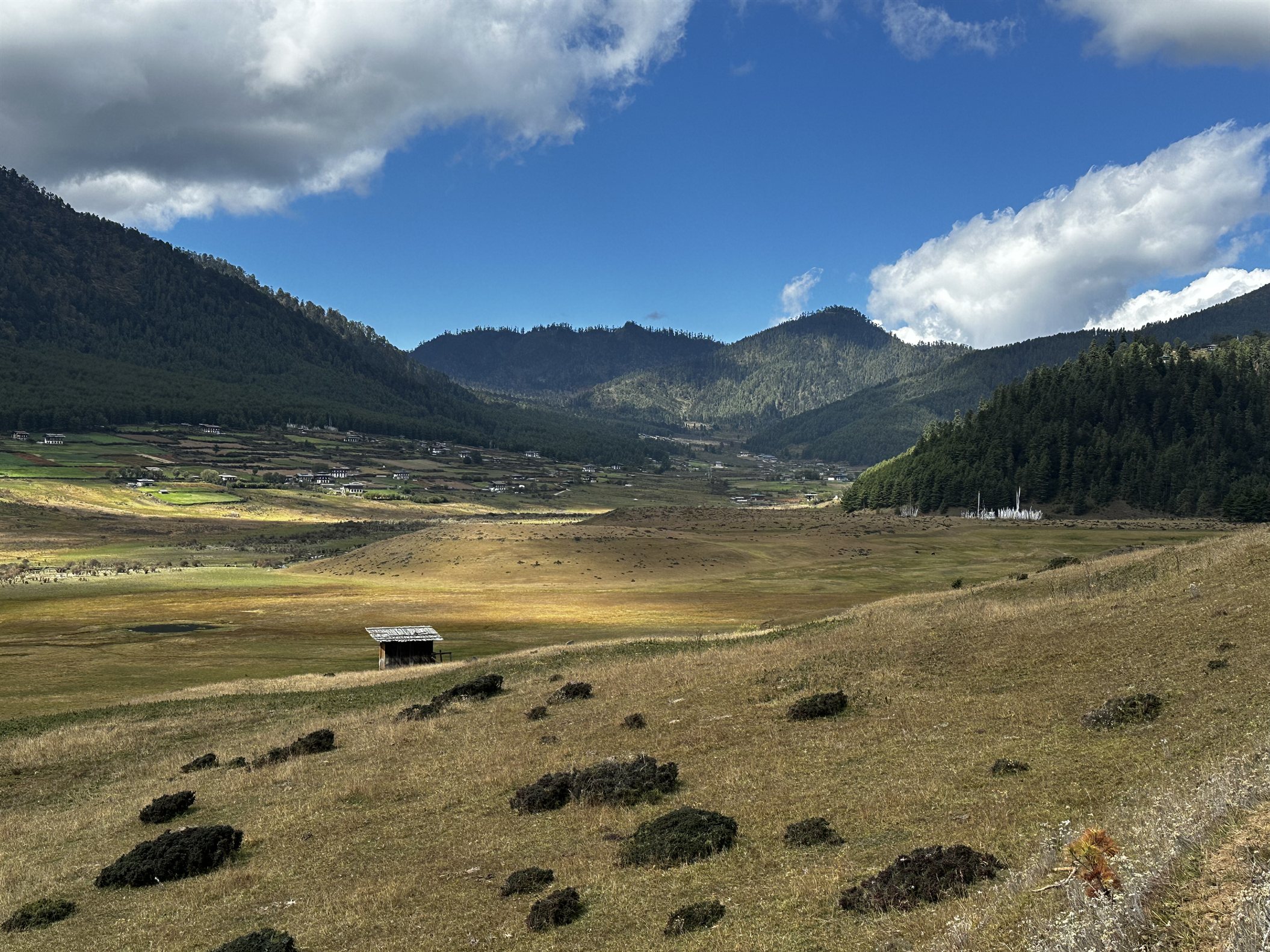
Punakha and Phobjikha can be connected by road in one travel day. The route climbs from the warmer river valley towards a high glacial landscape, with a noticeable drop in temperature.
Allow time for Gangtey Monastery and a short nature walk after arrival, but keep the programme flexible. Fog, rain and road works can slow the journey.
An overnight stay is essential. Two nights are better for travellers who want to walk, look for seasonal cranes and experience the valley without immediate departure.
The Bhutan Adventure and Culture Journey connects Phobjikha with the western valleys.
Phobjikha to Bumthang
The road from Phobjikha to Bumthang is a substantial transfer through central Bhutan. It crosses mountain terrain and often includes a stop near Trongsa. Conditions can turn it into a full travel day.
Do not attach several major visits to the same day. Trongsa Dzong and its museum deserve time, so an overnight stop may be worthwhile in a longer itinerary.
Bumthang should receive at least two nights after the journey. The Bhutan Discovery Journey shows how central Bhutan can fit into a ten day route.
Domestic flights in Bhutan
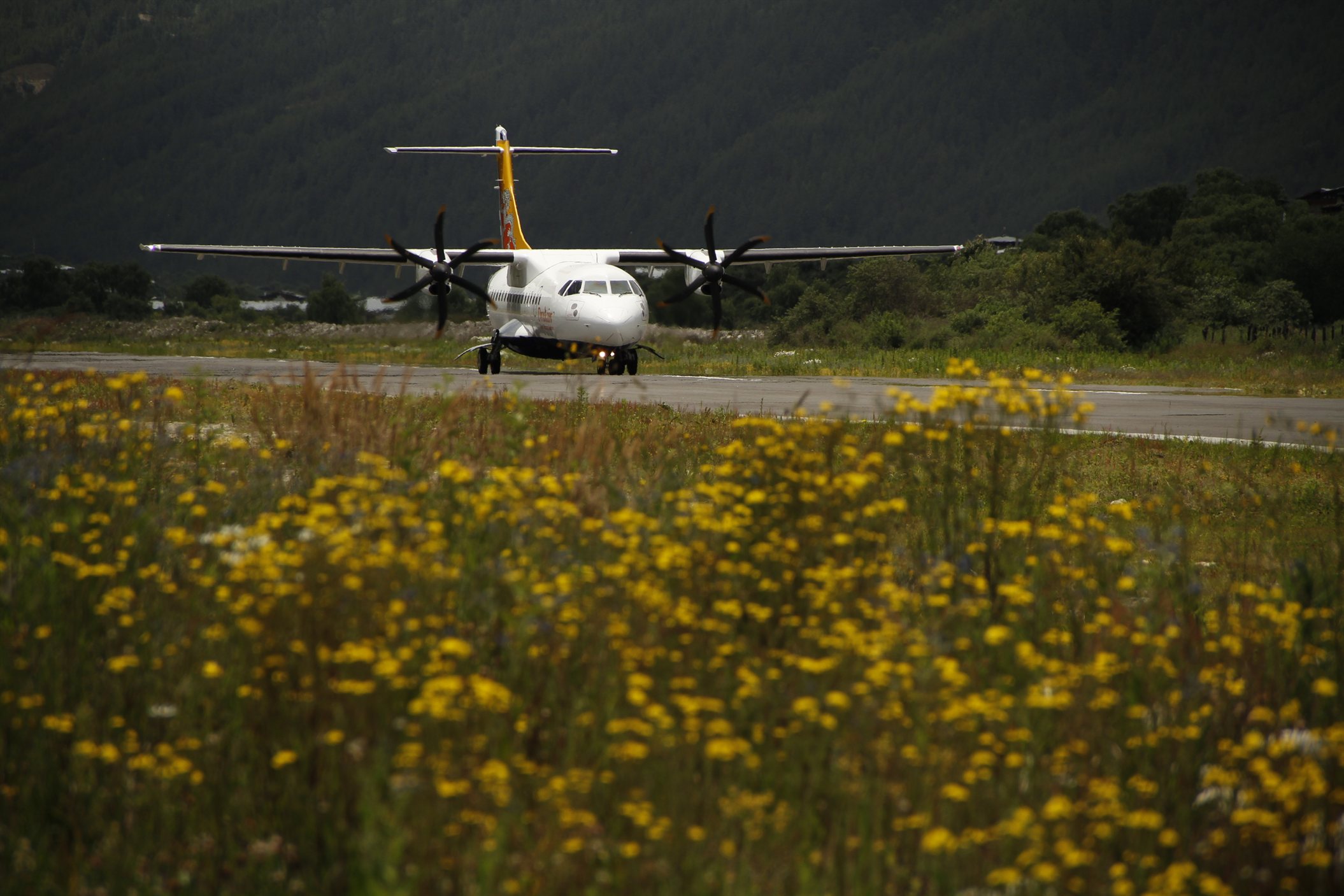
Domestic flights can save time on longer journeys. Domestic flights services are available in Bumthang in central Bhutan, Yonphula in the east and Gelephu in the south, with Paro as the main western hub.
Schedules are limited and can change with demand, aircraft availability, approvals and weather. A domestic flight should never be the only plan for a critical international connection.
Use a flight to reduce the return journey from Bumthang or eastern Bhutan, then keep enough time in Paro before departure. Your operator should have a road alternative if the service changes.
Check the latest Drukair schedules for current domestic operations.
Flying to Bumthang
Bumthang’s Bathpalathang Airport provides the most useful domestic connection for many cultural itineraries. The flight from Paro is far shorter than the road journey.
The advantage is time. The compromise is schedule reliability. Mountain weather may delay or cancel the service, and limited frequencies can affect the whole route.
A strong itinerary may drive east through Punakha, Phobjikha and Trongsa, then fly from Bumthang to Paro. This preserves the scenic road journey in one direction while reducing repetition.
Flying to Yonphula and eastern Bhutan
Yonphula Airport serves eastern Bhutan and can reduce several days of overland travel. It is most relevant to longer cultural journeys involving Trashigang and surrounding districts.
The east still requires private road transport after landing. Local journeys may be slow, and accommodation options are more limited than in western Bhutan.
Build several days of flexibility around an eastern route. The East to West Cultural Expedition is designed for the greater distances involved.
Travelling through Gelephu
Gelephu serves southern Bhutan with selected domestic and international flights. It can support specialised itineraries, regional links and access to the south.
It is not a convenient substitute for Paro on a short western holiday. The road to Thimphu and Paro is long, and the route should be designed around the south rather than added only because of an airfare.
Check current airport operations and road conditions before planning. New or changing services require extra contingency.
Are taxis useful in Bhutan?
Taxis operate in towns and at Paro airport. They can be useful for a simple local journey, but they are less suitable for a multi valley holiday that involves guides, luggage and several planned stops.
There is a taxi rank outside Paro airport. There is no other regular public transport service from the terminal. Prearranging a transfer removes uncertainty after arrival.
Agree on the fare and destination before setting off when a meter is not used. Your hotel can help arrange a trusted local taxi.
Can visitors use buses?
Local and intercity buses serve Bhutanese communities, but they are not the easiest choice for most international travellers. Schedules, luggage handling and stops may not match a sightseeing route.
Buses can offer local insight for experienced independent travellers, but current guide rules still apply. Confirm the practical arrangements with a certified guide or operator.
A private vehicle provides greater control over meal breaks, photography stops, temple opening times and mobility needs.
Helicopter services
For travellers looking to add a more exclusive sense of adventure to their Bhutan journey, helicopter charters can be arranged for selected itineraries, scenic experiences and specialised journeys. Flights remain subject to weather conditions, aircraft availability and the necessary operational approvals.
A helicopter journey can offer a spectacular perspective of Bhutan’s mountains, valleys and remote landscapes, particularly when incorporated thoughtfully into a private luxury itinerary. Rather than replacing Bhutan’s scenic road journeys entirely, it works best as a special experience that complements the slower pace of travelling through the country.
Transport during the monsoon
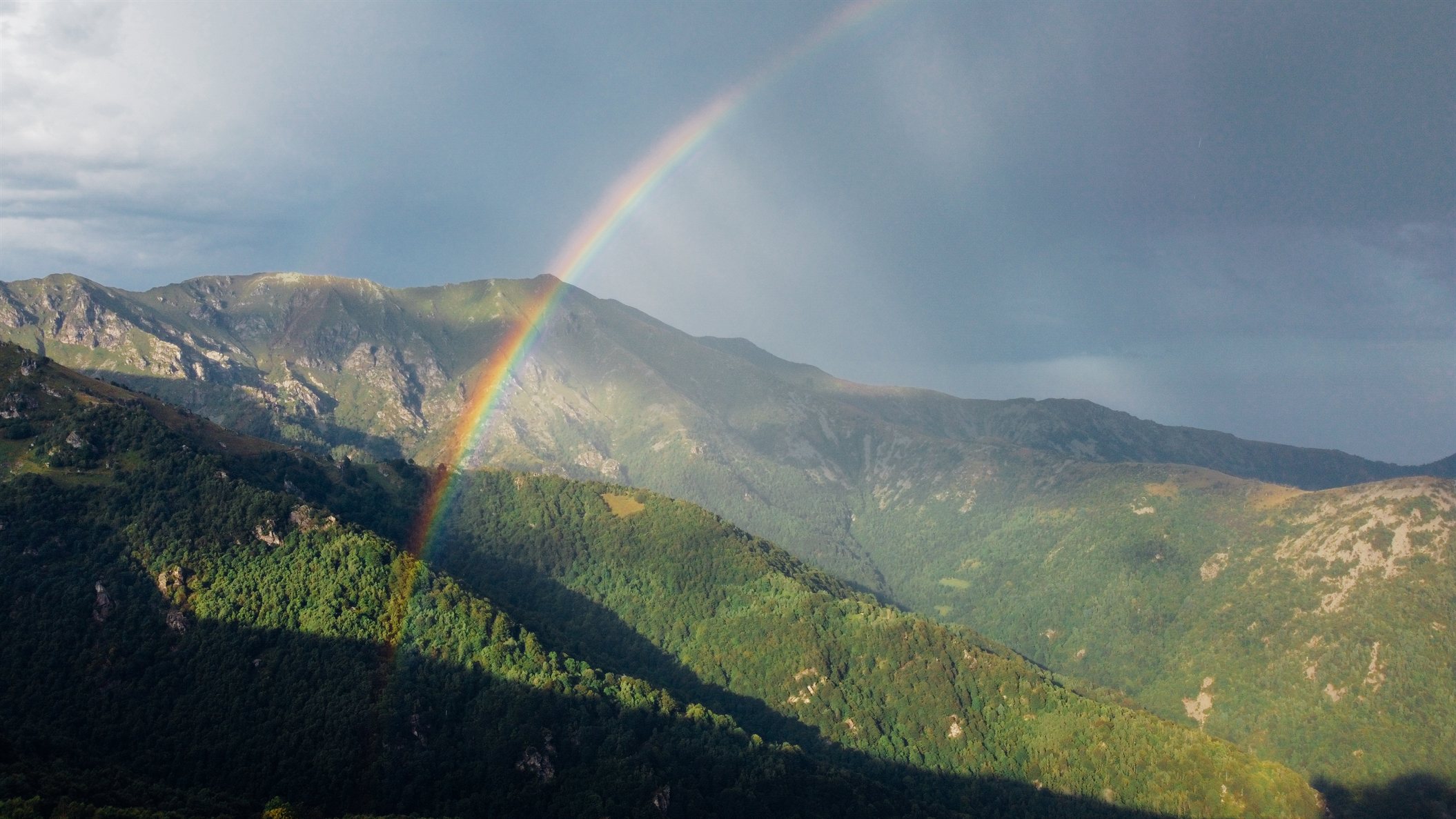
Summer monsoon rain can trigger landslides, flooding and temporary road disruption, especially from June to September. Travel times may increase and some routes can close while authorities clear debris.
Plan fewer long transfers and keep a flexible programme. Carry water, snacks, medication and a warm layer in the vehicle in case of delay.
Flights can also be affected by clouds and visibility. Avoid tight connections and choose travel insurance that addresses disruption.
Transport during winter
Winter is generally dry in the main western valleys, but snow and ice can affect high passes. Roads to Phobjikha, Bumthang and more remote areas need particular care after snowfall.
Start drives after daylight when conditions can be assessed. Pack warm clothing in the vehicle rather than placing everything in inaccessible luggage.
Punakha is a useful winter destination because its lower elevation is warmer. A western Paro, Thimphu and Punakha route often remains practical in normal conditions.
Choosing the right vehicle
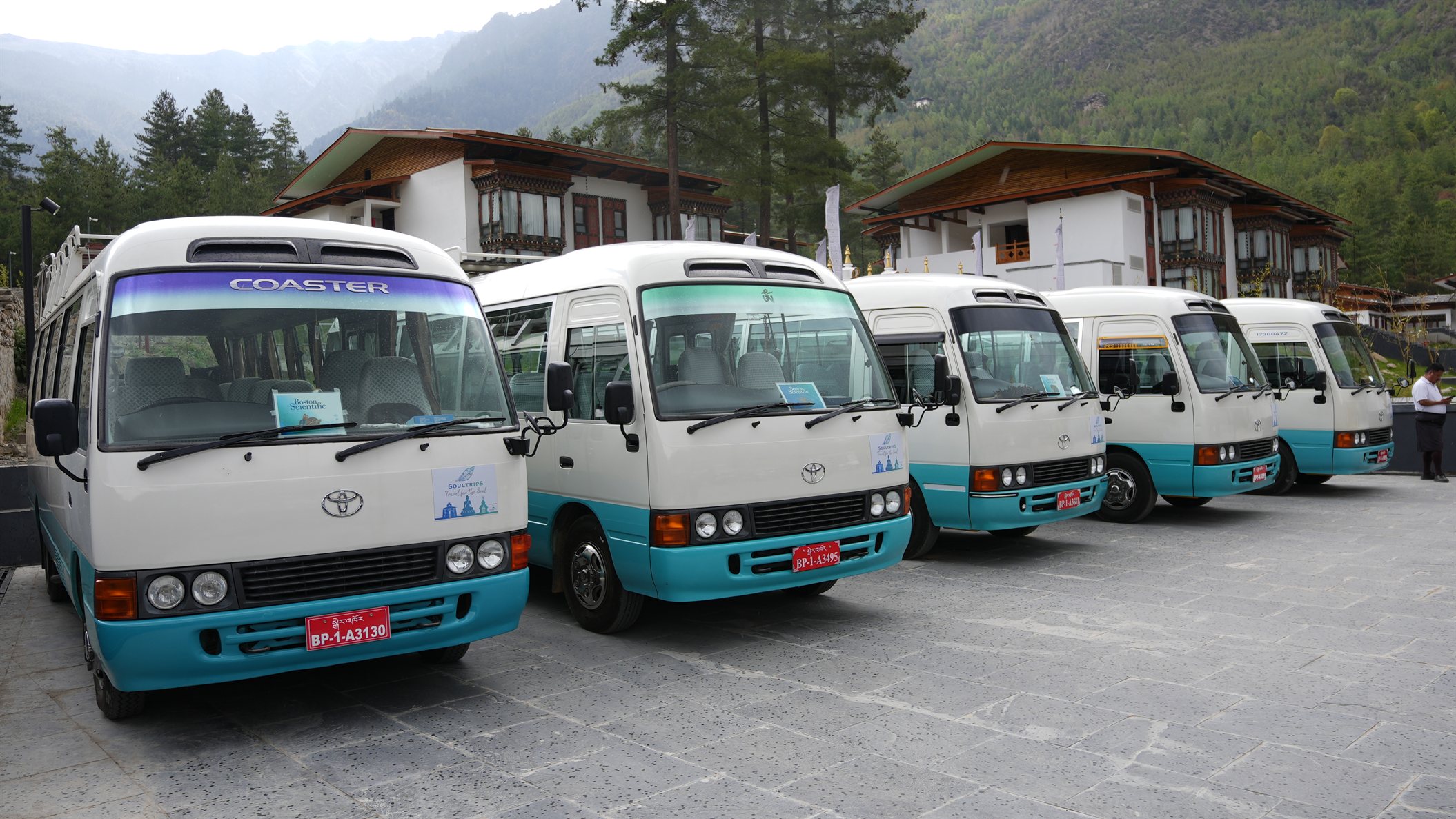
Comfort matters because you may spend several hours on the road. Ask your travel organiser about the vehicle model, seat layout and luggage space.
Consider these points:
- Group size and number of suitcases
- Leg room for long journeys
- Ease of entry for travellers with knee or mobility concerns
- Child seats requested in advance
- Heating for winter and ventilation for warmer valleys
- Space for walking poles, camera equipment or trekking bags
- Access to seat belts for every passenger
A larger vehicle is not automatically more comfortable on narrow roads. Choose a suitable size with a capable local driver.
Advice for travellers with motion or mobility concerns
Tell your operator about mobility needs before finalising the route. A lower step vehicle, front seat, more bathroom stops and shorter travel days can make a significant difference.
Travellers prone to motion sickness should discuss medication with a doctor. Keep it accessible and take it at the recommended time. Looking forward, avoiding heavy meals and stopping regularly can also help.
Many Bhutan attractions include steps and slopes. Transport can bring you close to some sites, but not every sacred building has direct vehicle access. Ask for honest walking and stair information rather than a general description such as easy.
Responsible road travel
Use an experienced licensed driver and avoid pressuring them to speed. Journey estimates should never take priority over safety.
Carry a reusable bottle, minimise single use waste and use established rest stops. Ask before photographing people or private homes during roadside pauses.
Local traffic may include livestock, pedestrians and farm vehicles. Patient driving is part of respectful travel.
Common transport planning mistakes
The first mistake is using map distance to estimate a journey. Mountain roads need more time than a similar distance in Singapore.
The second is adding major sightseeing after a long transfer. Give each travel day a realistic purpose.
The third is relying on one domestic flight immediately before an international departure. Keep a road alternative and sufficient buffer.
The final mistake is changing hotels every night. Two night stays reduce fatigue and give you a fuller sense of each valley.
Frequently asked questions
-
What is the easiest way to get around Bhutan?
A private vehicle with an experienced local driver is the easiest option. It provides flexibility for mountain roads, sightseeing stops and luggage.
-
Can tourists rent a car in Bhutan?
Self drive rental is not available in Bhutan. Visitors normally hire a vehicle with a driver through a hotel, operator or transport provider.
-
Do you need a guide in Bhutan?
A certified guide is mandatory especially if you are visiting monuments, dzongs, treks and travel beyond land border towns.
-
Are Bhutan’s roads dangerous?
Main routes are used daily, but they are winding and can be affected by weather, road works and landslides. An experienced local driver and realistic schedule reduce risk.
-
How long is the drive from Paro to Thimphu?
It commonly takes about one and a half hours in normal conditions, excluding stops. Traffic, weather and road works can extend the journey.
-
Can you fly from Paro to Bumthang?
Domestic services operate on selected schedules. They are useful but weather dependent, so confirm current operations and keep a road alternative.
-
Is public transport practical for tourists?
It is possible in limited situations, but it rarely matches a multi valley sightseeing plan. Private transport is more comfortable and flexible for most visitors.
-
Are taxis available at Paro airport?
Yes, taxis operate from the airport rank. You can also arrange a transfer through your hotel or operator, and there is no other regular public airport transport.
-
How can you reduce motion sickness?
Sit towards the front, look ahead, eat lightly and take appropriate medication after medical advice. Plan regular stops and avoid several long road days in succession.
-
Do road conditions change by season?
Yes. Monsoon rain can cause landslides and delays, while winter snow may affect high passes. Check local conditions and keep the itinerary flexible.
Let Bhutan’s roads become part of the journey
Getting around Bhutan takes time, but that time is not wasted. A private vehicle connects valleys at a pace that lets you notice rivers, farms, prayer flags and changes in landscape. Domestic flights are valuable for longer distances when the schedule supports them.
Plan fewer transfers, stay at least two nights in key places and trust your local driver’s judgement. Explore the SoulTrips Bhutan guide collection, then use the SoulTrips Plan My Trip service to create a comfortable route shaped around your interests and mobility needs.