By Soul Trips · Updated on 18 September, 2026
What to Eat in Bhutan: A Bhutan Food Guide to Traditional Meals
A Bhutan food guide begins with chilli and cheese, but the country’s table is much broader. You will find nutty red rice, hand folded dumplings, warming meat stews, mushrooms, buckwheat, seasonal greens, butter tea and dishes shaped by altitude and region. Meals are often simple in presentation and deeply comforting after a mountain walk.
Bhutanese cooking is not designed around a fixed national tasting menu. Recipes vary by family, valley and available produce. The same ema datshi can be fiery and loose in one kitchen, mild and creamy in another. A hotel buffet may adapt the heat for visitors, while a home meal may express local taste more directly.
Approach the food with curiosity and honest communication. Tell your guide about allergies, dietary rules and spice tolerance before the first meal. Then try small portions, ask what is seasonal and leave room for dishes you did not expect.
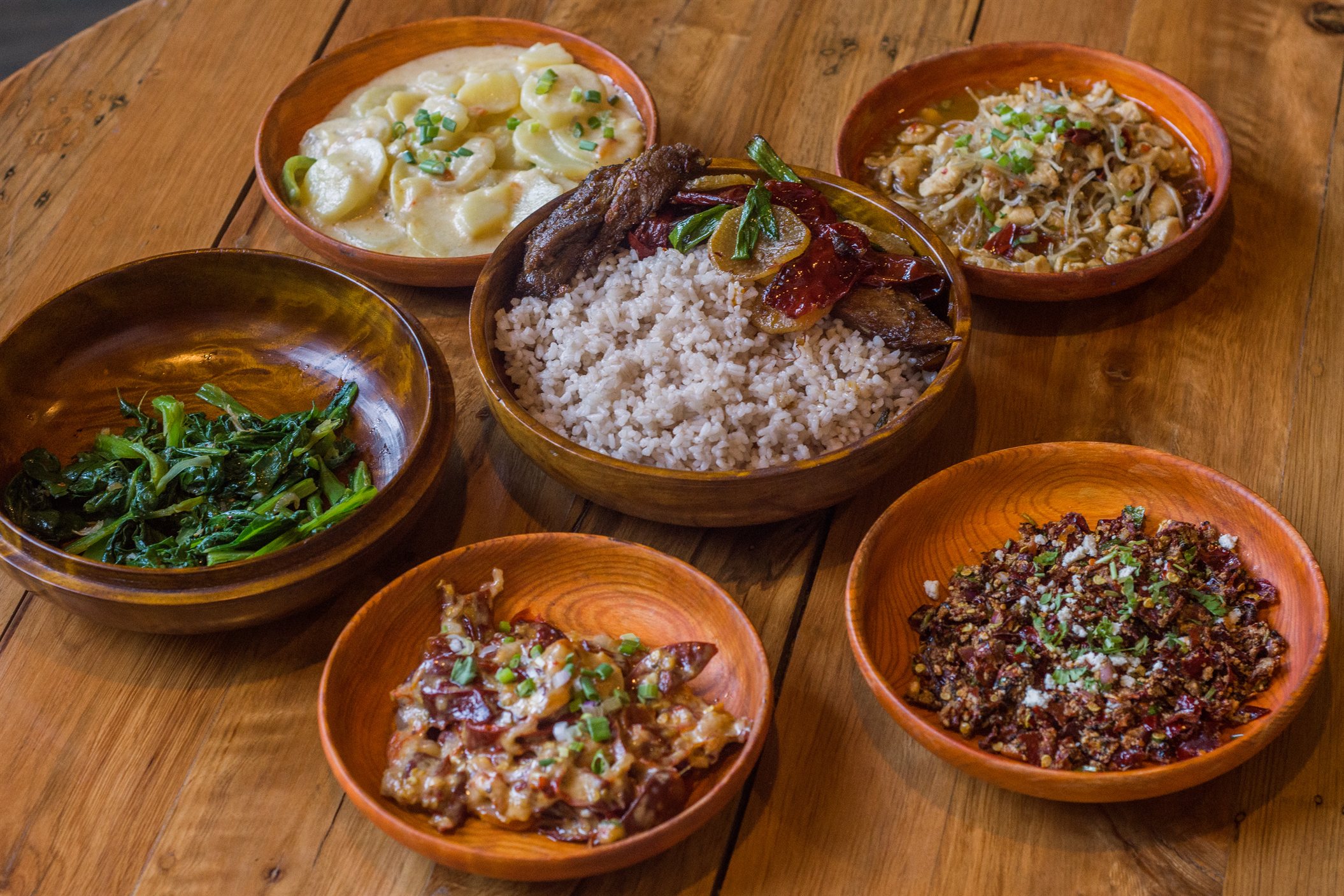
How to use this Bhutan food guide
Chillies are often treated as a vegetable rather than a light seasoning. Cheese softens and enriches many dishes, while rice or another staple balances the heat. Preservation also matters. Dried meat, fermented flavours and stored ingredients helped communities eat through cold seasons and long distances.
Altitude shapes agriculture. Lower valleys can grow a wider range of vegetables and fruit, while buckwheat, barley, potatoes and hardy greens matter in cooler areas. Forest products such as mushrooms add another seasonal layer.
Homemade cheese, hot chillies, buckwheat, butter tea and seasonal matsutake mushrooms are among the country’s food experiences. What reaches your plate depends on the route and month, so ask for local rather than imported specialities.
Ema datshi: Bhutan’s famous chilli and cheese dish
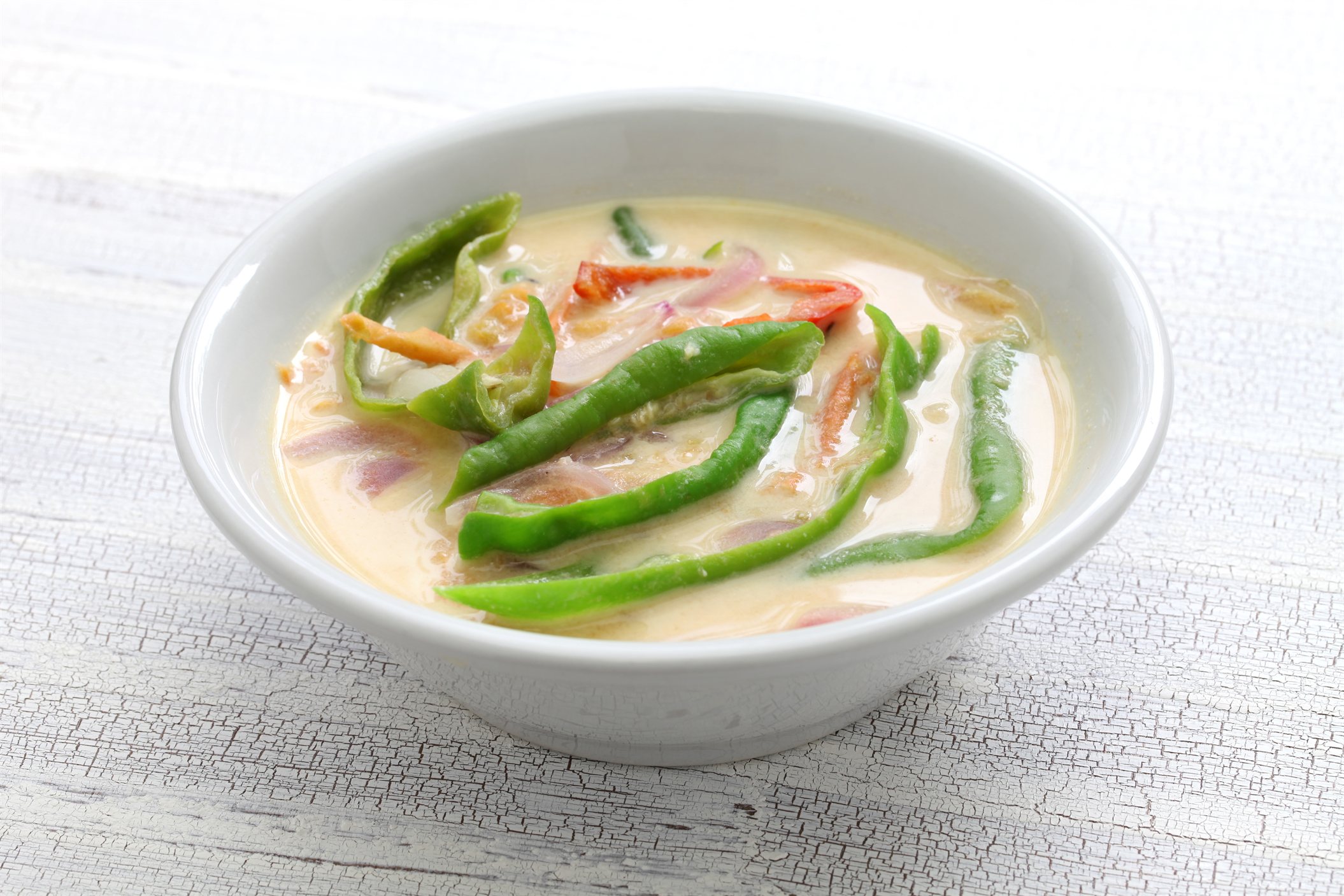
Ema datshi combines chillies with a cheese sauce. Ema means chilli and datshi refers to cheese. The result can range from gentle warmth to an intense dish that demands plenty of rice.
Fresh green or red chillies may be used, and some cooks add onion or tomato. The cheese varies by kitchen, so texture and saltiness change. It is usually served as one part of a shared meal rather than eaten alone.
If you are sensitive to spice, ask for a small tasting portion. Saying you enjoy chilli does not guarantee comfort with a Bhutanese family recipe. Your guide can request a milder preparation, though ema datshi without meaningful chilli loses its defining character.
Vegetarians should still ask about the cheese and preparation. The dish contains dairy and is not vegan.
Datshi variations to try
The cheese base appears with other main ingredients, offering gentler ways to understand the style.
Kewa datshi
Kewa datshi combines potatoes and cheese, usually with some chilli. It is creamy, filling and often easier for visitors who find ema datshi too strong. The potatoes absorb the sauce and pair naturally with red rice.
Shamu datshi
Shamu datshi uses mushrooms with cheese and chilli. Mushroom varieties change with season and location. During the right months, Bhutan’s forest mushrooms can be a highlight.
Other vegetable versions
You may encounter cheese cooked with beans, leafy greens or other vegetables. Names and recipes vary. Ask the kitchen what is fresh rather than expecting every restaurant to reproduce the same list.
Momos: Bhutanese dumplings
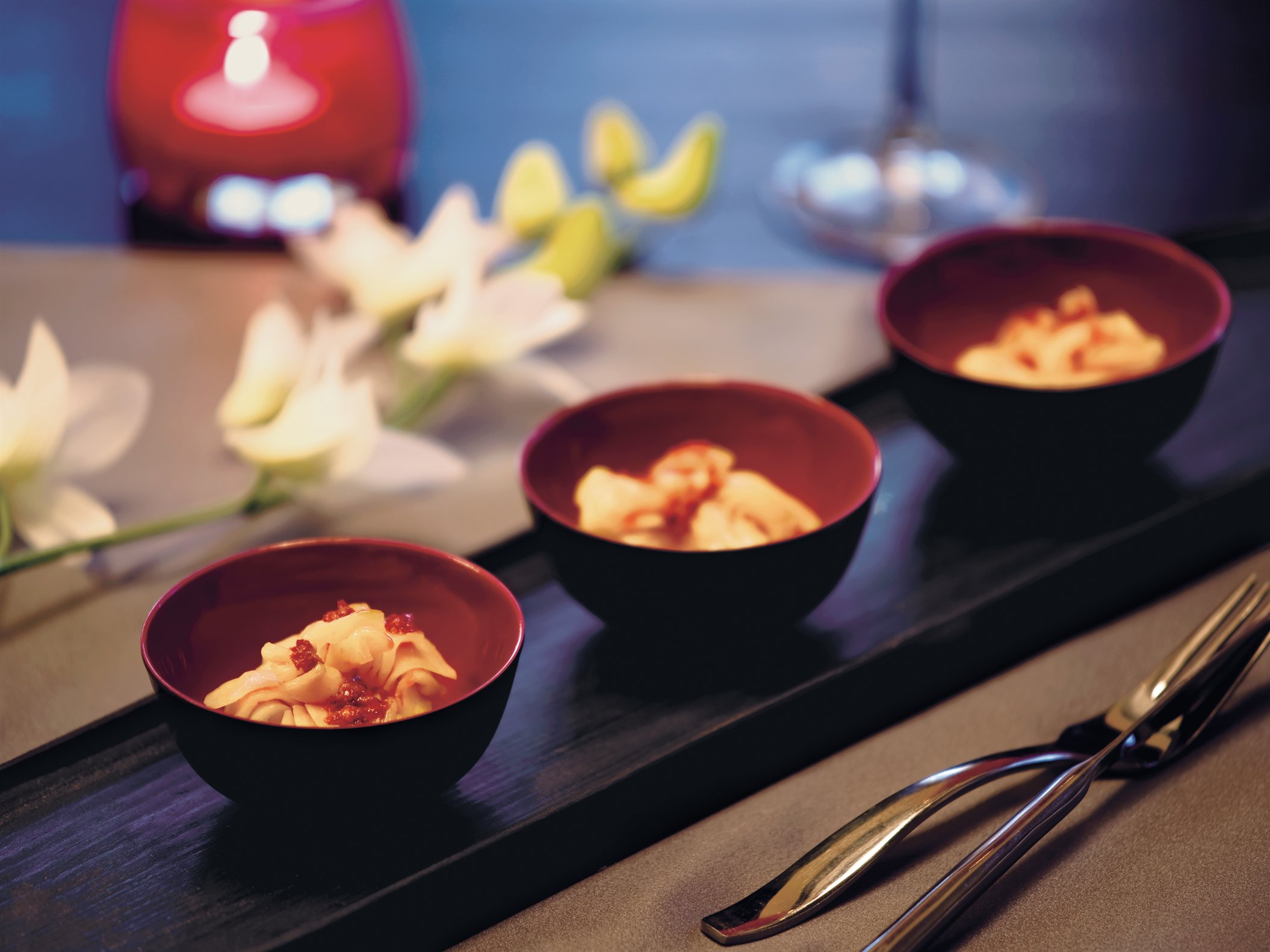
Momos are steamed or fried dumplings found across the Himalayan region. In Bhutan they may be filled with minced meat, cheese, cabbage or mixed vegetables. They are served as a snack, light meal or shared plate, often with a chilli sauce.
The wrapper should be tender and the filling moist. Steamed momos let you taste the filling clearly, while fried versions are richer and crisp. Try the sauce cautiously because its heat may exceed the dumpling itself.
Vegetarian does not always mean vegan. Cheese may be central to the filling, and dough or sauces can contain ingredients that are not obvious. Ask your guide to confirm if you have strict requirements.
Momos are familiar and comforting, but do not let them crowd out more regional dishes. They make an excellent first lunch after arriving in Paro, then you can explore further as your appetite settles.
Bhutanese red rice
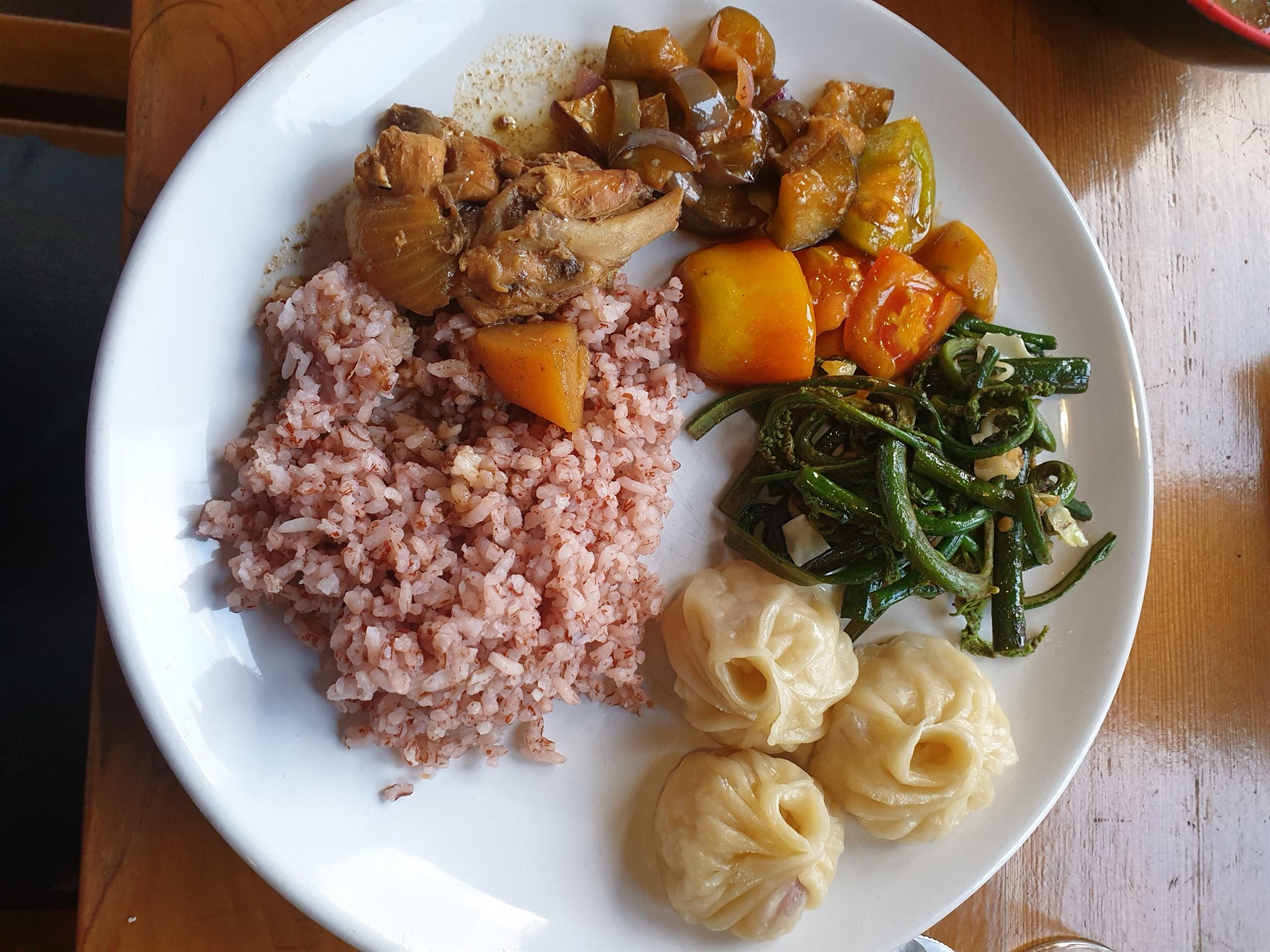
Red rice is a short grain or medium grain rice with a rosy brown colour and gently nutty flavour. It is commonly grown in the Paro Valley and cooks to a soft but substantial texture. It supports strong cheese and chilli dishes without disappearing beneath them.
You may receive white rice as well, especially in hotels catering to international groups. Ask to try local red rice when available. It is not a side note to the meal; it is the grounding element that makes many dishes feel complete.
Meat dishes worth knowing
Bhutanese meat preparations can be robust, warming and relatively simple. Meat may be dried or cooked with chillies, radish, vegetables and spices.
Phaksha paa
Phaksha paa is a pork dish often cooked with dried chilli and radish or other vegetables. The balance of rich pork, heat and a sharper vegetable works well with rice. Recipes differ, and pieces may include more fat than some visitors expect.
Shakam paa
Shakam paa uses dried beef, commonly cooked with chilli and vegetables. Drying creates a firm texture and concentrated flavour. It can be chewy compared with a slow braised Western stew, which is part of its traditional character.
Jasha maru
Jasha maru is a chicken dish with onion, tomato, garlic, ginger and chilli, though household recipes vary. It can be served as a loose stew or drier preparation. Ask for the local version rather than expecting a standard restaurant formula.
Yak meat
Yak products may appear in highland areas or specialist menus. Availability and authenticity vary. Ask where the ingredient comes from and choose reputable kitchens rather than ordering it only for novelty.
Vegetarian food in Bhutan
Vegetarian travellers can eat very well in Bhutan. Potatoes, mushrooms, cheese, rice, noodles, dumplings and seasonal vegetables appear widely. The main challenge is variety over a long trip if every kitchen relies on the same cheese dishes.
Tell your travel specialist in advance that you want diverse vegetarian meals. Ask for lentils, local greens, buckwheat, vegetable momos and dishes without cheese at some meals. A good itinerary can alert hotels before arrival.
Clarify that stock, sauces and cooking fat should also be vegetarian if that matters to you. The word vegetable on a buffet label may not describe every ingredient.
Vegan travel in Bhutan
Vegan travel is possible but requires preparation because dairy is central to many famous dishes. Cheese and butter can appear in vegetables, tea, sauces and dumplings. Remote lodges may have fewer substitutes.
Send a clear written note before the trip, then review it with your guide. Explain what you do eat as well as what you avoid. Rice, potatoes, buckwheat, lentils, vegetables, mushrooms and fruit provide a good foundation when kitchens have notice.
Do not assume ema datshi can simply be made vegan without changing the dish. Ask for a separate vegetable preparation instead. Carry a few suitable snacks for long drives, but allow local cooks the opportunity to prepare thoughtful food.
Gluten free and allergy aware travel
People with coeliac disease or serious allergies need more than a preference note. Cross contact can occur in small kitchens, buffets and shared fryers. Soy sauce, packaged seasonings, dumpling wrappers and noodles may contain gluten.
Pack safe snacks and any prescribed emergency medicine. Your guide can support communication, but no destination can guarantee a completely controlled kitchen.
Rice and many potato or vegetable dishes may be naturally free from gluten, yet preparation still matters.
Buckwheat and regional staples
Buckwheat is important in central and eastern Bhutan. It may appear in noodles, pancakes or dumpling style dishes. In Bumthang, you may encounter puta, buckwheat noodles, and khule, a pancake served with other dishes.
Hoentay are dumplings associated with Haa, traditionally filled with ingredients such as turnip greens, cheese and local herbs. Recipes vary and may be seasonal. A regional route offers more chance to taste them than a short western circuit.
The East to West Cultural Expedition gives you the time and geographic range to encounter food beyond Paro, Thimphu and Punakha.
Seasonal mushrooms and vegetables
Bhutan’s forests produce prized mushrooms, including matsutake in season. You can experience the mushroom festivals and foraging experiences in places such as Ura and Genekha during August. Foraging should only be done with knowledgeable local hosts and appropriate permission.
Fiddlehead ferns, leafy greens, radish, pumpkin and other vegetables may appear according to season and valley. Ask what arrived from the market that day. Fresh local produce can be more memorable than a dish chosen from a permanent list.
Traditional drinks
Suja
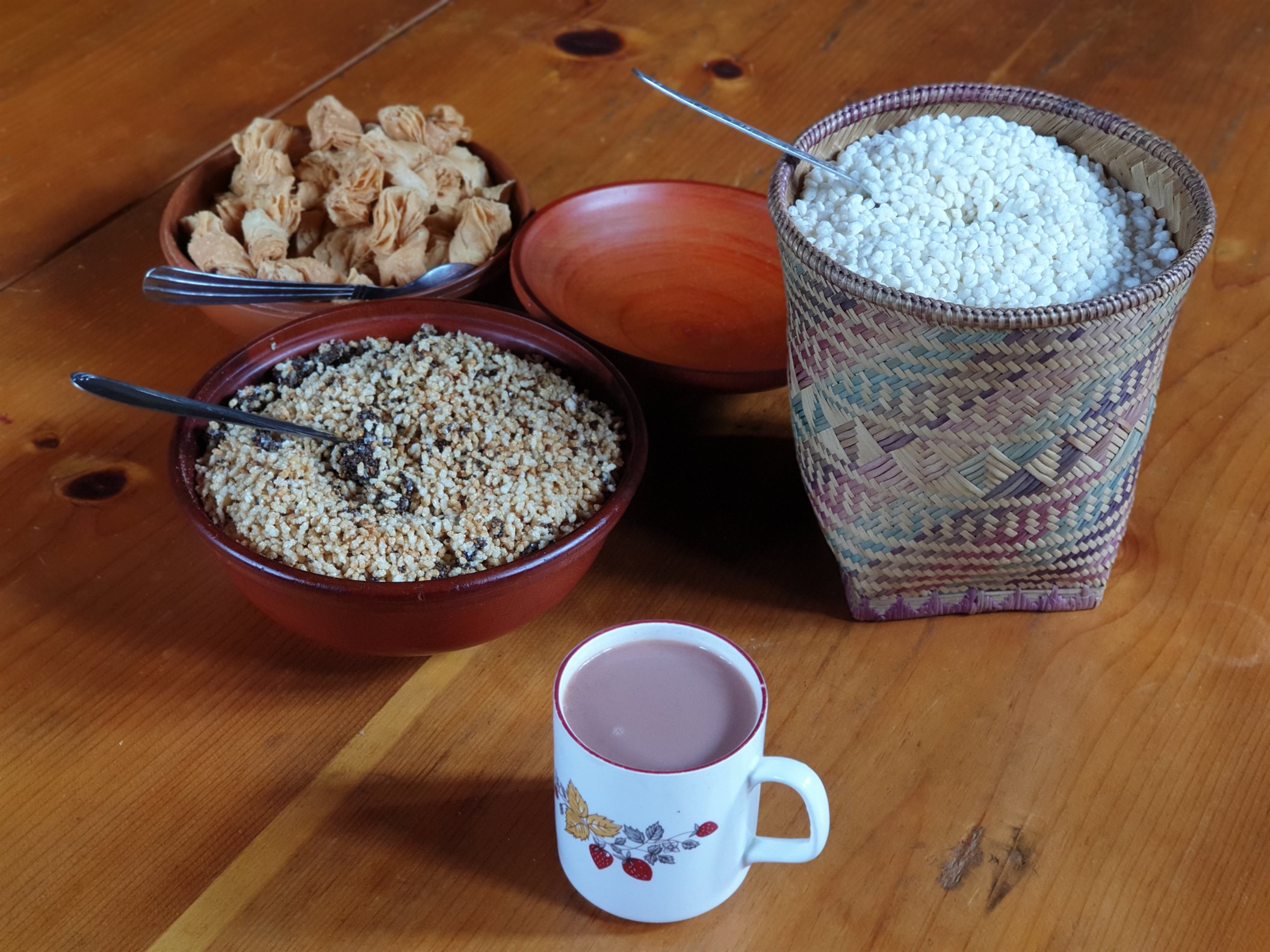
Suja is butter tea, generally made with tea, butter and salt. It is savoury, warming and quite different from sweet milk tea. Try a small cup without judging it by expectations of ordinary tea.
Ngaja
Ngaja is sweet milk tea and will feel more familiar to many visitors. It may be offered at breakfast or during a visit. Sugar levels vary.
Ara
Ara is a traditional alcoholic drink made from grains such as rice, barley or wheat. Preparation and strength vary. Drink cautiously, especially at altitude, and never feel obliged to accept alcohol.
Water matters more than novelty. Drink treated or reliably filtered water and stay hydrated during drives and hikes. Alcohol can worsen dehydration and disrupt sleep.
Breakfast, lunch and dinner on a tour
Hotel breakfast often combines eggs, toast, fruit and cereal with local dishes. Lunch may be a buffet or set meal on the touring route. Dinner is commonly at the hotel, especially outside Thimphu and Paro.
Repetition can happen when several hotels serve similar visitor menus. Tell your guide if you want more local food, more vegetables or less spice. Good feedback is specific and polite.
Some SoulTrips Bhutan tours include most or all meals, while luxury stays may feature property dining and special experiences. Read the exact inclusions before booking so you understand which meals remain at your own expense.
Where to eat in Paro, Thimphu and Punakha
Thimphu offers the widest choice, from Bhutanese restaurants to cafés and international food. Paro also has independent dining alongside hotel restaurants. Punakha dining is more closely tied to resorts and lodges, though local options exist.
Restaurant opening hours change, so ask your guide for current recommendations based on location and the food you want. A recently opened café is not automatically more authentic than a long established hotel kitchen.
Plan one or two independent meals in town if your package allows it. Balance them with a home meal, farm visit or regional lunch for a fuller picture.
Food at homestays and farm visits
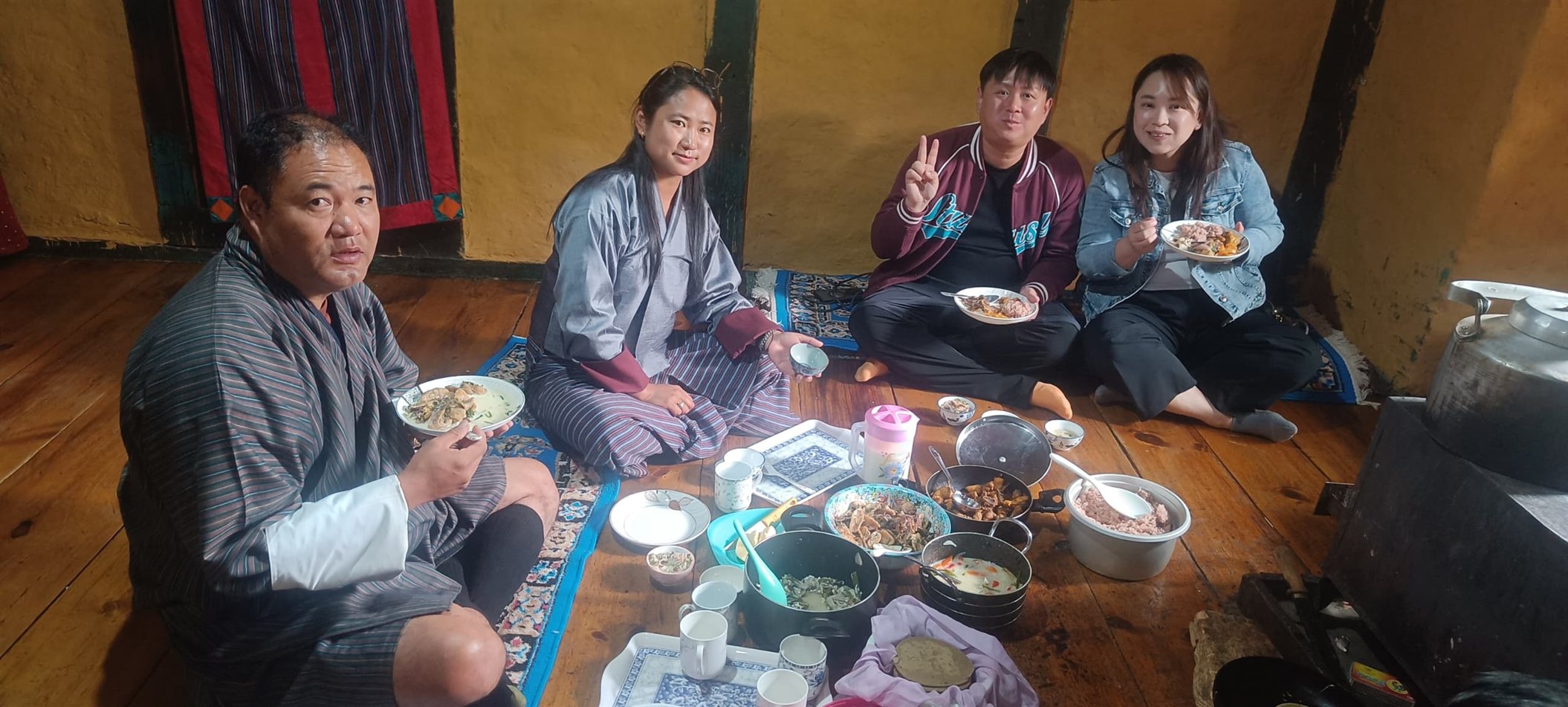
A home meal can reveal how dishes are actually combined and shared. You may see vegetables from the garden, rice from the valley and recipes that do not appear on restaurant menus.
Arrive with respect. Tell the host about allergies in advance, wait to be shown where to sit and ask before photographing the kitchen or family. Try a small portion of unfamiliar food rather than taking more than you can finish.
Consider staying in Bhutan homestays for cultural immersion experience. The Bhutan Adventure and Culture Journey shows how food and local encounters can complement active days.
Spice levels and how to order
State your preference before the food is cooked. Useful language is specific: no chilli, very mild, medium by visitor standards or local style. A kitchen may interpret mild differently, so ask your guide to help.
Order a cooling potato or vegetable dish, rice and a less spicy protein alongside ema datshi. Taste sauces before adding them. Dairy can soften the sensation, but it does not remove chilli.
If you find a dish too hot, do not criticise the cook. Explain that your tolerance is lower and request another option. Bhutanese hosts generally want you to eat well.
Food safety and water
Food hygiene standards at established hotels and restaurants in Bhutan are generally good, but it is still sensible to take a few precautions, especially if you have a sensitive stomach.
Avoid drinking untreated tap water. Choose bottled water, boiled water or properly filtered drinking water provided by your hotel, restaurant or guide.
If you book a Bhutan tour package with SoulTrips, you will be given a reusable water bottle. Your hotel or guide can advise where safe drinking water refills are available along your journey. Using a reusable bottle helps reduce single use plastic waste while still allowing you to stay properly hydrated.
Staying hydrated is especially important in Bhutan because many destinations are at higher elevations. Drink water regularly throughout the day, particularly when sightseeing, hiking or travelling between valleys.
Dining etiquette
Use serving utensils, take a modest first helping and return for more. Compliments are appreciated, especially when you name a dish you enjoyed.
If tea or food is offered during a home visit, accept a small amount if you can. Decline gently for medical or dietary reasons. Do not photograph people eating without asking.
The Bhutan culture and etiquette guide covers home visits, sacred spaces and respectful photography in more detail.
Food souvenirs
Tea, spices, incense, packaged snacks and legally prepared local products can make appealing gifts. Check your country’s current import rules before buying meat, dairy, plants or fresh produce. Keep commercial packaging and receipts.
Avoid buying unlabeled liquids for air travel. Ask your guide which products are reputable and which items travel well. A woven table textile or wooden bowl may be easier than food if customs rules are uncertain.
A suggested first day of Bhutanese food
Begin with momos or a gentle rice meal after your flight. At dinner, try red rice, a small serving of ema datshi, kewa datshi, one seasonal vegetable and a chicken or pork dish if you eat meat. Taste suja once you have settled.
This sequence introduces the core flavours without overwhelming you. Over later days, add buckwheat, dried meat, home cooking and regional specialities. Repeat favourites as well. Culinary travel should be pleasurable, not a checklist.
Frequently asked questions
-
Is Bhutanese food very spicy?
It can be extremely spicy because chilli is often a main ingredient. Hotels commonly offer milder choices for visitors. State your tolerance clearly and taste small portions first.
-
What is ema datshi?
Ema datshi is a Bhutanese dish of chillies and cheese. Recipes vary by household and kitchen, with different chillies, cheese and consistency. It is normally eaten with rice as part of a shared meal.
-
Are momos Bhutanese?
Momos are part of a wider Himalayan food tradition and are very popular in Bhutan. Fillings may include meat, cheese or vegetables. They can be steamed or fried and are often served with chilli sauce.
-
Is vegetarian food easy to find?
Yes, vegetarian food is widely available. Cheese, potatoes, mushrooms, rice and vegetables are common. Ask for variety and confirm stocks or sauces if you follow strict rules.
-
Is vegan food available in Bhutan?
Yes, with advance planning. Dairy appears in many famous dishes, so kitchens need a clear note before arrival. Rice, vegetables, potatoes, mushrooms and lentils can form satisfying meals.
-
Can I drink tap water?
Use reliably treated, filtered or sealed water rather than drinking untreated tap water. Ask your hotel and guide about safe refill stations. Carry a reusable bottle where suitable.
-
What is Bhutanese red rice?
It is a locally grown rice with a reddish brown colour, nutty flavour and substantial texture. It is especially associated with the Paro Valley. It pairs well with chilli and cheese dishes.
-
What is butter tea like?
Suja is savoury tea made with butter and salt. It is warming and quite different from sweet tea. Try a small serving with an open mind.
-
Can hotels handle food allergies?
Many can help, especially with advance notice, but small kitchens and buffets may have cross contact risk. Give precise written information and carry prescribed emergency medicine. Discuss serious allergies before booking.
-
Should I tip in restaurants?
Service arrangements vary, and tipping is discretionary. Check the bill and ask your guide about current local practice. Reward good service without treating a tip as permission to make unusual demands.
Taste Bhutan with curiosity
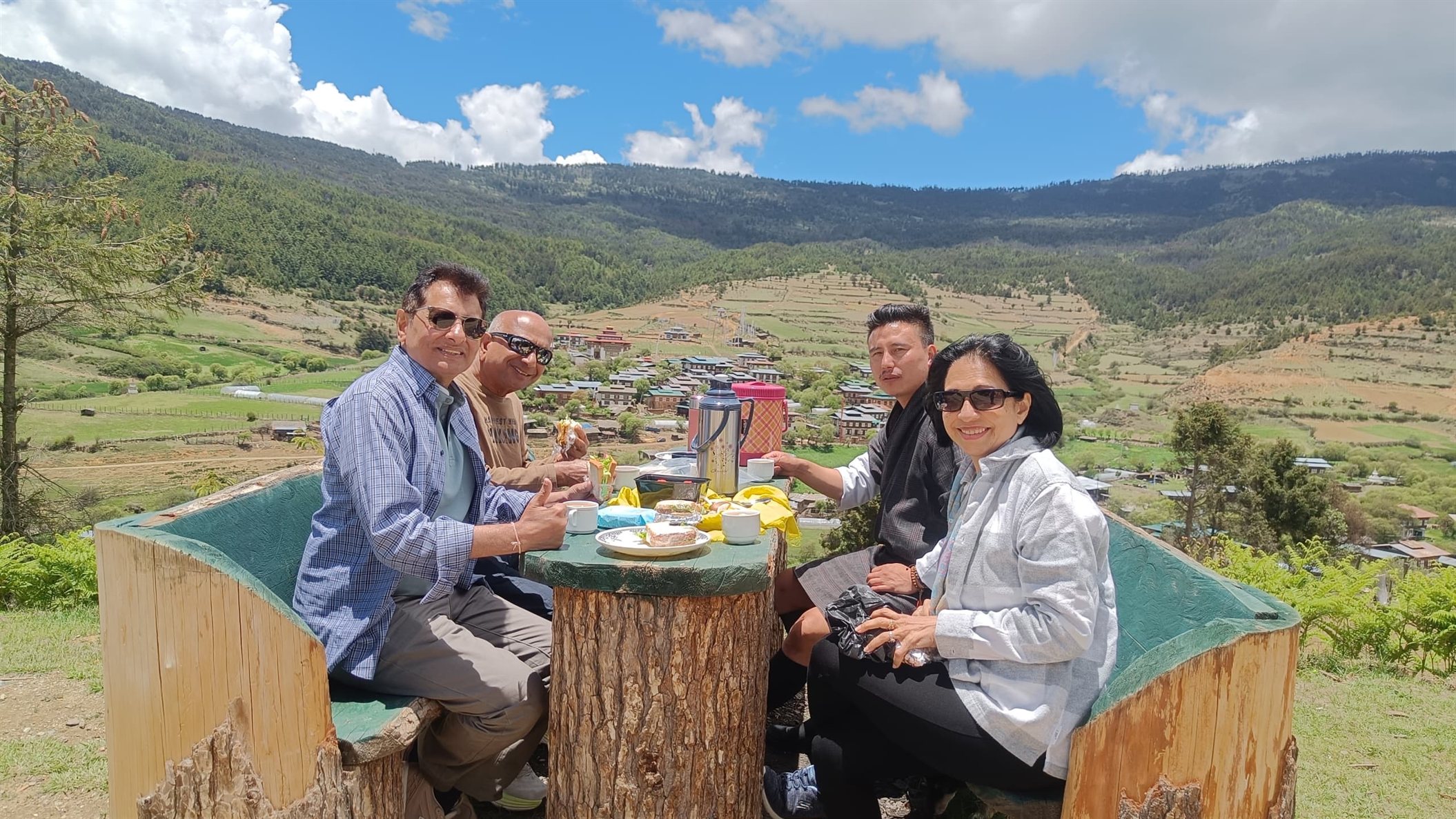
The best Bhutan food guide does not tell you to chase one famous dish. It helps you notice the whole table: red rice supporting chilli and cheese, dumplings shared on a cool day, buckwheat in a central valley and tea offered in a family home.
For a journey shaped around culture and local encounters, explore the Essential Bhutan Cultural Journey, read the SoulTrips travel tips or use the trip planning service. Share your dietary needs early, and SoulTrips can help create a route where eating is part of understanding Bhutan.