By Soul Trips · Updated on 18 September, 2026
Bhutan Festivals Guide: Popular Tshechus, Dates and What to Expect
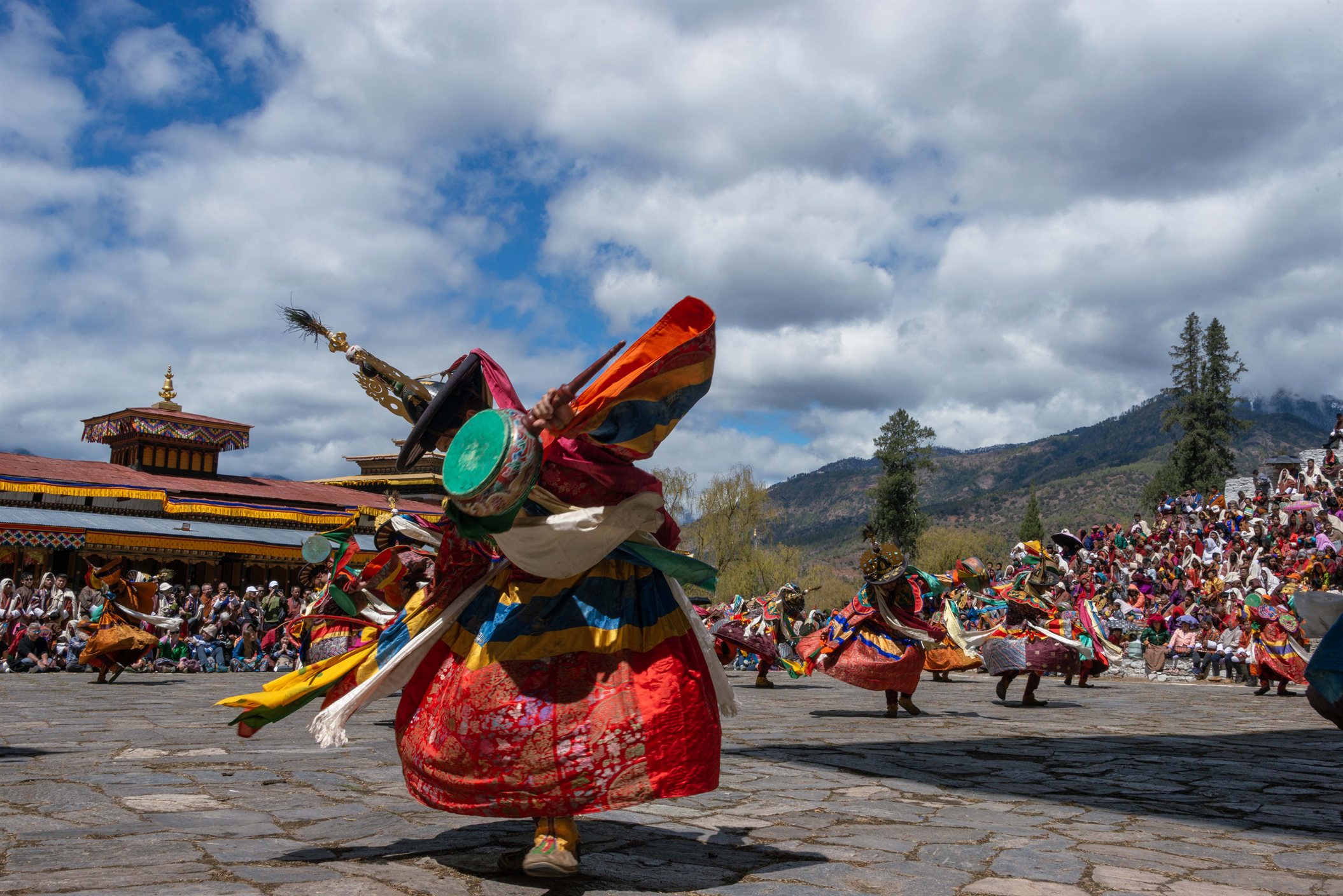
Bhutan festivals are among the most vivid ways to encounter the country’s living culture. In a dzong courtyard, masked dancers move through stories that have been carried for generations. Families arrive in their finest clothes, children share picnic food and monks prepare rituals whose meaning reaches far beyond performance.
The best known events are tshechus, religious festivals generally associated with Guru Rinpoche, also known as Padmasambhava. They are community occasions, places of devotion and opportunities to receive blessings. Visitors are welcome, but the day belongs first to the people who observe it.
Festival travel needs careful planning. Dates follow Bhutanese lunar calendars, can shift in relation to the Gregorian calendar and sometimes change after an early schedule is published. Hotels and flights fill quickly for major events. Use this guide to choose a festival, then reconfirm the exact dates with your travel specialist before paying for flights.
Bhutan festival dates: how to use them safely
Here are the 2027 dates for the popular Bhutan festivals:
- Punakha Tshechu: 16 to 18 February 2027
- Paro Tshechu: 18 to 22 March 2027
- Ura Yakchoe: 18 to 22 April 2027
- Thimphu Tshechu: published autumn dates require final reconfirmation
- Black Necked Crane Festival: traditionally held in November, with the precise date to be confirmed
- Druk Wangyel Tshechu: traditionally held on 13 December
The Druk Asia Bhutan Festival Calendar provides a useful planning resource.
What is a tshechu?
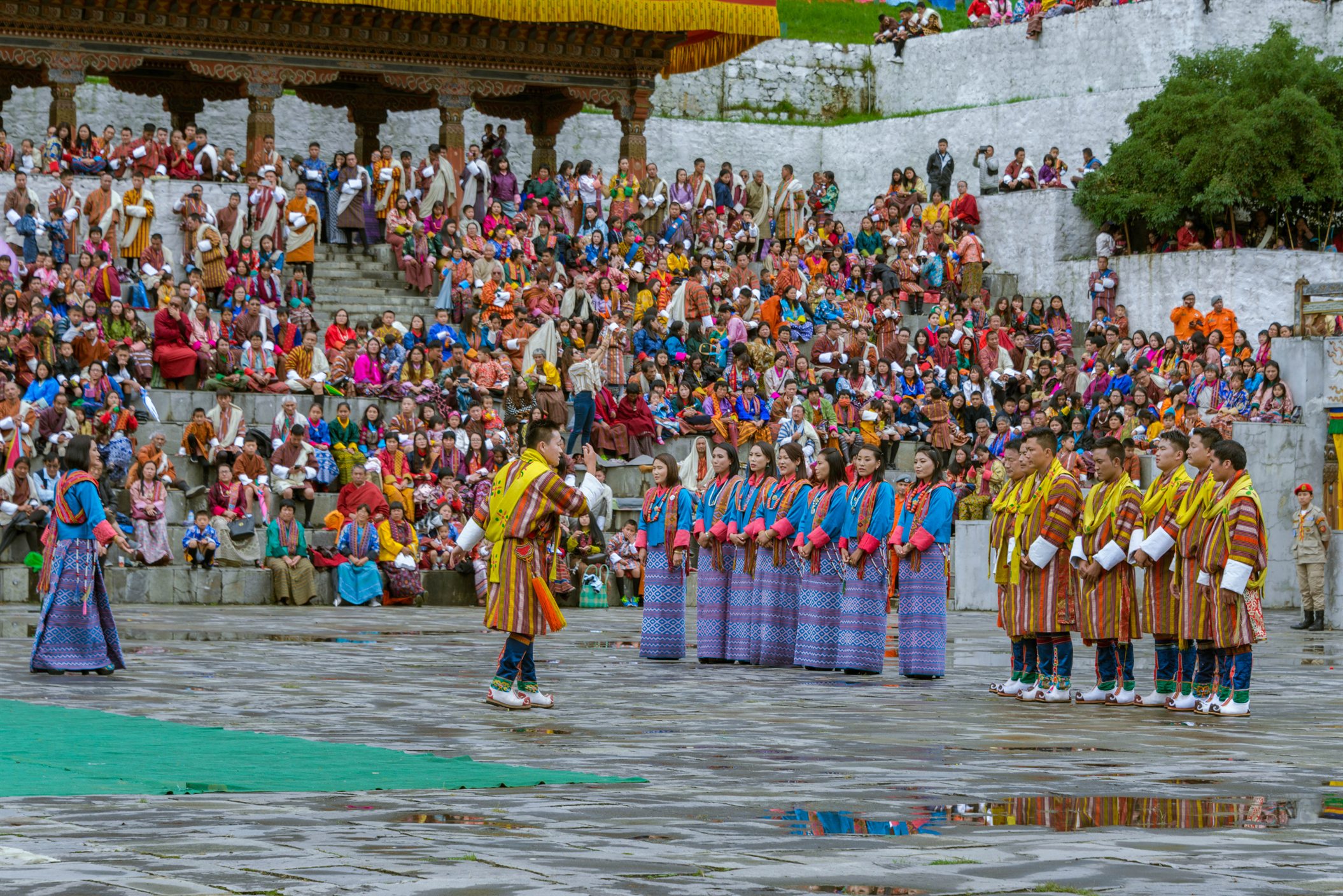
The word tshechu refers to the tenth day of a lunar month, and many festivals honour Guru Rinpoche, the teacher credited with bringing Vajrayana Buddhism to the Himalayan region. The exact story, sequence and local tradition vary.
Monks or trained lay performers present cham, sacred mask dances with elaborate costumes and symbolic movements. Some dances depict protective deities, moral choices, death, liberation or the triumph of wisdom over harmful forces. Folk songs, comic figures and community activities may appear between ritual sequences.
A tshechu is not simply a dance show. People attend for merit, blessing, social connection and devotion. Some festivals culminate in the display of a large sacred textile image known as a thongdrel. It may be unfurled before dawn and displayed only briefly to protect it from sunlight.
Your guide can explain the story without speaking over the ceremony. Ask questions during pauses or after the event rather than treating every movement as live entertainment commentary.
Paro Tshechu
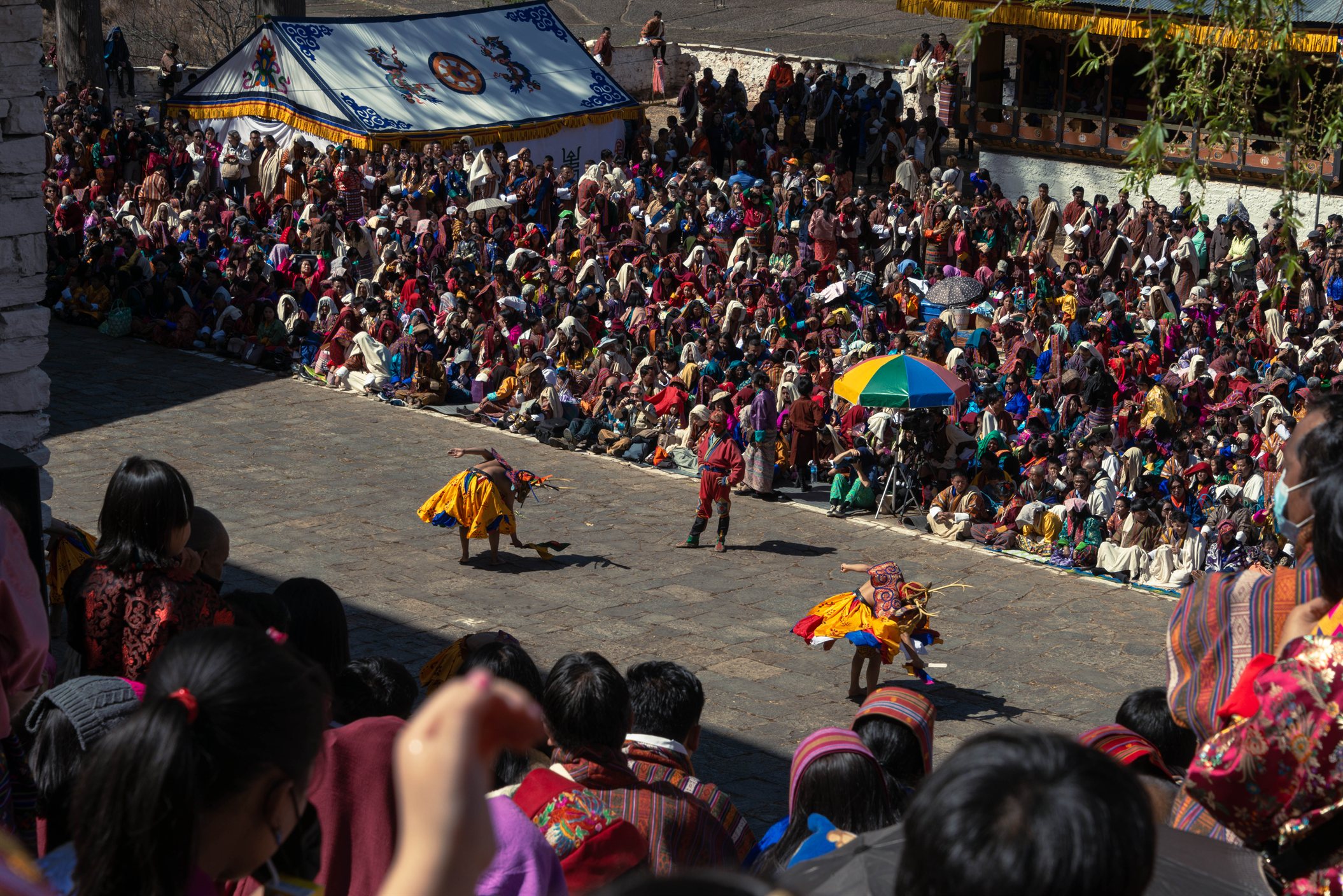
Paro Tshechu is one of Bhutan’s most accessible and celebrated spring festivals. It is usually held at Rinpung Dzong and draws people from across the valley. The setting, national dress and sequence of dances create a powerful introduction for a first time visitor.
The festival commonly lasts several days, with the sacred thongdrel displayed early on the final morning. Each day has its own programme, so attending one day does not reproduce the whole event. Your itinerary should identify which sessions you will see.
The current planning calendar places the 2027 Paro Tshechu from 18 to 22 March. Treat those dates as requiring final confirmation before ticketing. Paro hotels and Bhutan flights can fill far ahead, so begin planning early.
Paro combines naturally with Tiger’s Nest, Thimphu and Punakha. Do not schedule the Tiger’s Nest hike after a predawn festival starts unless your fitness and rest allow it. The Essential Bhutan Cultural Journey shows how a balanced western route can be paced.
Thimphu Tshechu
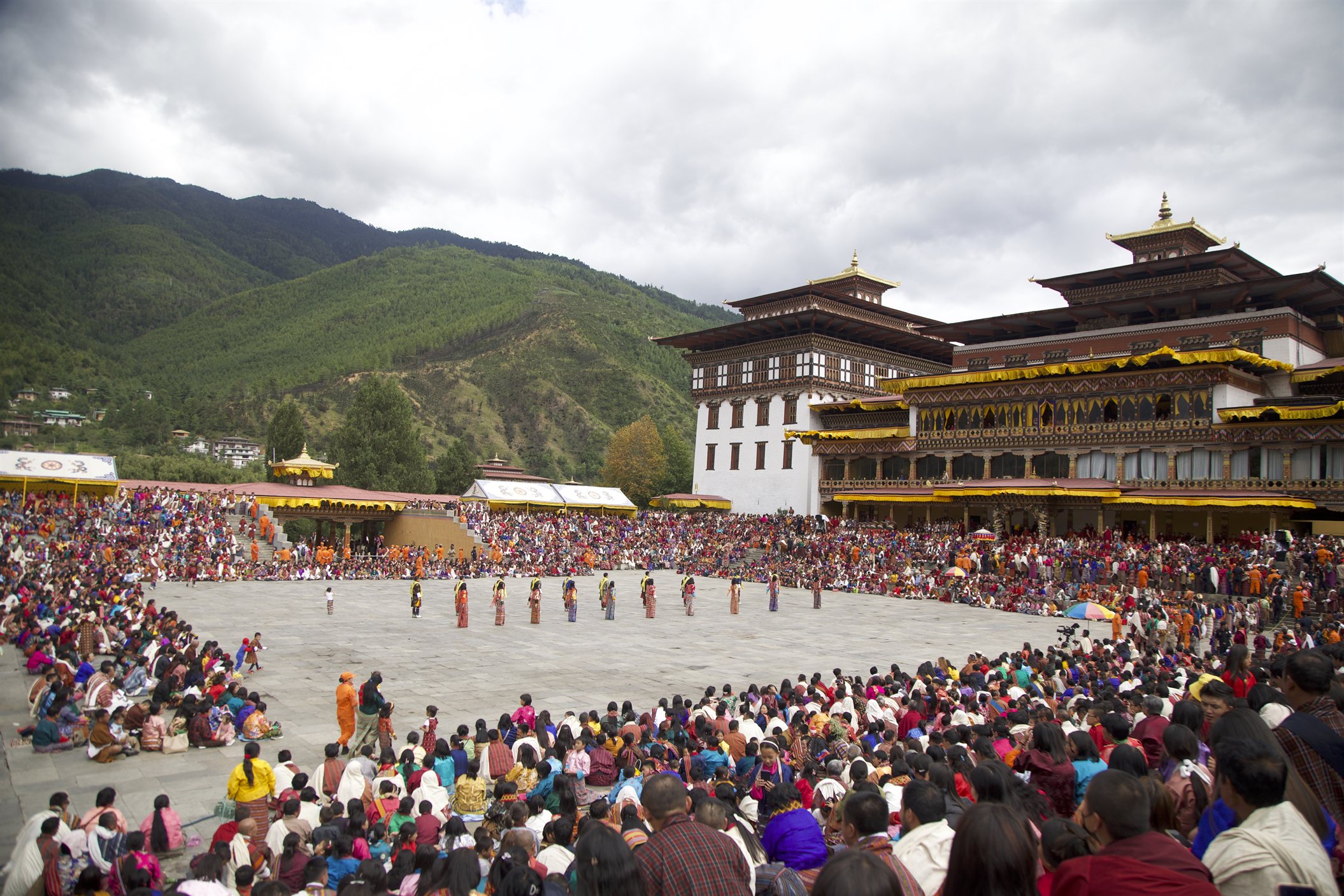
Thimphu Tshechu is a major autumn event at Tashichho Dzong. The capital setting creates large crowds, formal national dress and a strong sense of a country gathering together. It is an excellent choice if you want a celebrated festival within an itinerary that also includes museums, crafts and contemporary Bhutanese life.
The event follows the Thimphu Drubchen, a separate sacred observance. It is important not to collapse different events into one name when planning.
Published dates for future Thimphu Tshechus can conflict online. Confirm the official schedule, the days open to visitors and the exact venue before booking. Reserve central accommodation early if walking access matters, though vehicle arrangements and security restrictions may still affect arrival.
Punakha Tshechu and Punakha Drubchen
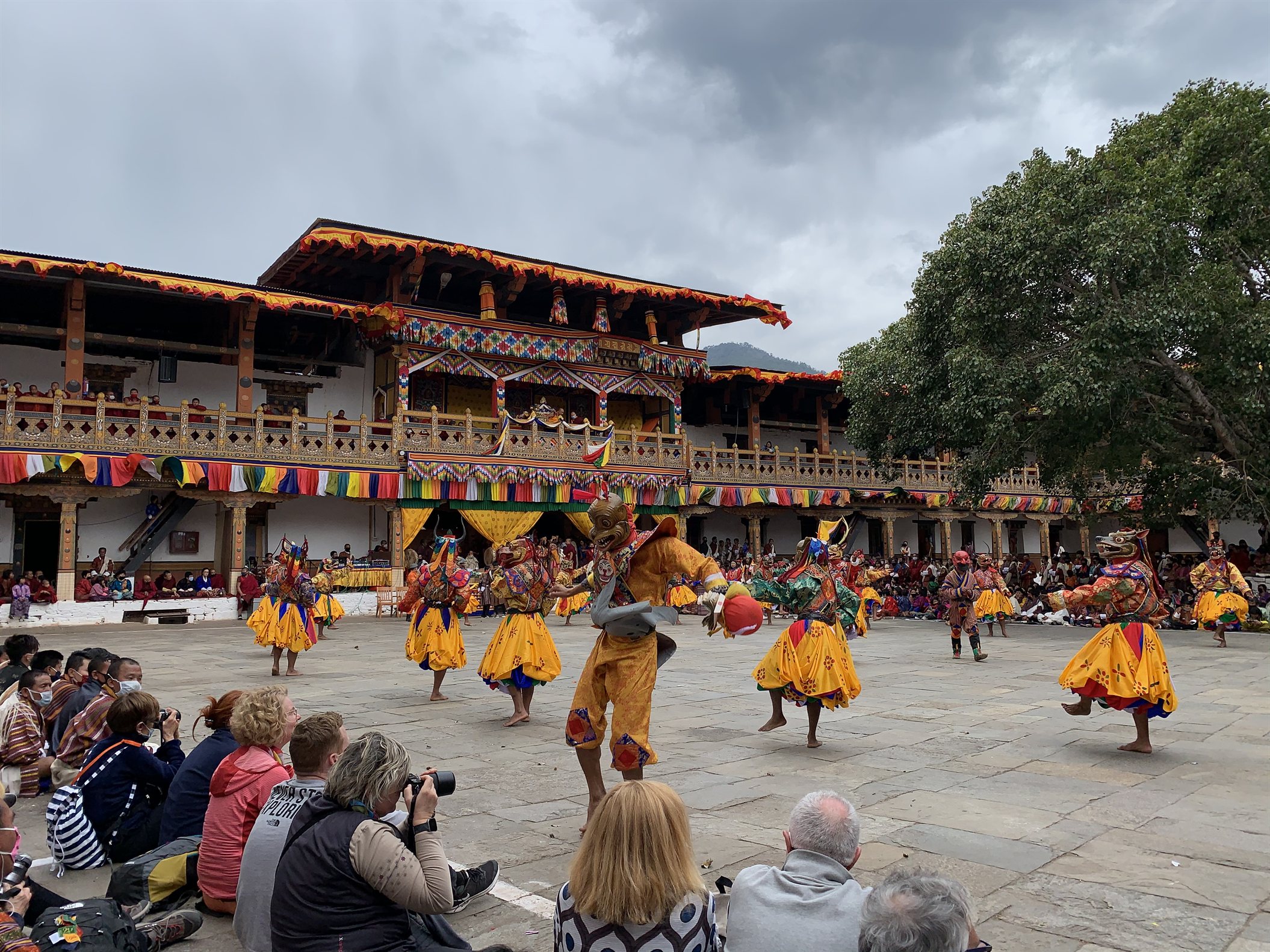
Punakha hosts both a drubchen and a tshechu, usually in late winter or early spring. The dramatic dzong at the confluence of two rivers gives the celebrations an exceptional setting.
Punakha Drubchen recalls historic events through distinctive scenes and rituals. The tshechu that follows includes sacred dances associated with the wider Bhutanese festival tradition. They are related in the travel calendar but should not be described as identical.
The current planning schedule places Punakha Tshechu from 16 to 18 February 2027. Confirm the dates and the preceding drubchen if you hope to see both. Mornings can be cool, while the lower valley warms during the day, so bring layers.
Bumthang festivals
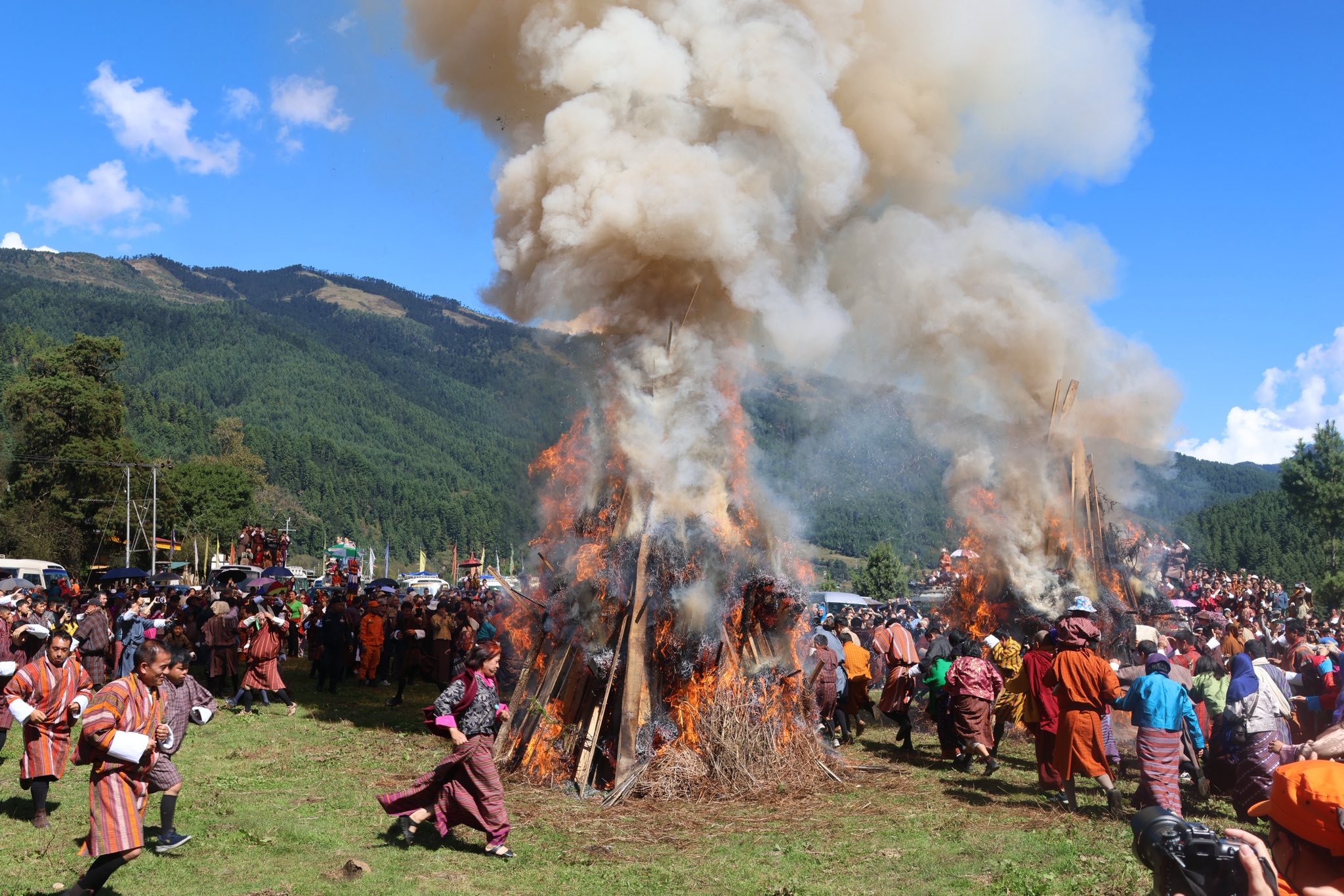
Bumthang’s valleys contain many important temples and host festivals with strong local character. The journey requires more time than a short western circuit, but the reward is cultural depth and a less compressed experience.
Ura Yakchoe
Ura Yakchoe is associated with Ura village and sacred relic traditions. The current planning calendar places the 2027 event from 18 to 22 April. Confirm the final schedule and which ceremonies are accessible to visitors.
Jambay Lhakhang Drup
This autumn event at Jambay Lhakhang is known for sacred dances and distinctive night rituals. Some ceremonies have specific cultural meaning and photography restrictions. Attend with an experienced guide and avoid sensational descriptions of private or sacred elements.
Jakar and other local tshechus
Bumthang has several dzong and monastery festivals across the year. Smaller gatherings can feel more intimate than Paro or Thimphu, but transport and accommodation are limited. The Bhutan Discovery Journey and East to West Cultural Expedition illustrate the time needed for central Bhutan.
Black Necked Crane Festival
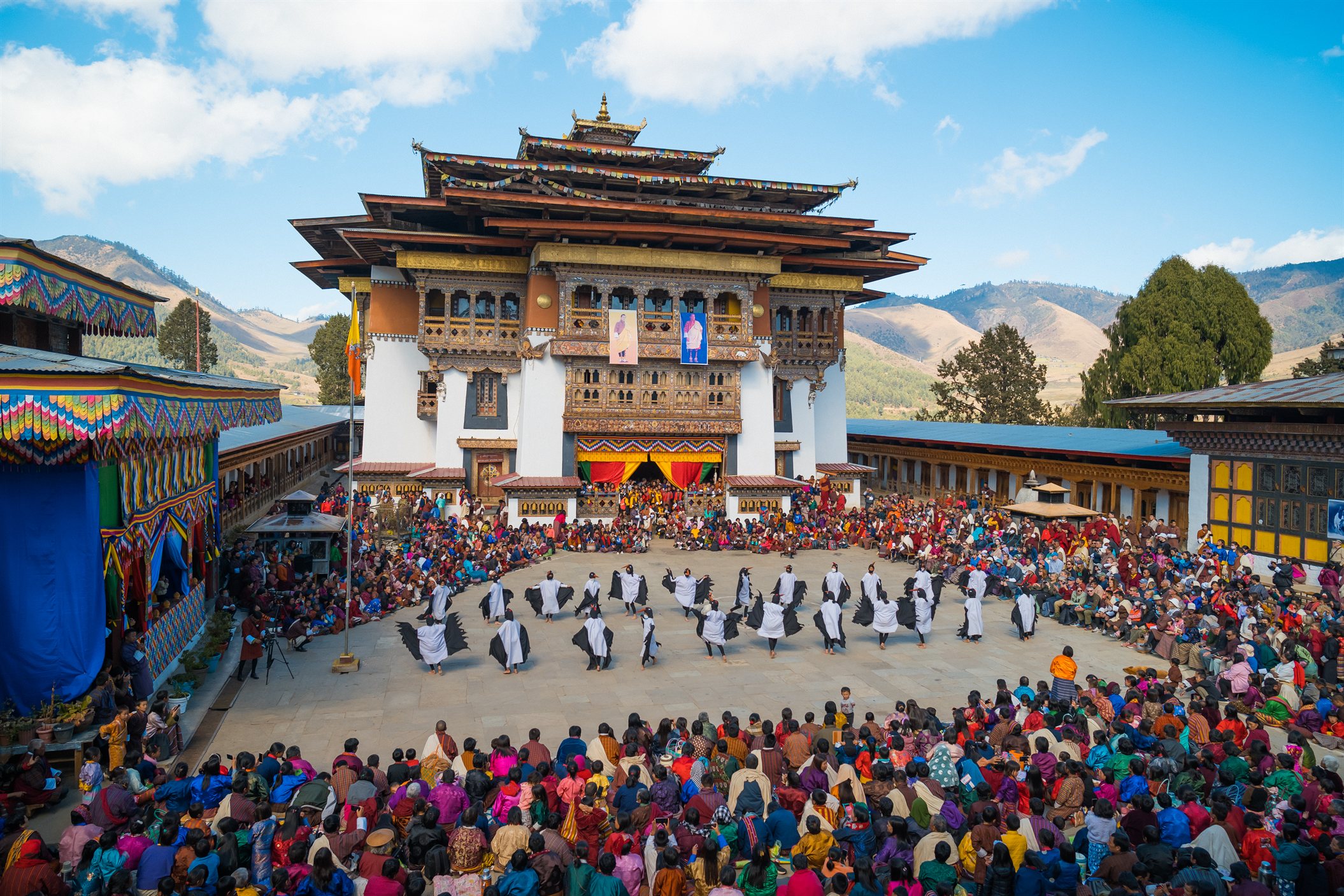
The Black Necked Crane Festival is held in the Phobjikha Valley and connects conservation, community awareness and local culture. It is traditionally associated with November, when the valley is known for the seasonal presence of black necked cranes.
This is not a tshechu in the same sense as the great religious festivals. Expect community performances, conservation themes and a valley setting rather than a multiday dzong programme. Crane sightings are never guaranteed and should be enjoyed with distance and respect.
Confirm the event date and the birds’ current presence. Spend at least two nights in the valley if possible, because a rushed overnight gives little time for walks, the monastery and changing light.
Druk Wangyel Tshechu
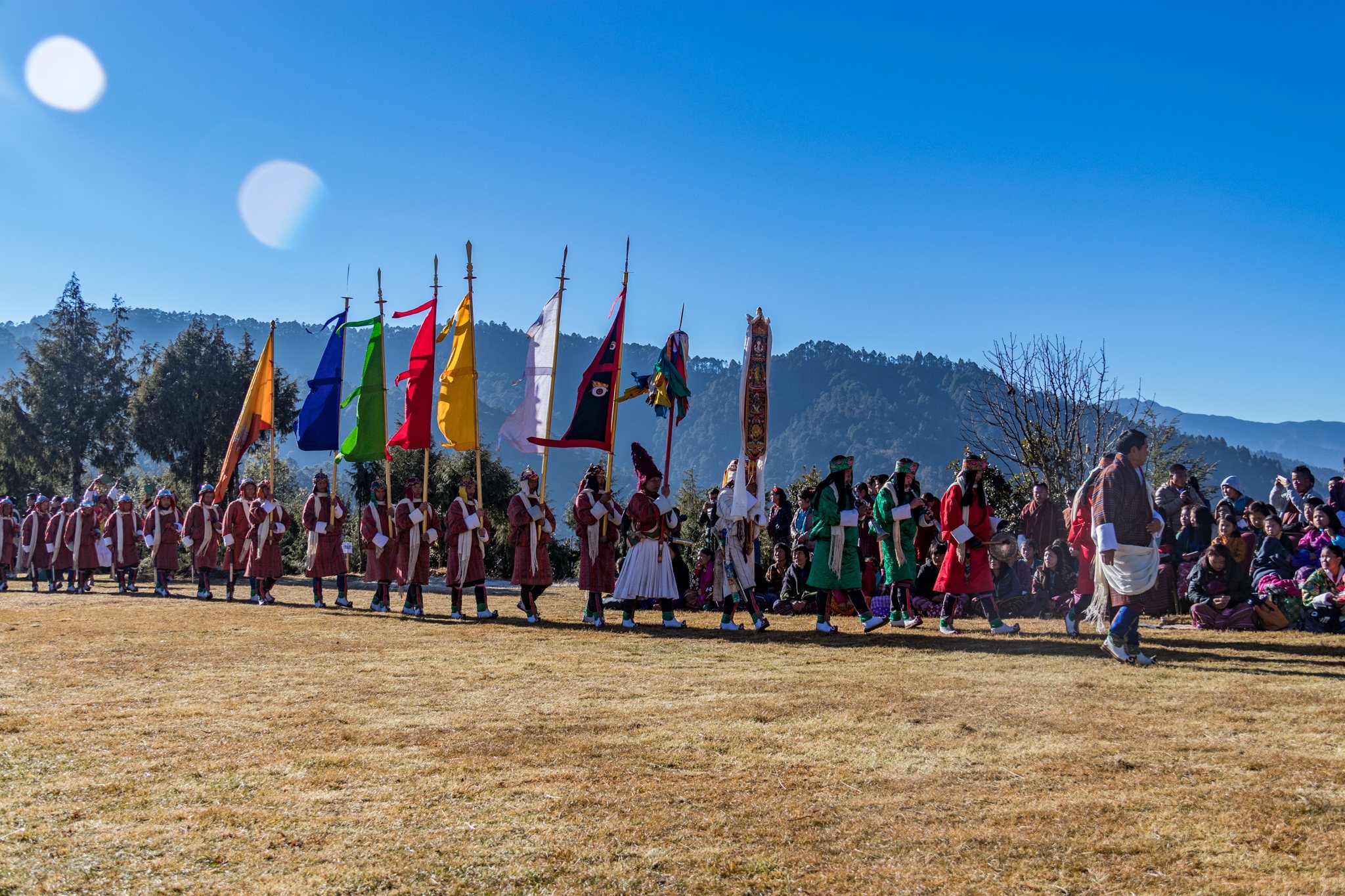
Druk Wangyel Tshechu is held at Dochula Pass, traditionally on 13 December. The event honours national service and features a distinctive setting beneath mountain views when conditions are clear.
December mornings at the pass can be very cold. Bring thermal layers, a hat, gloves and a wind resistant jacket. Weather can obscure the mountains or affect road conditions, so treat the landscape as a gift rather than a promise.
Because the date is traditionally fixed, it is easier to plan than some lunar events, but logistics and access should still be confirmed for the current year.
Smaller local festivals
Bhutan has many district, village and monastery celebrations. A smaller tshechu may give you more room, closer observation and a stronger sense of local relationships. It may also have limited visitor facilities, less English interpretation and a schedule that changes during the day.
Ask your travel specialist about events already occurring along your route. Do not add a long detour only to collect another festival name. One well understood morning can be more meaningful than several hurried appearances.
The official tourism site also highlights seasonal events linked to mushrooms, birds and regional products. These are different from religious tshechus and should be described accurately.
What you will see
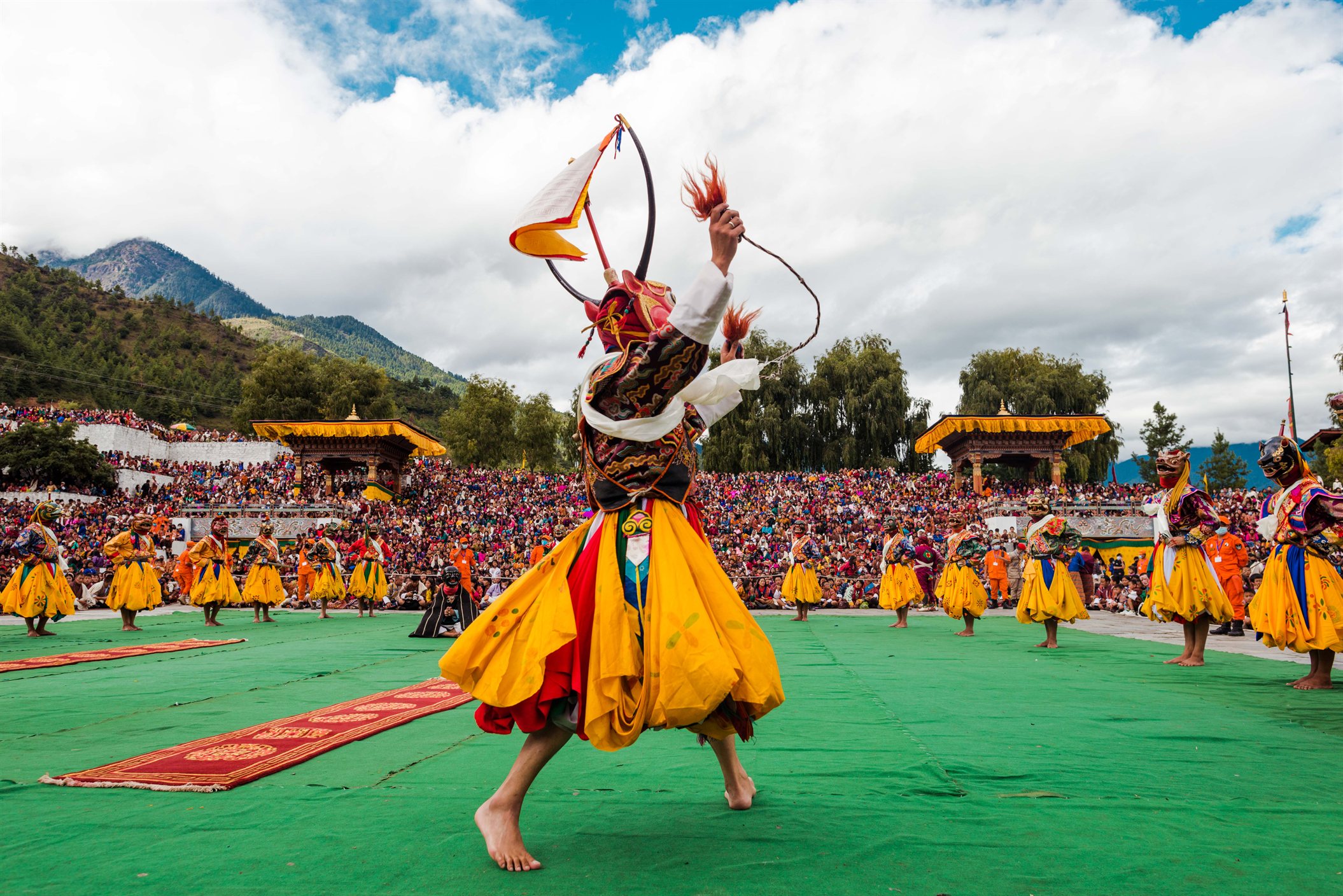
Expect long sequences rather than a short stage production. The courtyard gradually fills, dancers enter and leave, musicians maintain rhythm and comic atsara figures interact with the crowd. Families talk, eat and move around while maintaining attention to sacred moments.
You may see:
- masked cham dances
- brocade costumes and ritual instruments
- monks chanting or preparing ceremonies
- folk songs and community dances
- atsara figures using humour and social commentary
- formal national dress
- offerings and blessings
- a thongdrel display at selected festivals
Programmes can change because of weather, religious decisions or local circumstances. Patience is part of attending.
Festival etiquette
Dress modestly and neatly. Cover shoulders and knees, remove hats when requested and avoid clothing suited to a beach or strenuous trail. Bhutanese families may be wearing their finest gho and kira.
Follow your guide to the appropriate visitor area. Do not sit in places reserved for monks, officials, elders or performers. Avoid stretching legs toward an altar or blocking someone’s view.
Keep your voice low during dances and prayers. Silence your phone and do not push through families for a photograph. The Bhutan culture and etiquette guide explains these principles in more detail.
Photography at festivals
Outdoor photography is often allowed, but permission is not universal. Ask before photographing monks, children, close portraits or ritual preparations. Parents should approve images of children.
Do not step into the performance area, use intrusive flash or hold equipment above other people for long periods. A compact lens and respectful position usually create better images than an aggressive approach.
Thongdrel displays and inner rituals may have specific restrictions. Follow the instruction given on the day. The fact that another visitor takes a photograph does not prove it is permitted.
What to wear and pack
Festival days can begin before sunrise and continue under strong sun. Wear layers, comfortable shoes and modest clothing. Bring a warm jacket, sun hat, sunscreen, water and a small sitting cushion if your operator recommends one.
Keep your day bag compact. Courtyards become crowded, and large camera bags inconvenience everyone. A rain shell is useful in any season because umbrellas can block views.
Use the Bhutan packing list to prepare for the valley, month and other activities on your route.
Arriving, seating and comfort
Popular festivals reward an early start. Your guide will know security procedures, road closures and suitable entry points. A seat may be on stone, timber or a simple viewing area, and shade is limited.
Bring water and follow local arrangements for food and waste. Toilets may be basic and queues can be long. Carry tissues and hand sanitiser without expecting the venue to function like a ticketed indoor theatre.
Leave room in the schedule afterwards. A long drive immediately after a crowded festival day can be tiring.
Booking flights and hotels
Major festival dates create concentrated demand. Bhutan’s limited air capacity and certified hotel inventory mean popular combinations can sell out. Start planning at least several months ahead, and earlier for specific luxury lodges or room configurations.
Do not buy a complex flight until the event date is reconfirmed. Ask about change conditions, gateway nights and weather buffers. Read how far in advance to book an international trip.
Festival itineraries should include more than the event. Build in temples, villages, walks and rest so Bhutan does not become a sequence of crowded courtyards.
Choosing the right festival
Choose Paro for a famous spring event and easy integration with a first route. Choose Thimphu for a major autumn gathering and a broader look at the capital. Choose Punakha for a powerful dzong setting and an early year journey.
Choose Bumthang for deeper cultural travel and more time on the road. Choose the Black Necked Crane Festival for conservation and landscape. Choose Druk Wangyel for a fixed December tradition and cold mountain atmosphere.
Your best festival is the one that fits your dates, pace and cultural interest. A famous name is not automatically a better experience.
Frequently asked questions
-
What is the most famous festival in Bhutan?
Paro and Thimphu Tshechus are among the best known and easiest for first time visitors. Punakha is also highly regarded for its dzong setting and connected drubchen. Each has a different season and atmosphere.
-
Are Bhutan festival dates fixed?
Many follow lunar calendars and shift against the Gregorian calendar. Early published dates can change. Confirm the official schedule before paying for flights and hotels.
-
Can tourists attend tshechus?
Visitors are generally welcome in designated areas. These are religious community events, so modest dress, quiet behaviour and your guide’s instructions are essential. Some ceremonies or spaces may be restricted.
-
Do I need a special festival permit?
A separate festival permit is not generally required for ordinary public attendance, but normal Bhutan entry, guide and site arrangements apply. Access rules can vary by event. Confirm with your operator.
-
How long should I attend?
A half day can introduce the atmosphere, while a full day reveals more of the sequence. Attending several days suits travellers with a strong cultural interest. Protect time for other parts of Bhutan as well.
-
Can I photograph the mask dances?
Outdoor photography is often permitted from visitor areas, but restrictions can apply. Avoid flash, obstruction and intrusive portraits. Ask your guide before photographing sacred moments.
-
What should I wear?
Wear neat clothing that covers shoulders and knees, plus comfortable shoes and seasonal layers. Bring sun protection and a compact rain shell. Early mornings can be cold.
-
What is a thongdrel?
A thongdrel is a large sacred textile image displayed at selected festivals, often for a limited time. Viewing it is associated with blessing. Photography and access rules should be followed carefully.
-
Are festivals suitable for children?
They can be, especially for patient children comfortable with crowds and long sitting periods. Bring water, snacks, sun protection and a flexible exit plan. Keep children away from restricted performance areas.
-
When should I book a festival trip?
Begin several months ahead, and earlier for major events or luxury hotels. Flight capacity is limited and the best located rooms fill quickly. Wait for reliable date confirmation before issuing inflexible tickets.
Experience Bhutan festivals with context
Bhutan festivals are most meaningful when you understand that sacred dance, family gathering and daily faith share the same courtyard. Arrive early, dress respectfully, listen to your guide and allow the day to move at its own rhythm.
Explore SoulTrips Bhutan tours, the SoulTrips travel tips and the trip planning service. For current Bhutan festival dates and a route built around the right event, contact SoulTrips before booking flights.